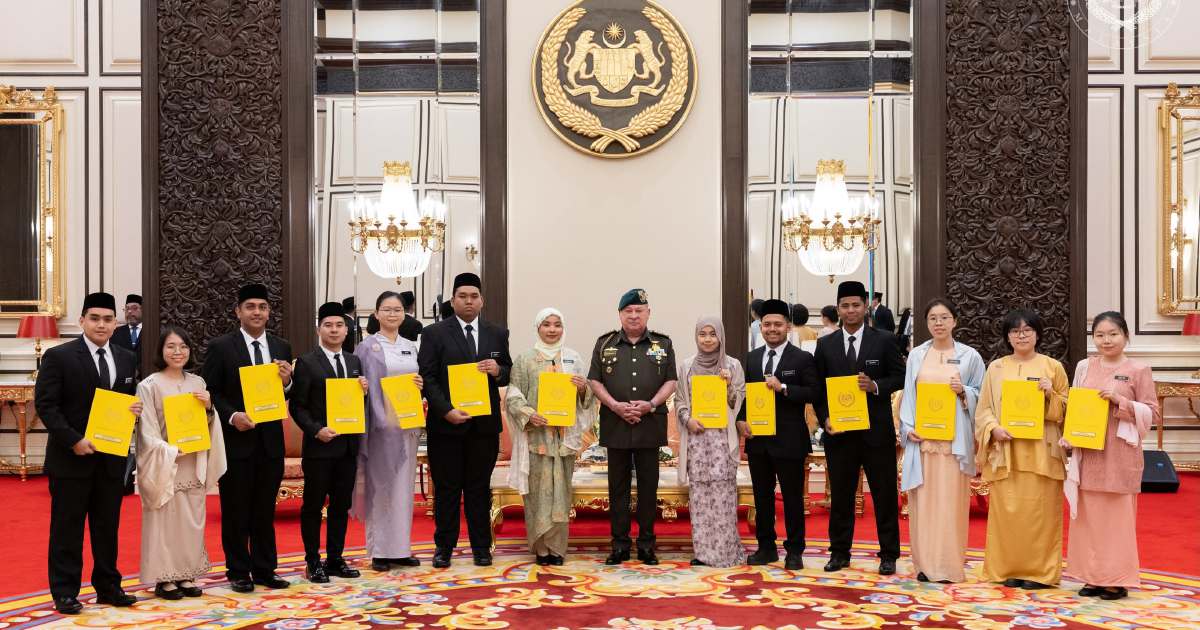
His Majesty Sultan Ibrahim, King of Malaysia, conferred the honour of the Yang di-Pertuan Agong Scholarship (BYDPA) 2026 upon 14 outstanding citizens during a formal ceremony at Istana Negara in Kuala Lumpur. The presentation underscores the royal institution's commitment to recognising and nurturing exceptional talent across the nation, selecting individuals who exemplify excellence in their respective fields and demonstrate potential for contributing meaningfully to Malaysian society.
The Yang di-Pertuan Agong Scholarship represents one of Malaysia's most prestigious accolades, designed to identify and support individuals who have already demonstrated remarkable achievement or possess extraordinary promise. Recipients are typically selected through a rigorous evaluation process that considers their academic credentials, professional accomplishments, community engagement, and potential to drive positive change within their sectors. The award carries significant symbolic weight, as it bears the endorsement of the highest constitutional office in the land and recognises merit at the national level.
The selection of 14 recipients this year reflects the diversity of talent flourishing across Malaysia's professional landscape. These individuals come from various backgrounds and specialisations, spanning academia, business, public service, healthcare, technology, and social enterprise. This breadth demonstrates the scholarship committee's recognition that excellence manifests across multiple domains, and that national progress depends on nurturing capability wherever it emerges. The varied profiles of recipients also signal a deliberate effort to support leaders who can drive innovation and positive outcomes in sectors critical to Malaysia's development trajectory.
For many recipients, the scholarship carries implications far beyond personal recognition. It often opens doors to further opportunities for advanced study, professional development, or expanded responsibilities within their current organisations. The prestige associated with the award can enhance credibility, facilitate networking with other accomplished professionals, and provide platforms for greater influence. In this sense, the scholarship functions as both recognition of past achievement and catalyst for future contribution. Recipients frequently leverage the honour to advance their agendas for change within their respective fields or communities.
The conferment at Istana Negara adds ceremonial weight to the occasion. The palace setting reinforces the constitutional dimension of the award and signals that the scholarship programme operates as an expression of the Yang di-Pertuan Agong's role as guardian of national interests and unity. This ceremonial dimension is not merely symbolic—it carries meaning within Malaysian political and social culture, where royal patronage and endorsement carry particular significance. For recipients, being formally recognised by the Ruler at the royal palace represents a profound honour that extends beyond professional achievement to encompass broader national esteem.
The timing of the 2026 award cycle coincides with Malaysia's ongoing efforts to position itself as a knowledge-based economy and innovation hub within Southeast Asia. By actively identifying and honouring exceptional Malaysians, the scholarship programme contributes to a broader narrative about domestic talent and capability. In an era when Malaysia competes regionally for investment, skilled workers, and intellectual capital, programmes that celebrate homegrown excellence reinforce national confidence and demonstrate that world-class talent flourishes domestically. This has indirect policy implications, as it supports arguments for retaining talent within the country and attracting returning Malaysians who may have pursued opportunities abroad.
The scholarship also reflects an inclusive approach to merit recognition. By selecting recipients across multiple sectors and professional backgrounds, the award acknowledges that Malaysia's development depends on excellence manifesting throughout society—not merely in traditionally elite institutions or professions. This approach encourages talented individuals across diverse fields to view themselves as part of a national narrative about achievement and contribution. For young Malaysians observing the selection process, the visibility of recipients from various backgrounds may inspire broader aspirations about what constitutes valued achievement within the Malaysian context.
Regionally, Malaysia's investment in recognising domestic talent through prestigious scholarship programmes positions the nation as one that values meritocracy and continuous professional development. As Southeast Asian countries compete to retain and attract skilled workers within a region increasingly integrated through trade agreements and professional mobility frameworks, demonstrating commitment to supporting excellence becomes strategically important. The Yang di-Pertuan Agong Scholarship serves this purpose implicitly, suggesting a commitment to nurturing the talent ecosystem that underpins competitive advantage.
Moving forward, the experiences of this year's 14 recipients will likely be documented and highlighted through official channels, serving as inspiration for future candidates. Their achievements and subsequent contributions will form part of the scholarship programme's legacy, demonstrating the returns on investment in identifying and honouring exceptional Malaysians. Whether recipients leverage the recognition to advance further studies, take on leadership roles, or drive innovation within their sectors, their trajectories will collectively contribute to the practical evidence supporting the scholarship's original premise—that systematically identifying and supporting excellence strengthens Malaysia's social and professional fabric.

