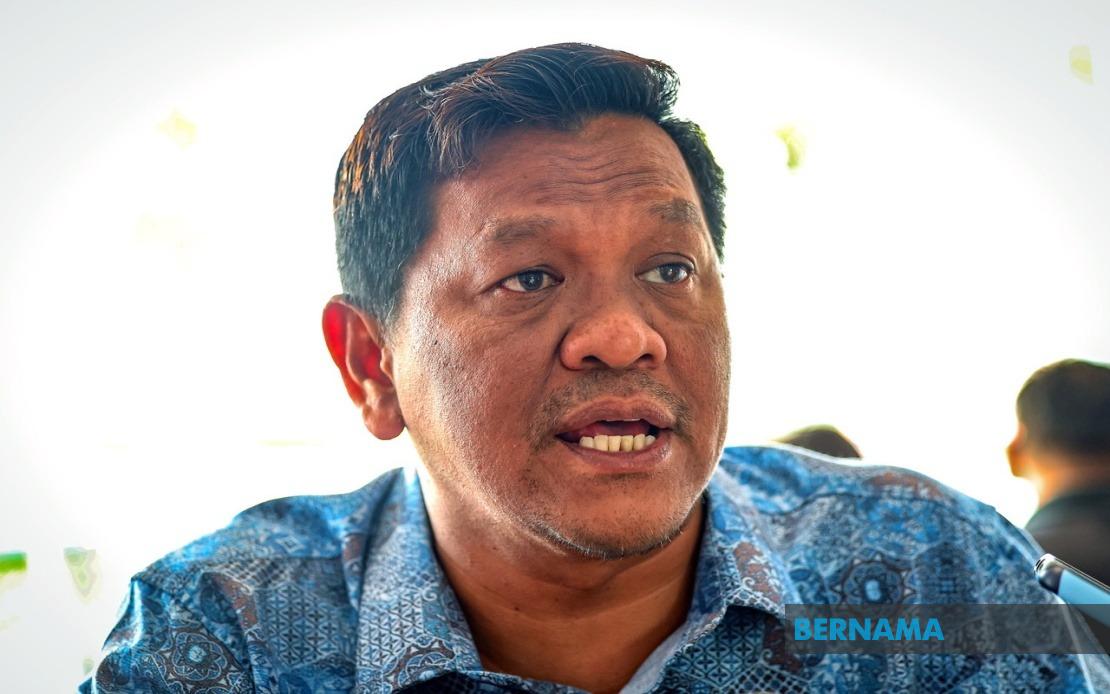
Two hundred motorcyclists in the Renggam area of Kluang received RM5 fuel vouchers on Tuesday as part of a government assistance programme aimed at easing the financial pressures facing daily commuters. The initiative, implemented through the National Security Council (MKN), underscores the administration's commitment to addressing the cost-of-living concerns that continue to weigh on ordinary Malaysians, particularly those in smaller towns and rural settlements where two-wheeled vehicles remain the primary mode of transport.
Abdullah Izhar Mohamed Yusof, political secretary to the Communications Minister, characterised the voucher distribution as an expression of government solidarity with communities at the grassroots level. Speaking during the Jiwa@Komuniti MADANI Sembang Santai World Cup Edition programme, he framed the assistance within a broader philosophy of national unity and social cohesion. The timing and scale of the initiative reflect deliberate policy efforts to maintain public confidence in government programmes while demonstrating responsiveness to everyday economic challenges faced by Malaysian workers and families.
Beyond the immediate relief of the fuel vouchers, the programme incorporated structured dialogue between government officials and community members. Representatives from the Information Department (JaPen) and the Department of Community Communications (J-KOM) participated alongside the National Security Council, transforming what could have been a simple cash distribution into a multi-layered engagement exercise. This approach recognises that rural and semi-rural communities often feel disconnected from policy-making processes and require direct access to accurate government information to build trust in institutional initiatives.
The inclusion of informational briefings alongside material assistance reflects an integrated communication strategy. Officials used the gathering as an opportunity to explain current government policies, allowing residents to pose questions and voice concerns about local conditions. Such two-way dialogue has become increasingly important in Malaysian governance, where misinformation and competing narratives can rapidly undermine public support for legitimate programmes. By establishing direct communication channels, the government aims to ensure that citizens receive authentic information before alternative interpretations take hold.
Abdullah Izhar indicated that this programme represents one component of a sustained national outreach effort. He committed to expanding similar initiatives across different regions, with the stated objective of ensuring equitable access to government assistance and reliable information across all demographic segments. This language suggests that authorities view grassroots engagement not as a one-off publicity event but as an essential mechanism for maintaining legitimacy and social stability in an increasingly complex information environment.
For Malaysian motorcyclists, fuel costs represent a genuine financial consideration that accumulates significantly over weeks and months. Unlike vehicle owners who might absorb cost variations within broader household budgets, riders often operate on tighter margins where every few ringgit matters for daily commuting to work, markets, or family obligations. The RM5 voucher, while modest in absolute terms, acknowledges this reality and signals government awareness of transportation costs as a legitimate poverty-alleviation concern.
The response from recipients illustrated both genuine gratitude and realistic expectations about programme sustainability. M. Raja, a 56-year-old father of five from Taman Sri Jaya, expressed appreciation while candidly noting that monthly distributions would provide more meaningful relief. His comment captures a common tension in targeted assistance programmes: sporadic vouchers offer psychological comfort and genuine short-term help, but sustainable poverty reduction requires either regular support or structural changes to fuel pricing or wage levels. Similarly, Hee Eeck Kwe's remarks highlighted rural communities' concern about being marginalised in national assistance schemes, suggesting that symbolic inclusion in government programmes carries weight beyond their immediate monetary value.
The Renggam programme occurred within a broader Malaysian context of persistent inflation and cost-of-living pressures that have shaped electoral politics and social sentiment over recent years. Fuel expenses, housing costs, and food prices remain central to household anxiety, particularly among working-class Malaysians. Government assistance initiatives, whether fuel vouchers, targeted subsidies, or direct cash transfers, serve simultaneously as genuine relief measures and as political communications meant to demonstrate responsiveness to public concerns.
The involvement of multiple government departments indicates coordination at relatively high bureaucratic levels. Such multi-agency participation in grassroots programmes requires advance planning, resource allocation, and institutional cooperation that suggests these initiatives enjoy official sanction and are likely to be replicated elsewhere. For residents in other Malaysian towns and rural areas, the Renggam programme signals that similar assistance and engagement opportunities may be forthcoming, though timing and targeting remain unclear.
From a Southeast Asian perspective, Malaysia's approach to grassroots assistance reflects regional patterns in which governments balance market-oriented policies with targeted welfare measures designed to maintain social cohesion. Countries throughout the region have implemented fuel vouchers, cash transfers, and direct assistance programmes as inflation pressures intensified. The Renggam initiative demonstrates how Malaysian authorities attempt to deliver relief while simultaneously building institutional legitimacy through community dialogue and information-sharing.
The stated commitment to regular, nationwide expansion of these programmes carries potential budgetary implications that merit attention. Sustaining monthly or quarterly voucher distributions across multiple locations requires dedicated funding mechanisms and administrative capacity. Officials must ensure that programmes remain financially viable while expanding reach, a balance that becomes more complex as economic conditions fluctuate and fuel prices shift. Programme design thus involves not only immediate generosity but also long-term fiscal sustainability calculations.
Looking forward, the Renggam initiative exemplifies a government strategy of combining material support with community engagement as a dual approach to governance challenges. Whether distributed as fuel vouchers, food subsidies, or cash assistance, such programmes communicate that authorities recognise and respond to ordinary citizens' economic circumstances. The dialogue and information components underscore government messaging that it remains connected to communities beyond election cycles. For Malaysian motorcycle riders and other working-class residents, such initiatives represent both practical relief and political recognition, with implications for how communities perceive government responsiveness and their own place within national development priorities.

