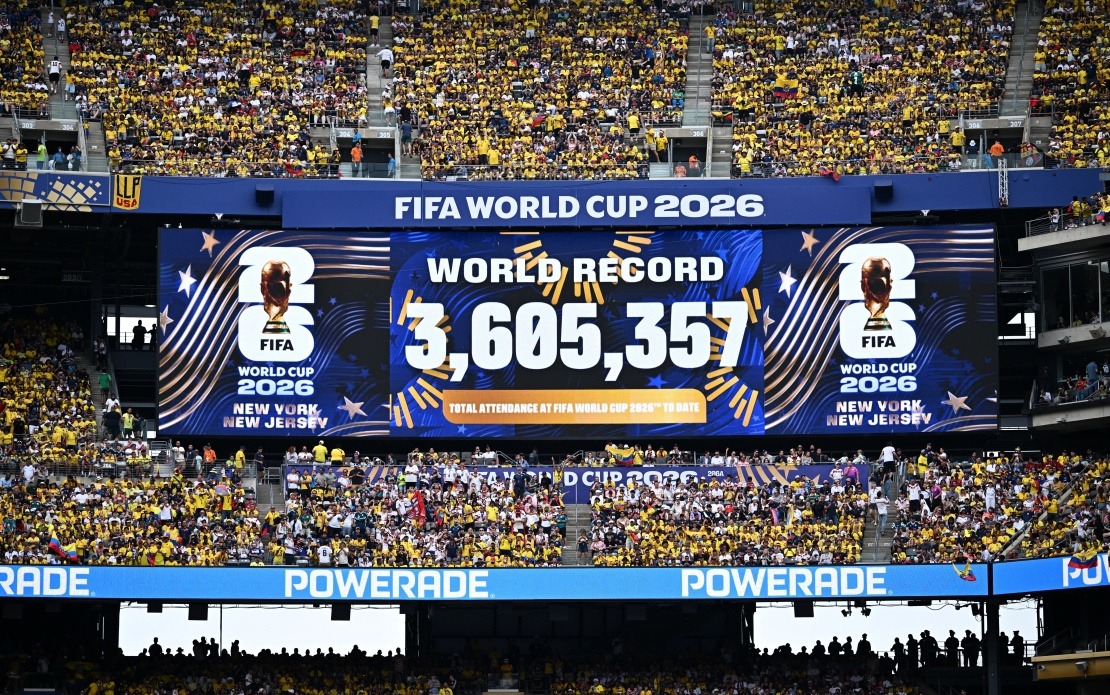
The 2026 FIFA World Cup etched its name into sporting history on Thursday when cumulative attendance across the tournament exceeded 3,605,357 spectators, eclipsing the previous record set 32 years earlier. The milestone was reached during Germany's match against Ecuador in East Rutherford, New Jersey, with the achievement announced to jubilant crowds watching on giant screens inside the stadium. This landmark underscores the tournament's extraordinary drawing power and the enduring global fascination with the world's most popular sport.
The venue itself became a symbol of the tournament's success, as thousands of fans in the stands erupted upon learning that their collective attendance had made history. The announcement during a live match added dramatic impact to the moment, transforming a routine announcement into a celebration of football's universal appeal. The spectacle highlighted how the 2026 World Cup has fundamentally reshaped expectations about tournament attendance and fan engagement across multiple venues and time zones.
When the World Cup was last held in the United States in 1994, the tournament featured 52 total matches and drew nearly 3.6 million supporters across its duration. That tournament was groundbreaking at the time, representing a watershed moment for football's popularity in North America. Yet the 2026 edition, with 48 matches still outstanding at the time the record was broken, is poised to achieve roughly double that total by tournament's conclusion—a staggering demonstration of sustained fan interest throughout the competition.
The structural expansion of the World Cup has contributed significantly to these unprecedented numbers. The 2026 tournament spans three nations—the United States, Canada, and Mexico—creating a geographically dispersed competition that has allowed millions of fans across North America to attend matches without travelling prohibitive distances. This regional distribution contrasts with previous tournaments concentrated in single countries, fundamentally altering the demographic and geographic reach of World Cup audiences.
Stadium utilisation rates paint a remarkable picture of consistent, near-universal demand. Venues across the 16 host cities have operated at more than 99 per cent capacity on average, indicating a level of appetite for matches that leaves almost no empty seats regardless of which teams are competing. This figure is particularly striking given the variance in team quality and global support bases, suggesting that the World Cup's cultural magnetism transcends traditional football allegiances and extends to casual enthusiasts and families seeking live sporting entertainment.
FIFA President Gianni Infantino characterised the attendance surge as a reflection of football's fundamental role in global society. His statement emphasised the tournament's capacity to unite diverse populations in moments of shared joy and celebration, positioning the World Cup beyond mere sporting spectacle into the realm of cultural phenomenon. The achievement across 16 different host cities—spanning three nations with distinct populations, economies, and sporting traditions—demonstrates football's unique ability to generate enthusiasm across continental boundaries and demographic segments.
For Malaysia and Southeast Asia, the 2026 World Cup's success carries particular relevance as nations in the region invest in expanded football infrastructure and seek to host major tournaments. The North American model demonstrates that carefully distributed venues, strong local fan bases, and sophisticated stadium management create conditions for record-breaking attendance. Malaysian planners examining future regional tournaments can draw lessons from how three countries coordinated to create a seamless fan experience spanning vast geographic territories.
The trajectory of attendance throughout the tournament suggests that final figures could approach seven million spectators—a phenomenon that reshapes how FIFA, broadcasters, and sponsors evaluate the commercial and cultural impact of future World Cups. This level of engagement translates into enormous revenue streams from ticket sales, hospitality, and ancillary services, setting new benchmarks for tournament profitability and proving that substantial populations remain eager to experience football live rather than solely through television screens or digital platforms.
Looking ahead, the 2026 World Cup's attendance milestone will almost certainly influence host selection for subsequent tournaments. Nations bidding for future World Cups will recognise that capacity stadiums, distributed venues, and accessible locations dramatically amplify fan participation and revenue generation. The North American tournament has established a template for success that balances elite competitive standards with inclusive access, potentially reshaping how tournament infrastructure is conceptualised across football-developing regions.

