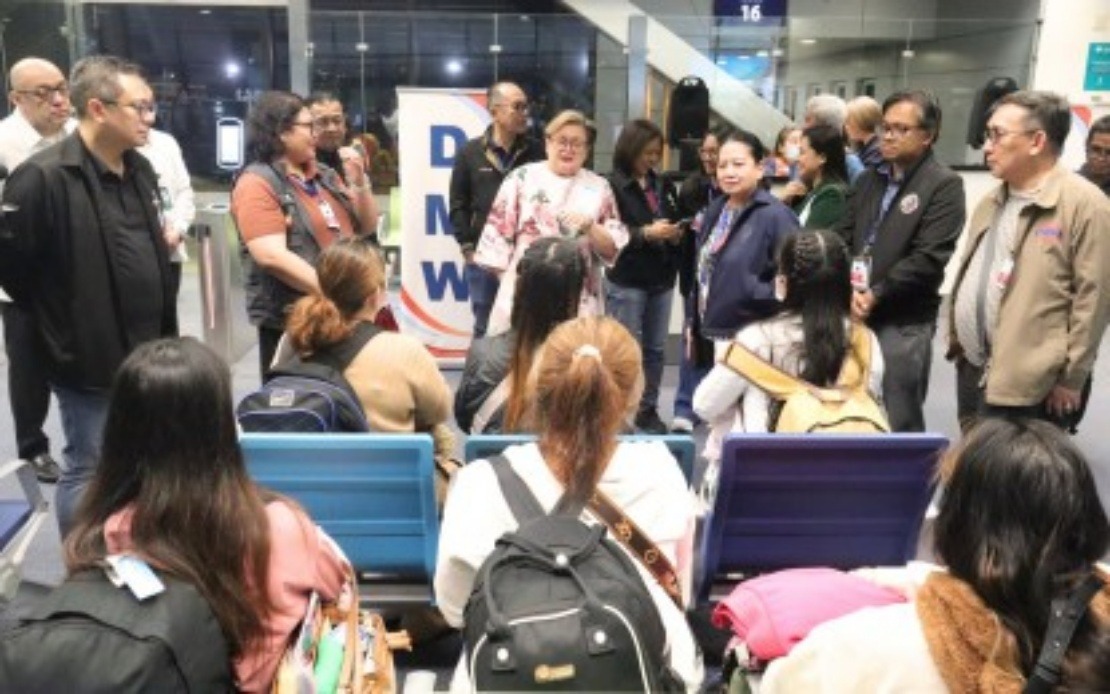
President Ferdinand R. Marcos Jr has secured the release and safe repatriation of 24 Filipino nationals who spent approximately nine months in Russian detention, marking a significant diplomatic win for Manila in addressing the welfare concerns of its overseas citizens. The group touched down at Ninoy Aquino International Airport Terminal 1 in two separate waves shortly after midnight on Sunday, having travelled through Bangkok, Thailand as a transit point. Their homecoming represents the culmination of high-level diplomatic efforts, with Marcos personally leveraging his bilateral meeting with Russian President Vladimir Putin on the sidelines of the ASEAN-Russia Commemorative Summit in Kazan to facilitate their release.
The repatriation operation unfolded across two Philippine Airlines flights arriving within hours of one another. The first contingent of six individuals landed aboard PAL Flight PR737 just after the stroke of midnight, while the remaining 18 passengers disembarked from PAL Flight PR733 as dawn broke over the capital. Foreign Affairs Secretary Maria Theresa Lazaro and Migrant Workers Secretary Hans Cacdac were present at the terminal to welcome the returning nationals, underscoring the government's commitment to supporting Filipino workers abroad and reaffirming its responsibility towards their protection and reintegration.
The detainees had been held in Irkutsk, a major city in southeastern Siberia, for nearly nine months without any formal criminal charges being levelled against them. This prolonged detention without clear legal grounds raised serious questions about due process and highlighted vulnerabilities in how Filipino nationals can become trapped in foreign legal systems. According to government assessments, preliminary evidence suggested these individuals may have become victims of illegal recruitment schemes that lured them to Russia under false pretences, only to result in their apprehension for alleged immigration-related violations once they arrived.
Marcos expressed his gratitude to Putin and the broader Russian government apparatus for their cooperation in resolving the matter, framing the successful outcome as evidence of constructive bilateral relations between the Philippines and Russia. The presidential intervention during the Kazan summit proved decisive, with Putin reportedly demonstrating willingness to facilitate the release as a gesture of goodwill. This outcome carries symbolic importance for the Philippines' broader diplomatic strategy in maintaining functional relationships with major powers, even amid the complex geopolitical tensions that characterise Southeast Asian foreign policy.
The coordination required to effect this repatriation demonstrated the interconnected nature of modern migration management and diplomatic problem-solving. The Department of Foreign Affairs worked in tandem with Russian authorities to navigate the legal and administrative hurdles necessary for the detainees' release. Simultaneously, the Department of Migrant Workers and the Overseas Workers Welfare Administration collaborated to ensure smooth logistics, including arranging transit through Thailand and coordinating airport reception procedures. This multi-agency approach reflects established protocols designed to handle complex cases involving Filipino nationals in distress abroad.
The circumstances surrounding these individuals' recruitment deserve closer examination, as they illuminate broader patterns of labour trafficking that continue to pose risks to migrant workers across Southeast Asia and beyond. Illegal recruitment schemes targeting Filipinos typically operate through networks that exploit economic desperation, offering lucrative employment opportunities that prove illusory upon arrival in destination countries. The apparent sophistication of the operation that ensnared these 24 individuals suggests organised criminal networks may be involved, warranting investigation by both Philippine and international authorities tasked with combating human trafficking and labour exploitation.
Government agencies have committed to providing comprehensive assistance and reintegration support for the returnees as investigations proceed into the full scope of their recruitment, the identities of those responsible for organising their illegal passage, and the circumstances that facilitated their detention. This support framework is essential, as individuals who have experienced prolonged overseas detention often face psychological trauma, disrupted family relationships, and economic hardship requiring sustained intervention. The Overseas Workers Welfare Administration and other relevant agencies must ensure these nationals receive counselling, medical assessment, skills training opportunities, and financial assistance where appropriate.
The case underscores persistent risks that Filipino migrant workers confront despite domestic awareness campaigns and legal protections. Approximately 2.2 million Filipinos work overseas at any given time, remitting billions of pesos annually to support families and drive economic activity at home. Yet this economic lifeline comes at considerable human cost, with workers vulnerable to exploitation, underpayment, workplace abuse, and legal entanglement in foreign jurisdictions where they lack adequate legal recourse or cultural familiarity. The fact that 24 individuals could be detained for nine months without formal charges highlights gaps in international labour protections and the importance of robust consular support systems.
For Malaysia and other Southeast Asian nations with large overseas worker populations, the Irkutsk detention case carries instructive lessons. Regional governments must strengthen information-sharing mechanisms to identify and combat illegal recruitment networks operating across borders. Bilateral and multilateral agreements should establish clearer protocols for protecting migrant workers from exploitation and ensuring rapid resolution when detention occurs without proper legal justification. The success of Marcos's diplomatic intervention suggests that high-level political engagement remains an essential tool when standard channels prove inadequate.
The reintegration process beginning now in Manila represents just one phase of addressing this incident comprehensively. Authorities must pursue investigations that trace recruitment networks back to their sources, identify Philippine citizens complicit in the schemes, and establish accountability mechanisms that deter future operations. Simultaneously, the returnees' experiences should inform enhanced pre-departure orientation programmes that educate prospective workers about risks and legitimate channels for overseas employment. This multi-layered approach combines immediate humanitarian response with systemic reform to prevent similar situations.
As globalisation continues expanding opportunities for cross-border employment, the vulnerability of migrant workers to exploitation, trafficking, and legal complications appears unlikely to diminish without deliberate intervention. The return of these 24 Filipinos represents a positive outcome, but it should prompt serious reflection about how governments, employers, recruitment agencies, and international bodies can establish more robust protections. The diplomatic goodwill that enabled this repatriation must be complemented by concrete operational changes that address root causes of migrant worker vulnerability across Southeast Asia and beyond.

