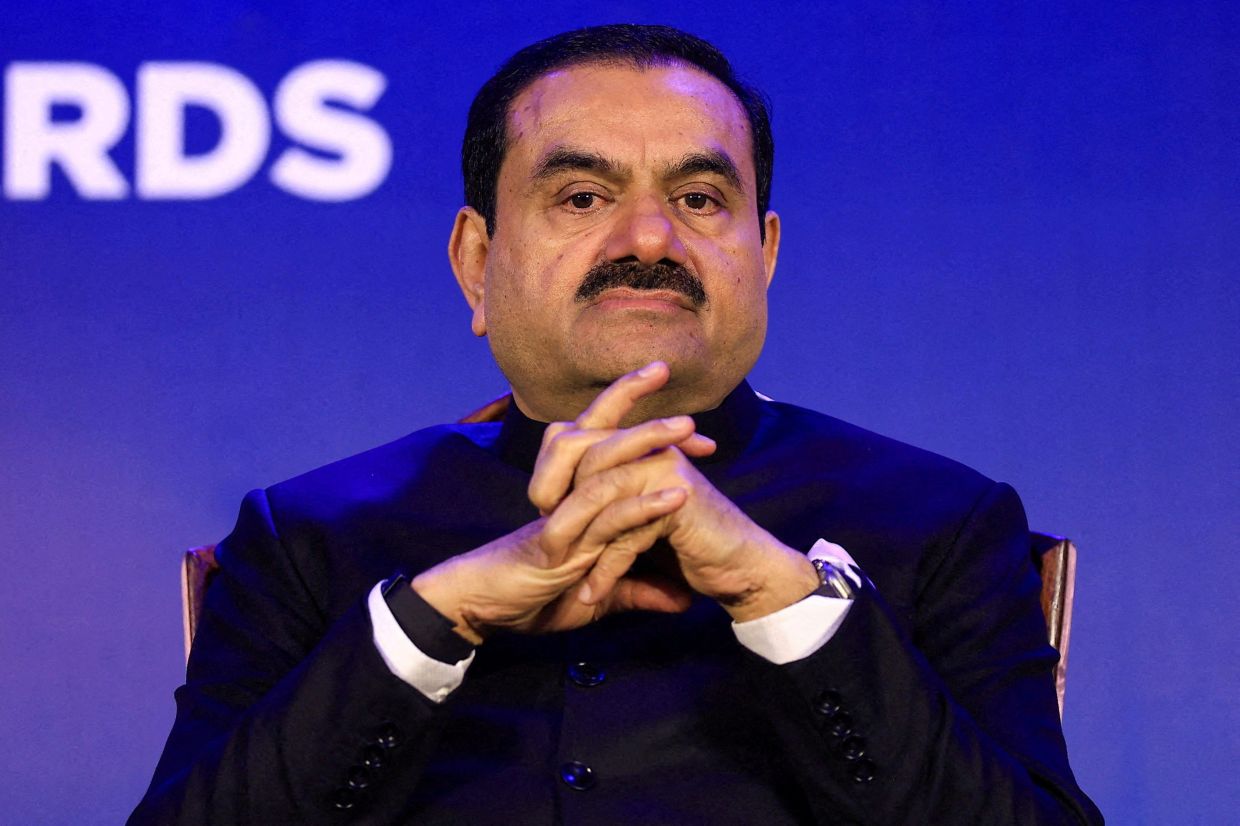
The legal representatives of Gautam Adani, one of India's most prominent business tycoons, have formally requested that a Brooklyn-based federal court dismiss all criminal charges against the billionaire entrepreneur. The request, filed on Wednesday before US District Judge Nicholas Garaufis, comes on the heels of a significant development: the US Justice Department announced in May that it would cease pursuing the case against Adani and his co-defendants, marking a major turning point in what had been a high-profile international prosecution.
Adani faced allegations that originated in 2024 concerning a scheme involving bribery of Indian government officials. According to the charges, the businessman allegedly orchestrated payments to secure regulatory approval for a solar power plant development project under the auspices of his diversified Adani Group conglomerate. Beyond the alleged bribery arrangement itself, prosecutors claimed that Adani had engaged in securities fraud by providing misleading assurances to American investors regarding his company's commitment to anti-corruption compliance and governance standards.
The defense strategy articulated by Robert Giuffra, Adani's principal attorney, rested on two foundational arguments designed to persuade the judge that the charges lacked legal merit. First, Giuffra contended that US courts lacked proper jurisdiction over the matter, asserting that the alleged criminal conduct fell outside the legitimate reach of American legal authority. Second, the defense argued that the government would face insurmountable evidentiary barriers in attempting to prove the bribery allegations that ostensibly occurred within India, where the transactions and interactions had taken place.
Throughout the legal proceedings, Adani Group has maintained an unambiguous position of categorical denial, asserting that the organization and its leadership have committed no wrongdoing whatsoever. This steadfast defense posture has remained consistent despite the initiation and continuation of the prosecution, signaling the company's confidence in its legal position and commitment to clearing its reputation in international markets.
For the criminal charges to be formally removed from the docket, Judge Garaufis must grant his judicial approval for the dismissal motion. The judge's signature on the dismissal order would represent the final procedural step in what has become an increasingly favorable trajectory for Adani in the US legal system, effectively ending the government's criminal pursuit of the billionaire.
According to Giuffra's written submission to the court, the Justice Department's decision to abandon the indictment represented the culmination of prolonged negotiations. The attorney emphasized that months of detailed and comprehensive communications, coupled with formal meetings between prosecutors and the defense counsel representing Adani and his co-defendants, preceded the government's prosecutorial decision. This suggests that the withdrawal was not impulsive but rather the product of careful deliberation and extensive dialogue between legal teams.
Beyond the criminal proceedings, Adani's defense team has also moved to resolve the parallel civil enforcement action launched by the US Securities and Exchange Commission. Giuffra requested that the judge formally dismiss the SEC's civil charges, noting that a settlement framework had already been negotiated between the regulator and the defendants. Under the terms of this settlement agreement, Gautam Adani himself has agreed to contribute US$6 million toward the resolution, while his nephew Sagar Adani, who was also implicated in the SEC case, has committed to paying US$12 million.
The financial dimensions of Adani's legal exposure extend beyond the SEC settlement. Adani Enterprises Limited, the group's flagship publicly traded company, has separately engaged in settlement negotiations with the US Treasury Department regarding alleged violations pertaining to sanctions imposed on Iran. The company has agreed to remit US$275 million to federal authorities to resolve these sanctions compliance violations, representing a substantial financial penalty that underscores the seriousness with which American authorities treated the regulatory breaches.
This cascade of legal developments carries significant implications for the Adani Group's standing in international markets and its ability to access American capital markets. The withdrawal of criminal charges removes the most severe reputational threat facing the conglomerate, particularly given that conviction on fraud charges would have devastated investor confidence and potentially triggered cascading commercial consequences across the group's diverse business holdings. For Malaysian investors and companies operating across Southeast Asia with ties to Indian markets or entities involved in cross-border infrastructure development, the Adani case serves as a cautionary reminder of the extraterritorial reach of US enforcement authorities and the importance of maintaining robust compliance frameworks, particularly around sanctions and anti-corruption obligations.
The resolution of these matters, contingent on the judge's formal approval, would allow the Adani Group to transition from an extended period of regulatory scrutiny and reputational uncertainty toward greater stability. However, the company's reputation in certain international circles, particularly among development institutions and ESG-focused investors, may require considerable time to rehabilitate, even following formal legal vindication. The case underscores the complex intersection of Indian domestic governance, American jurisdictional authority, and international business practices that increasingly characterizes global commerce.

