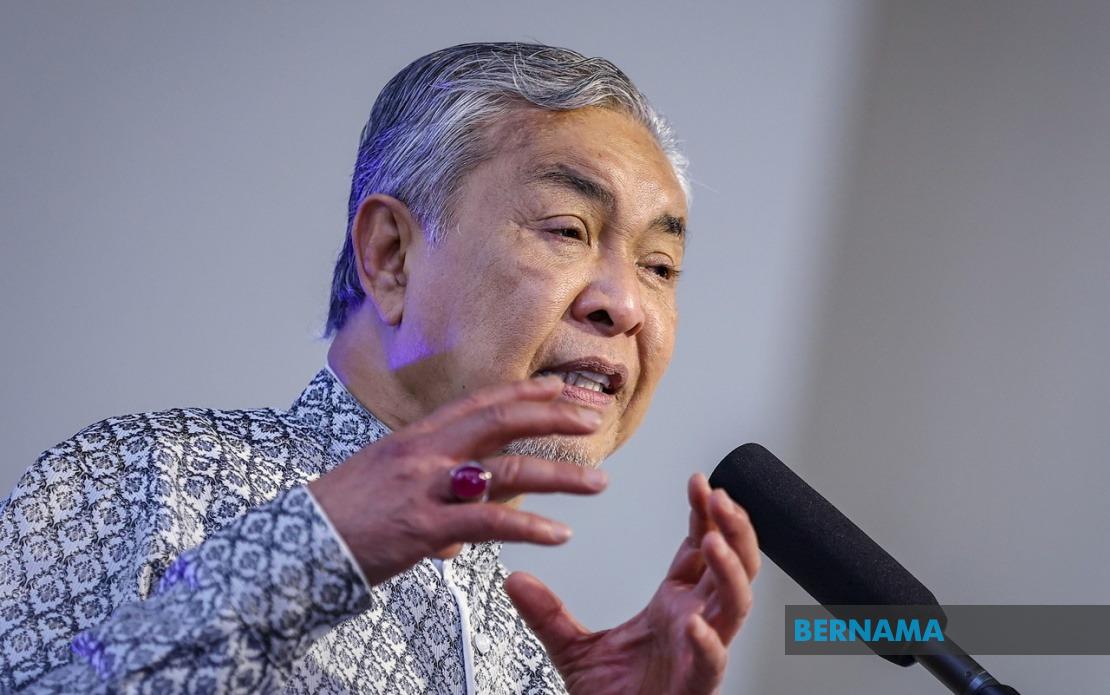
Barisan Nasional chairman Datuk Seri Dr Ahmad Zahid Hamidi has called on rival political parties to refrain from dredging up old, irrelevant issues during the ongoing Johor state election campaign, stressing the need for a more mature and dignified political dialogue. The Deputy Prime Minister's remarks underscore an apparent tension within Malaysia's coalition politics, where parties that cooperate at federal level must compete fiercely in state contests, creating potential friction over historical grievances and past political disputes.
Speaking after a community event in the Kempas state constituency on July 3, Ahmad Zahid stressed that campaigning should concentrate on the positive qualities and policy offerings of candidates rather than raking over unresolved controversies from previous political conflicts. His intervention signals BN's concern that certain rival parties—despite sharing governmental responsibilities in Kuala Lumpur—may attempt to exploit lingering resentments to gain electoral advantage in what is shaping up to be a highly competitive state poll.
The timing of Ahmad Zahid's appeal carries particular significance given the complex political alignments in Malaysian federalism. Several parties competing in the Johor election simultaneously hold ministerial positions and parliamentary seats as part of the federal government coalition. This reality creates an unusual dynamic where political opponents are also institutional colleagues, meeting regularly in Cabinet sessions and coordinating on national policy matters. Ahmad Zahid explicitly referenced this awkward situation, expressing concern that introducing controversial historical issues into the state campaign could poison working relationships at the federal level and create discomfort among leaders who must continue collaborating on national governance.
While appealing for campaign restraint, Ahmad Zahid simultaneously sought to temper perceptions of BN overconfidence heading into the July 11 polling. The coalition has repositioned itself as the underdog despite holding the state government, citing significant demographic shifts in Johor's electoral landscape that have fundamentally altered the political terrain since the previous state election. He emphasized that BN cannot take victory for granted and must substantially improve on its previous performance of securing 40 seats to ensure another strong mandate.
The demographic transformation Ahmad Zahid highlighted reflects a broader challenge facing Malaysian political parties across the country. More than half of Johor's voters are now young people, a cohort that often displays different political preferences and priorities compared to older generations. This generational shift has implications not just for Johor but for how all political parties must recalibrate their messaging and policy platforms to remain relevant to an increasingly youthful electorate.
In response to these demographic realities, BN has structured its state manifesto around issues directly addressing youth concerns. Menteri Besar Datuk Onn Hafiz Ghazi's platform places particular emphasis on employment opportunities and skills development, recognizing that young voters prioritize economic security and career advancement. The coalition is promoting Technical and Vocational Education and Training programs as a pathway to meaningful employment, reflecting a strategic focus on developing a skilled workforce capable of accessing higher-wage positions in Johor's economy.
Ahmad Zahid cited recent labour market improvements as evidence that economic conditions are moving in the right direction, noting that the national unemployment rate has declined to 2.9 per cent. However, he acknowledged that aggregate employment figures mask persistent concerns among young people seeking quality jobs that offer genuine long-term career prospects and competitive compensation. Simply reducing unemployment numbers, the BN chairman suggested, is insufficient if workers cannot access positions that provide sustainable income growth and professional development opportunities.
The emphasis on technical and vocational training within BN's Johor manifesto reflects a broader policy direction being promoted at both state and federal levels. These programs are presented as offering young voters concrete pathways to acquiring valuable skills that employers actively seek, potentially commanding premium wages in specialized sectors. By centering skills development in its campaign messaging, BN seeks to demonstrate that it offers substantive solutions to youth economic anxieties rather than relying primarily on traditional patronage or party loyalty appeals.
Ahmad Zahid's direct appeal to young Johor voters represents an acknowledgment that securing their support will be decisive in determining the election outcome. Given that more than half the electorate falls into this demographic category, any party that fails to mobilize younger voters effectively faces serious electoral consequences. The coalition's strategy of presenting concrete, youth-focused policy proposals rather than abstract ideological appeals suggests BN believes this cohort responds to practical governance offerings addressing their immediate needs.
The 16th Johor state election involves all 56 seats in the state assembly, making it a comprehensive test of BN's electoral standing in a strategically important region that has long served as a political bellwether. The fact that BN is contesting every single seat demonstrates the coalition's determination to achieve complete control of the state legislature and sideline rival political groupings entirely. Early voting is scheduled for July 7, with the main polling day following four days later.
For Malaysian observers monitoring federal-state political dynamics, the Johor contest offers valuable insights into how coalition politics operates under pressure. Ahmad Zahid's appeal for campaign restraint essentially asks competing parties to compartmentalize their rivalry—maintaining cooperation at federal level while competing intensely in state contests without weaponizing historical disputes. Whether this appeal achieves its intended effect remains to be seen, but his public statement reflects awareness that modern Malaysian politics requires navigating complex institutional arrangements where the same political actors must cooperate and compete simultaneously.

