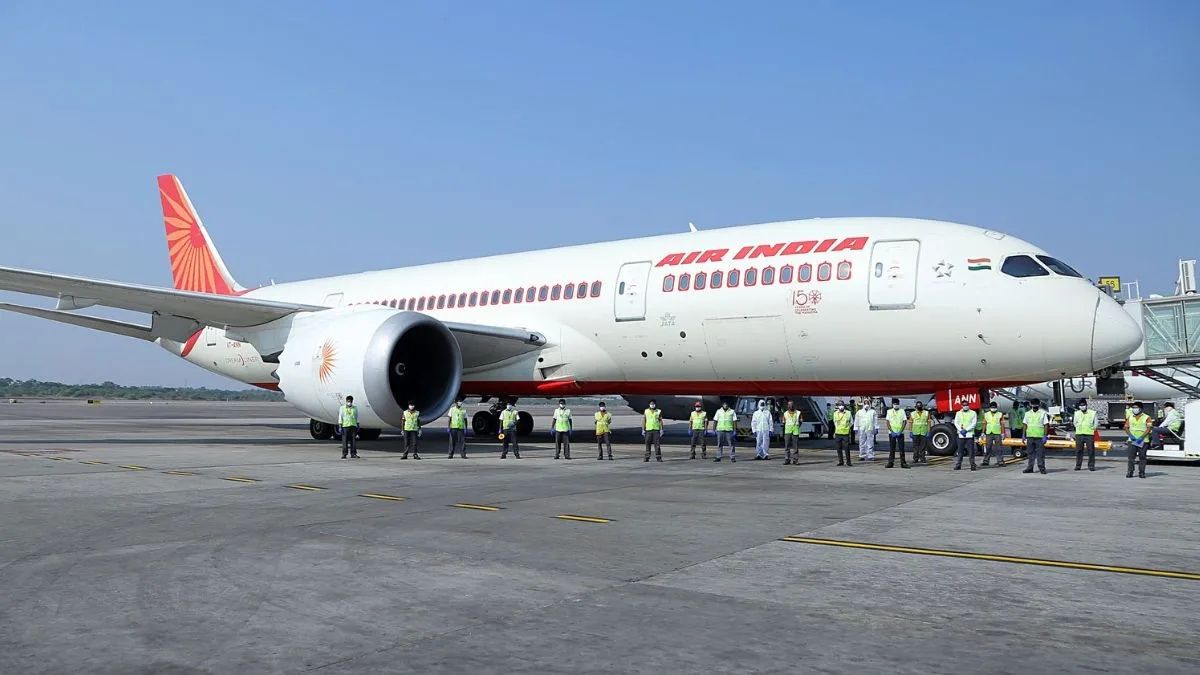
An Air India Airbus A321 operating the Delhi-Amritsar route inadvertently crossed into Pakistani airspace on Monday night after suffering a navigation system failure, according to official sources who confirmed the incident on Wednesday. The aircraft, operating as Flight AI-463, was safely guided back to Indian territory following an alert from Pakistani Air Traffic Control and eventually landed in Amritsar, though not before experiencing significant operational complications that delayed its arrival by nearly four hours.
The flight departed from Delhi's Indira Gandhi International Airport at 9.18pm on Monday, June 22, embarking on what should have been a routine domestic service covering the approximately 450-kilometre distance between the capital and the holy city. However, minutes into its northwesterly journey, the aircraft encountered a technical malfunction affecting its onboard navigation systems, disrupting the guidance mechanisms that typically keep the aircraft on its designated flight path. The resulting navigational error caused the aircraft to drift westward, gradually moving across the International Border and into airspace controlled by Pakistan.
The intrusion was quickly detected by Pakistani air traffic authorities monitoring their assigned airspace. Rather than taking adversarial action, Pakistan's ATC immediately coordinated with the Indian flight crew to alert them to the breach. According to a senior airport official speaking anonymously, the pilots responded swiftly upon notification, immediately correcting their course and guiding the aircraft back across the International Border into Indian territory. This swift coordination between air traffic control services on both sides of the border, despite historically tense relations between the two nations, underscores the professional protocols that exist within the aviation community to ensure flight safety above political considerations.
The deviation and subsequent correction represented only the first of several complications the flight would face that evening. As the aircraft approached Sri Guru Ram Dass Jee International Airport in Amritsar around 10.30pm, local air traffic controllers informed the flight crew that the airspace was experiencing significant congestion. Combined with the lack of an available landing slot and broader operational constraints at the airport, controllers made the decision to divert the flight back to Delhi rather than hold it in a prolonged holding pattern, which would consume additional fuel and time.
The return journey to the national capital added approximately 900 kilometres to the flight's operating distance and more than two hours to passenger journey time. Upon arrival in Delhi, the aircraft underwent a technical inspection to assess the extent of the navigation system failure and determine what repairs or recalibrations were necessary before it could safely resume service. Following the completion of these inspections and receipt of operational clearances from relevant authorities, Flight AI-463 departed Delhi once again and finally touched down in Amritsar at approximately 2.20am on Tuesday morning, completing its journey nearly four hours behind schedule.
Neither Air India nor India's Directorate General of Civil Aviation has issued a detailed public statement regarding the specific nature of the navigation system malfunction. The incident has instead prompted aviation authorities to conduct a thorough investigation into the technical circumstances that led to the route deviation, an examination that will likely examine the aircraft's inertial navigation system, global positioning capabilities, and related avionics. Such investigations are standard procedure in commercial aviation and serve to identify systemic issues, maintenance gaps, or design deficiencies that could potentially affect other aircraft in the fleet.
The incident occurs within a broader context of occasional airspace incursions across South Asia, where mountainous terrain, challenging weather patterns, and dense air traffic sometimes create conditions requiring heightened coordination between neighbouring nations. Just one month prior to this Air India occurrence, a Pakistan International Airlines flight briefly entered Indian airspace during adverse weather conditions before Indian air traffic controllers successfully guided it back to its designated route. These incidents, while typically resolved without major consequence through professional coordination protocols, highlight the ongoing technical and operational challenges facing aviation operations throughout the region.
For Malaysian and Southeast Asian observers, the incident serves as a reminder of the critical importance of maintaining robust aviation safety standards and inter-country coordination mechanisms, even amid diplomatic tensions. The professionalism demonstrated by Pakistani and Indian air traffic control services in managing this navigational emergency reflects the universal commitment to passenger safety that transcends national boundaries. As the region continues developing its airspace infrastructure and handling increased passenger traffic, incidents such as this underscore the necessity for continuous investment in modern navigation technology, staff training, and standardised communication protocols.
The investigation into Flight AI-463's navigation system failure will provide valuable insights into the reliability and redundancy of aircraft navigation equipment currently in service across commercial fleets. Navigation system malfunctions, while not uncommon, require careful analysis to ensure that design improvements or maintenance protocols can prevent similar incidents. Given the critical importance of accurate navigation for safe flight operations, particularly in regions where airspace boundaries are sensitive geopolitical considerations, ensuring the highest standards of navigation system integrity remains a paramount concern for civil aviation authorities throughout South Asia and beyond.

