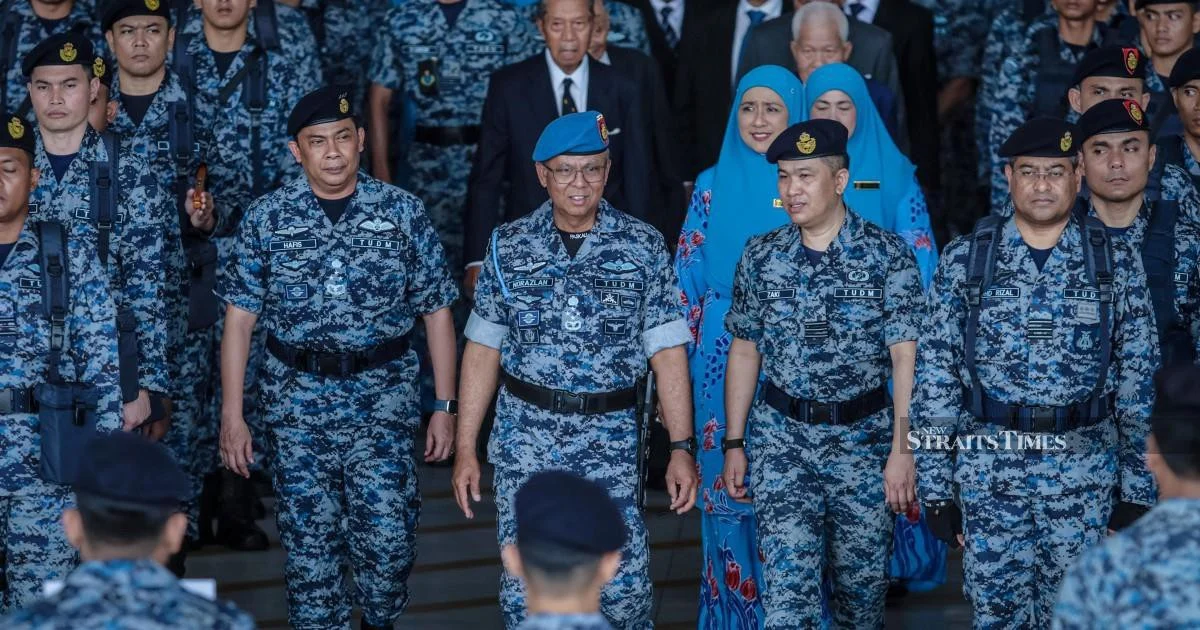
The Royal Malaysian Air Force (RMAF) chief, General Tan Sri Muhamad Norazlan Aris, has underscored the mounting importance of air-based defence systems in safeguarding Malaysia's extensive maritime interests as the regional security landscape grows more complex. Speaking at a defence forum in Subang, the senior military officer emphasised that traditional approaches to protecting the nation's shipping lanes and territorial waters require significant enhancement through modernised aerial capabilities to remain effective against contemporary threats.
Malaysia's dependency on its maritime routes extends far beyond domestic considerations. The country lies along some of the world's most strategically significant shipping corridors, including the Strait of Malacca, through which hundreds of billions of dollars in global trade pass annually. Any disruption to these waterways directly impacts not only the Malaysian economy but also the broader Southeast Asian region's economic stability. The RMAF chief's comments reflect growing recognition among defence strategists that conventional naval patrols alone cannot adequately secure these expansive ocean zones against the full spectrum of modern maritime threats, ranging from piracy to unauthorised surveillance activities.
General Tan Sri Muhamad Norazlan Aris highlighted how the evolving geopolitical environment in the Indo-Pacific region has created new security considerations that demand immediate attention. The presence of multiple naval powers operating in Southeast Asian waters, competing territorial claims, and increased military activities in the region have collectively elevated the strategic value of air defence capabilities. Air-based systems offer Malaysia the advantage of rapid response, extended surveillance coverage, and the ability to project protective presence across vast ocean areas with relatively fewer personnel compared to surface-based naval assets.
The emphasis on air power aligns with global defence trends where nations recognise aerial dominance as foundational to maritime security. Modern fighter aircraft, maritime patrol planes, and advanced radar systems provide capabilities that traditional surface vessels cannot replicate alone. For a maritime nation like Malaysia, which depends on international trade and fishing resources, maintaining credible air surveillance and defence systems serves as a deterrent to potential incursions and enables rapid identification of suspicious maritime activities.
The RMAF's strategic positioning reflects Malaysia's broader security architecture. Unlike larger nations with extensive naval fleets, Malaysia's approach emphasises leveraging air power to achieve force multiplication—using limited resources to maintain presence and protection across disproportionately large geographic areas. This doctrine becomes increasingly relevant as defence budgets face constraints while security responsibilities expand. Advanced aerial platforms equipped with long-range surveillance capabilities can monitor maritime zones spanning thousands of square kilometres from singular operational bases, a cost-effectiveness proposition that resonates with military planners facing budgetary limitations.
Regional developments have intensified these security considerations. The rise of unmanned aerial systems, evolving maritime trafficking patterns, and the potential for asymmetric threats all demand sophisticated air-based response mechanisms. The RMAF chief's statement represents not merely a call for increased military spending but a recognition that Malaysia's defence posture must evolve to address 21st-century maritime security challenges that differ substantially from historical maritime defence scenarios. The strategic value of maintaining credible air capabilities thus transcends military considerations to encompass economic security and national interests.
Integrating air power into maritime security strategies requires substantial investment in both platform acquisition and personnel training. Modern aerial defence systems demand sophisticated technical expertise, maintenance infrastructure, and continuous modernisation to remain relevant against advancing threats. The RMAF's advocacy for enhanced air power capabilities implicitly acknowledges these investment requirements and positions them as essential expenses rather than discretionary military expenditure.
Furthermore, effective air-based maritime protection demands robust coordination between military services and civilian maritime authorities. Information sharing, integrated command structures, and harmonised operational procedures enhance the effectiveness of air surveillance and defence systems. Malaysia's maritime security effectiveness depends not solely on aircraft quantity but on the integrated systems that enable rapid information dissemination and coordinated response to emerging threats across its vast maritime zones.
For Malaysian stakeholders, particularly shipping companies and trading enterprises that depend on maritime routes, the RMAF chief's emphasis on air power carries direct implications. Credible air defence capabilities contribute to maritime security perceptions that influence insurance costs, shipping route selections, and overall confidence in regional stability. When potential threats perceive adequate air-based defence systems, they become less likely to attempt incursions or interference with legitimate maritime commerce. The economic benefits of enhanced maritime security through air power thus extend well beyond military calculations into broader commercial and financial considerations.
The general's remarks also underscore Malaysia's role within the broader Southeast Asian context. As a primary user of critical maritime corridors, Malaysia's capacity to maintain secure sea lanes benefits not only its own economy but also contributes to regional stability that supports trade and prosperity across Association of Southeast Asian Nations member states. Enhanced air-based maritime defence capabilities thus represent a contribution to regional security architecture and collective prosperity.
Moving forward, the RMAF's priority on air power modernisation will likely influence defence procurement decisions and military strategic planning. The challenge ahead involves balancing these expanded air-based requirements against competing development priorities and budgetary constraints. Nevertheless, the clear articulation by Malaysia's top air force officer that aerial capabilities remain critical for maritime protection suggests that air power enhancement will remain a focal point in national defence strategy deliberations.