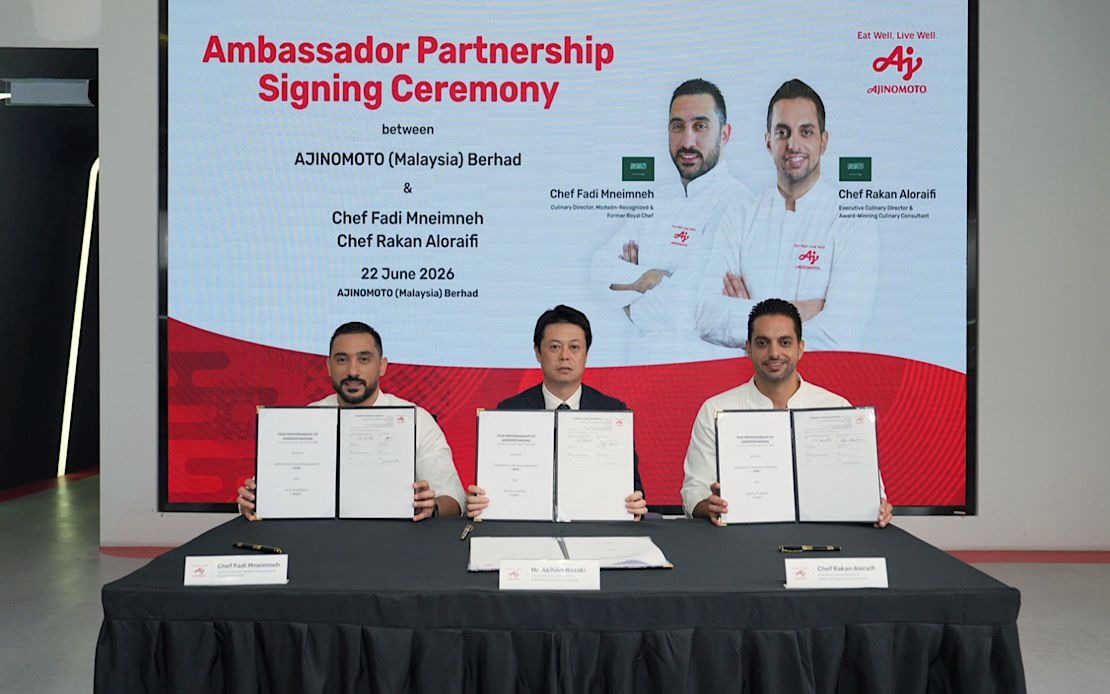
Ajinomoto (Malaysia) Berhad is intensifying its push into Middle Eastern markets by collaborating with two of Saudi Arabia's most respected culinary figures, signalling a strategic shift towards leveraging influential personalities as gatekeepers to the region's lucrative food service sector. The partnership, unveiled in Kuala Lumpur on June 25, pairs the Malaysian food giant with Chef Fadi Mneimneh and Chef Rakan Aloraifi, whose combined prominence in Middle Eastern gastronomy positions them as valuable ambassadors for the company's halal-certified product range. This move reflects broader industry recognition that securing endorsements from respected culinary professionals can dramatically accelerate market penetration in regions where traditional advertising holds less sway than peer recommendations and culinary innovation.
The collaboration carries particular significance given the explosive growth of the halal food sector across the Gulf Cooperation Council nations. Saudi Arabia and its neighbours represent some of the world's most dynamic markets for premium food products, driven by rising consumer incomes, expanding hospitality sectors, and increasingly sophisticated tastes among urban middle-class populations. By partnering with chefs who command respect among both established restaurants and hospitality decision-makers, Ajinomoto is positioning itself to capture market share not just among consumers but among the critical HORECA—hotel, restaurant and café—segment that drives bulk purchasing decisions. The strategy sidesteps conventional marketing in favour of demonstrating product value through the lens of culinary artistry and authentic regional cuisine.
Chef Fadi's credentials as a Michelin-starred culinary director and former royal chef lend particular weight to the partnership. His association with royal households suggests connections to the Gulf's wealthiest and most influential circles, while his Michelin recognition signals international credibility that resonates with Saudi Arabia's aspirational food culture. Similarly, Chef Rakan's portfolio as an award-winning executive director and culinary consultant indicates deep integration into the region's food and hospitality infrastructure. Together, they embody the twin appeals of tradition and modernity—the royal connection speaks to heritage and prestige, while their advisory roles in contemporary culinary trends signal innovation. This combination allows Ajinomoto to position itself not as a foreign corporation selling commodity ingredients, but as a partner in the Middle Eastern culinary renaissance.
The centrepiece of the initiative involved hosting the two chefs at Ajinomoto's manufacturing facility in Bandar Enstek, Negeri Sembilan, a deliberate choice designed to build confidence in the company's halal standards and quality control processes. By inviting influential figures to witness firsthand the rigorous standards governing production, Ajinomoto addressed a critical concern for Middle Eastern importers and distributors: assurance that products meet both regulatory halal requirements and the exacting standards expected by premium establishments. The factory visit functioned simultaneously as quality assurance verification and as an educational experience introducing the chefs to the deeper science behind umami—the savoury taste profile that has become central to Ajinomoto's global marketing narrative. This approach transforms a commercial pitch into a culinary education session, elevating the partnership beyond transactional arrangements to something more intellectually substantive.
The live culinary demonstrations that followed showcased the practical application of umami principles within Middle Eastern cooking traditions. By preparing authentic regional dishes enhanced with Ajinomoto products, the chefs demonstrated that Japanese-inspired umami flavouring could complement rather than compete with established Middle Eastern taste profiles. This is not a trivial point: food cultures in the Middle East carry deep historical and religious significance, and consumers can resist foreign flavour innovations perceived as threatening authenticity. The demonstrations directly addressed this resistance by showing how umami enhancement preserves and amplifies existing flavour profiles, adding depth without requiring abandonment of traditional recipes. For restaurant chefs and food service operators evaluating whether to integrate Ajinomoto products into their operations, witnessing this integration firsthand from respected culinary authorities provides both permission and inspiration.
The initiative also included participation from Ajinomoto's distributor representative in Brunei, expanding the networking dimension beyond Saudi Arabia to encompass the broader Southeast Asian and regional trading community. This suggests the company views the Saudi partnership not in isolation but as a cornerstone of a broader regional strategy that acknowledges the interconnected nature of food service supply chains and professional networks across Asia-Pacific and the Middle East. Brunei's inclusion reflects the sultanate's role as both a significant halal food importer and a cultural bridge between Southeast Asia and the Islamic world, making its distributor networks valuable for amplifying the initiative's reach across multiple markets simultaneously.
Ajinomoto's announcement of plans to collaborate with the two chefs at HORECA events scheduled for October 2026 in Riyadh and Jeddah indicates this partnership is designed for sustained engagement rather than a single promotional moment. The HORECA platform targets procurement decision-makers, executive chefs, and hotel operations managers—the precise audience whose purchasing choices determine whether Ajinomoto products gain shelf space and menu prominence across the region's premium hospitality establishments. By securing the chefs' participation in these major industry gatherings, Ajinomoto gains not just audience access but the credibility-enhancing association of prominent culinary figures endorsing the company's offerings to their professional peers. This is particularly valuable in a regional market where personal relationships and professional reputation carry substantial weight in business decision-making.
The broader strategic context reveals why Ajinomoto is prioritizing Middle East expansion at this particular moment. The company occupies a mature market position in Southeast Asia and faces intensifying competition in core Asian markets. By contrast, the Gulf states represent growth markets with substantial purchasing power, expanding food service sectors, and increasing demand for premium food products among rapidly urbanizing populations. The region's commitment to halal certification standards aligns perfectly with Ajinomoto's existing compliance frameworks and quality certifications, reducing the adaptation costs typical of market entry initiatives. Moreover, Middle Eastern consumer preferences increasingly favour products with established international credentials and celebrity endorsements, playing directly into the company's partnership strategy with recognized culinary figures.
For Malaysia more broadly, Ajinomoto's positioning of itself as a beacon of halal manufacturing excellence carries diplomatic and economic implications. The company's strategy to showcase Bandar Enstek facilities and Malaysian halal standards to influential Middle Eastern figures subtly reinforces Malaysia's brand as the world's trusted halal centre. When Saudi chefs return home and reference Malaysian manufacturing quality and halal integrity in their professional circles and media appearances, they function as unpaid ambassadors for Malaysian brand reputation. This spillover effect strengthens Malaysia's competitive position in halal food exports—a sector where the country has invested substantially in branding and regulatory infrastructure. Ajinomoto's successful Middle East expansion thus becomes a case study in how Malaysian companies can leverage country-of-origin advantages within the expanding global halal economy.
The partnership also illustrates evolving patterns in food industry marketing and business development within Islamic-majority markets. Rather than generic advertising campaigns or trade show presence alone, multinational food companies increasingly recognize that credibility with Middle Eastern hospitality sectors flows through respected culinary professionals whose recommendations carry weight among peers and consumers alike. This represents a departure from conventional marketing models in developed Western markets, where brand awareness and mass-market positioning drive purchasing decisions. In the Middle Eastern context, where food culture remains deeply connected to heritage, religious observance, and family tradition, the endorsement of a respected chef carries substantially more persuasive force than corporate claims. Ajinomoto's strategy aligns its business development approach with these regional norms rather than attempting to impose external marketing frameworks.
Looking ahead, the success of this partnership will be measurable not just in immediate sales figures but in whether Ajinomoto products secure integration into premium restaurants and hotel chains across Saudi Arabia and neighbouring Gulf states. The company has created a framework where influential culinary figures function as both validators of product quality and as educators introducing umami principles and modern flavour science to Middle Eastern audiences. If this model proves effective—as the October 2026 HORECA event outcomes will demonstrate—Ajinomoto may expand similar culinary partnerships to other growth markets globally, establishing a template where celebrity chef endorsements and hands-on factory exposure replace or complement conventional trade marketing. For Malaysian food manufacturers observing this initiative, Ajinomoto's approach offers valuable lessons in how traditional export models can evolve to capture growing consumer sophistication and the outsized influence wielded by culinary influencers in determining which ingredients and products become industry standards.

