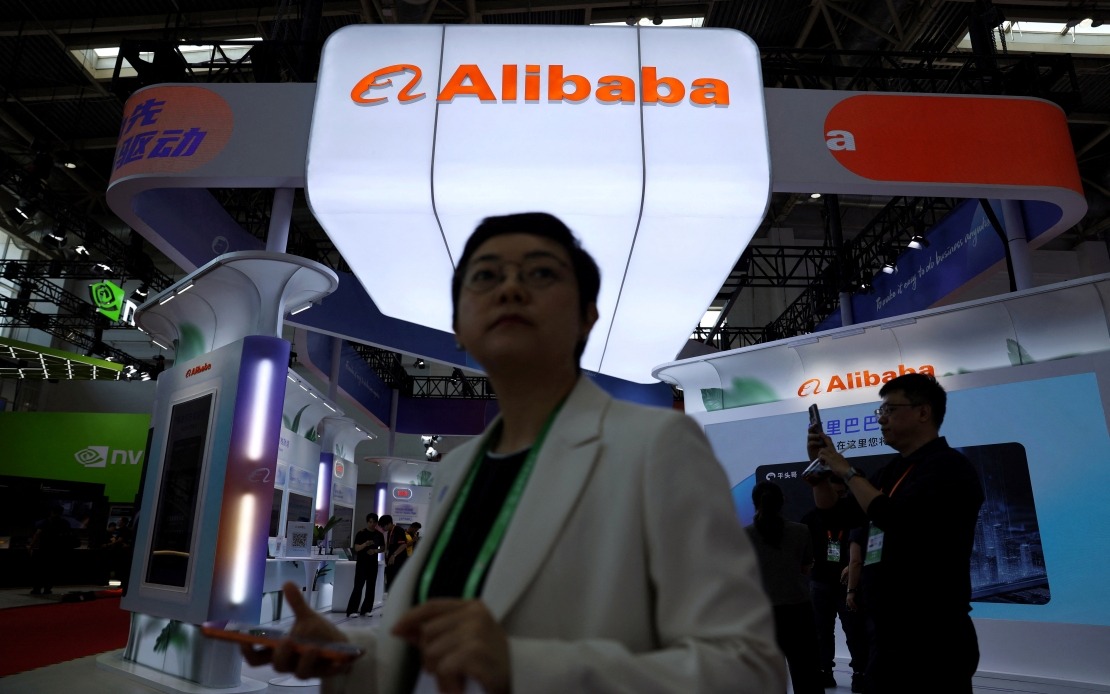
Alibaba has escalated its dispute with Washington by filing a formal lawsuit contesting the Pentagon's classification of the company as part of China's military-industrial complex. The court filing, made public on Tuesday, represents a significant pushback against a sweeping policy decision that fundamentally threatens the Chinese technology conglomerate's operations and relationships in the United States.
The designation, announced in June by the US Department of Defense, placed Alibaba alongside 187 other companies deemed to have military connections or affiliations with China's defence apparatus. The list included other major Chinese enterprises such as Tencent Holdings and automaker BYD, signalling a broadening American strategy to restrict technology and investment flows from entities with perceived military links. For Alibaba, one of the world's most valuable and influential digital platforms, the inclusion represented a damaging assertion that could trigger severe commercial and financial consequences.
In its legal filing, Alibaba's attorneys mounted a vigorous defence of the company's civilian nature and independent governance structure. The company emphasised that its board of directors operates independently without military representation, undercutting the Pentagon's implicit argument that military interests exercise hidden control over the firm's strategic direction. This governance argument strikes at the heart of American concerns about potential state or military influence over Chinese companies operating in sensitive sectors.
Alibaba further contended that the breadth of its business operations—spanning e-commerce, cloud computing, logistics, and enterprise software—serves only civilian and commercial purposes. The company highlighted that its suite of products and services exclusively targets retail customers, supply chain operators, and corporate information technology functions. This commercial positioning directly contradicts any characterisation of military purpose or application, the company's legal team argued.
The firm also pointed to its own internal policy architecture as evidence of its commitment to civilian use only. Alibaba disclosed that contractual agreements and compliance frameworks explicitly forbid military applications of its technology and services. Moreover, the company asserted that it holds no military certifications or licences—credentials that would typically accompany genuine military-industrial involvement or government defence contracts in most regulatory frameworks.
For Malaysian and Southeast Asian business leaders and investors, Alibaba's legal challenge underscores the growing friction between American national security policy and global commerce. Many regional companies maintain significant operational ties with both American and Chinese technology ecosystems, and the Pentagon's increasingly expansive military company designations create complex compliance and investment dilemmas. The dispute demonstrates how geopolitical tensions can rapidly destabilise long-established commercial relationships and market access.
The Pentagon's June announcement adding 188 companies to its military-linked entities list represented an aggressive escalation in America's efforts to contain Chinese technological influence. By casting such a wide net across Alibaba and other major corporations, the US signalled a shift toward treating large Chinese technology companies as inherently intertwined with state and military interests, regardless of their stated civilian focus or international shareholder composition. This presumption reverses historical burden-of-proof arrangements and compels companies to affirmatively prove their innocence rather than allowing authorities to demonstrate guilty connections.
Alibaba's lawsuit raises fundamental questions about the transparency and evidentiary standards underpinning such designations. The company's argument that the determinations lack factual or legal basis suggests that the Pentagon's classification process may have proceeded without disclosing concrete evidence of military affiliation or operational overlap. For international investors and business partners evaluating engagement with Chinese technology platforms, such opacity creates substantial uncertainty about the sustainability of existing partnerships and the exposure to secondary American sanctions or restrictions.
The legal action also reflects Alibaba's strategic calculation that aggressive defence through American courts represents a viable path to protecting its interests. By filing suit in US federal court, the company implicitly acknowledges American legal authority while betting that judicial review will scrutinise the Pentagon's reasoning and potentially overturn or narrow the designation. This approach differs markedly from nationalist responses by other Chinese firms and signals confidence in American legal processes, at least within technology and commercial law domains.
Southeast Asian stakeholders should monitor this litigation closely, as its outcome could reshape how American authorities classify and restrict Chinese technology companies operating across the region. A successful Alibaba challenge might narrow the Pentagon's designation criteria, while a defeat could embolden further restrictions on other major Chinese tech platforms integral to regional digital infrastructure and e-commerce ecosystems. The precedent established here will likely influence American policy toward Chinese tech companies across cloud computing, artificial intelligence, and semiconductor sectors for years to come.

