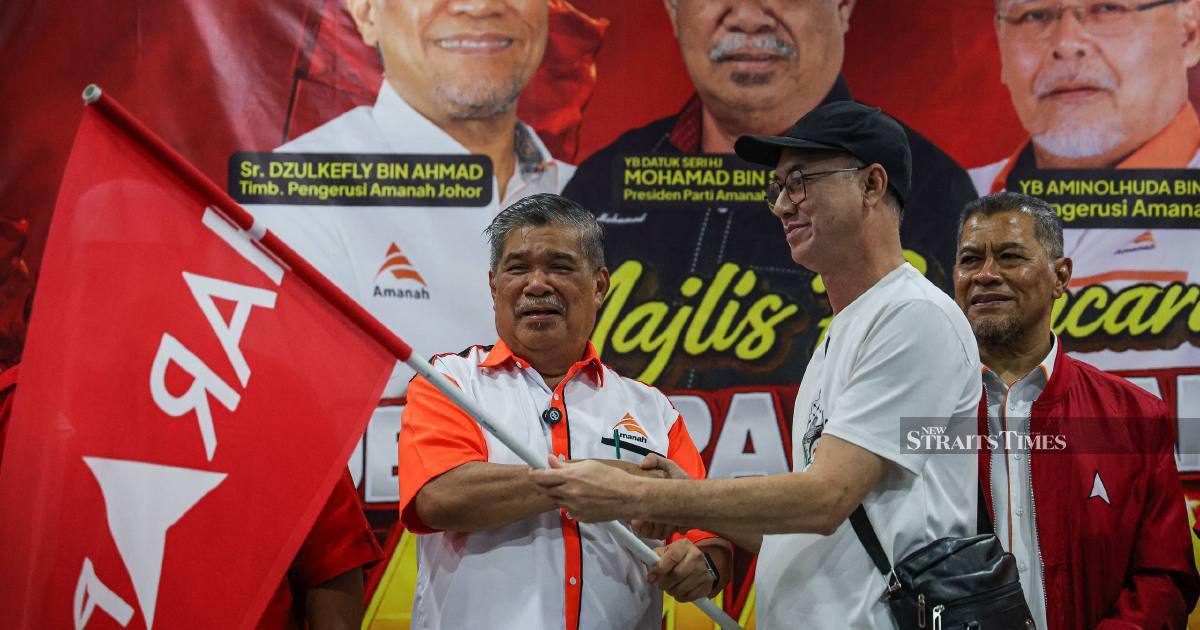
Amanah is adopting a generational refresh strategy for the upcoming Johor state election on July 11, announcing plans to field 13 new political faces across its slate of 19 candidates. The decision underscores the Islamic party's commitment to injecting fresh perspectives into its campaign while maintaining a core of experienced legislators, according to party officials.
The composition of Amanah's candidate list reflects broader patterns within Malaysian opposition politics, where parties balance the need for proven performers with demands from grassroots members for opportunities. With 13 newcomers representing approximately 68 per cent of the party's fielded candidates, Amanah is placing substantial bet on untested figures to drive its electoral message in Johor, Malaysia's second-largest state by population.
This approach carries both advantages and risks. New candidates often bring energy, community connections, and appeal to younger voters seeking alternatives to established political figures. However, they lack the institutional memory and voter recognition that typically benefit incumbents. For Amanah, which remains relatively junior within Malaysia's political landscape compared to larger parties, the newcomer strategy may help neutralise perceptions of a fixed or entrenched leadership class.
The party's decision to retain six sitting candidates suggests selective continuity, implying confidence in particular proven performers while signalling openness to turnover elsewhere. This mixed approach is common among parties seeking to project stability without appearing stale. In Johor's competitive political environment, where multiple coalitions and independent candidates typically compete, every seat matters substantially to overall performance.
Amanah's candidate deployment in Johor occurs within the broader context of Malaysian state elections, which have become crucial testing grounds for political coalitions ahead of potential federal ballots. Johor, traditionally a stronghold of larger parties, represents significant strategic territory for opposition forces. The state's political composition has shifted in recent years, creating openings that smaller parties like Amanah have sought to exploit through targeted candidate placement and coalition partnerships.
The party's emphasis on new candidates also reflects demographic realities within its support base. Amanah, which split from PAS in 2015, has cultivated support among urban professionals, younger voters, and communities seeking alternative Islamic political representation. Fielding younger, fresh candidates aligns with this constituency's expectations and may enhance the party's appeal to first-time and young voters in Johor constituencies.
Logistical and organisational challenges accompany expanding candidate recruitment. Training new candidates in campaign mechanics, media engagement, policy articulation, and grassroots mobilisation requires substantial party resources. Amanah's ability to prepare 13 newcomers effectively while maintaining campaign momentum will significantly influence electoral outcomes. The party's support structure—including internal training programmes, mentorship systems, and communication strategies—will be tested during what promises to be an intense campaign period.
Geographic distribution of these candidates across Johor's state constituencies will shape the party's electoral viability. Concentrating newcomers in certain districts while deploying experienced candidates in marginal or stronghold seats represents a common strategic calculation. Information about specific constituency assignments will provide clearer insight into Amanah's expectations regarding which races are winnable versus those framed as growth opportunities.
The broader coalition architecture in which Amanah operates also influences candidate dynamics. Whether the party contests independently, aligns formally with other opposition parties, or pursues selective seat-sharing arrangements affects candidate viability and voter perceptions. Johor's electoral history shows that fragmented opposition contests often benefit larger parties and incumbent governments, creating pressure for strategic coalitions that must accommodate multiple parties' candidate ambitions.
Amanah's candidate strategy intersects with wider questions about opposition unity and differentiation in Malaysian politics. The party occupies a distinctive political space—presenting itself as progressive on governance and social issues while maintaining Islamic credentials—that potentially attracts voters dissatisfied with both PAS's Islamist messaging and secular-oriented DAP. How effectively 13 new candidates communicate this distinctive positioning will influence their personal performance and the party's overall brand perception in Johor.
Electoral analysts will scrutinise whether Amanah's newcomer-heavy approach yields positive returns or proves counterproductive. Party performance relative to candidate experience levels provides data points for future electoral strategy calibration. If new candidates perform strongly, the strategy gains validation and may be replicated in future elections. Conversely, disappointing results might prompt reassessment favouring more experienced candidate rosters.
The July 11 election will ultimately measure not merely individual candidate quality but the coherence of Amanah's broader campaign narrative, coalition positioning, and organisational capacity. While newcomer candidates represent faces of party renewal, their success depends substantially on factors beyond their personal attributes—including party campaign resources, media coverage, voter sentiment towards incumbent government, and coalition dynamics that remain fluid in Malaysian politics.

