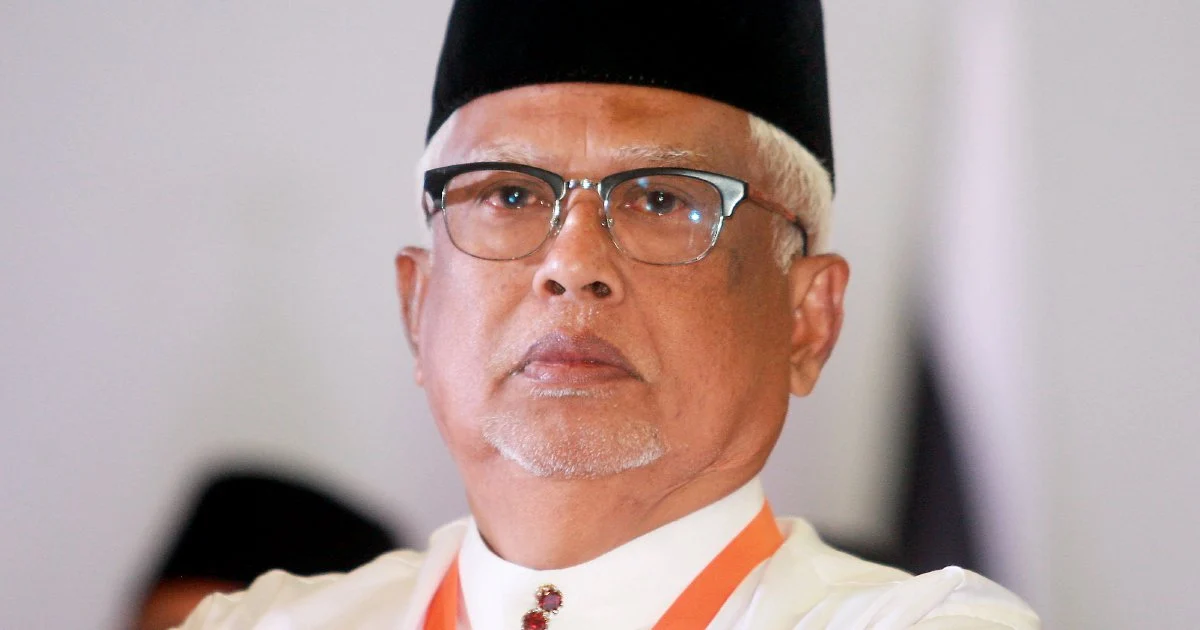
The fragile unity within Malaysia's Perikatan Nasional coalition faces fresh scrutiny after an Amanah leadership figure challenged Pas to justify its ongoing backing of Bersatu candidates in the Johor state election, even as the Islamic party has allegedly levelled serious accusations against the component partner. The intervention underscores deepening cracks in the PN alliance at a critical moment for state-level politics in the peninsula's southern region.
The political inconsistency flagged by Amanah reveals the growing complexity of managing coalition arrangements when member parties hold divergent interests and priorities. At stake is not merely the credibility of individual parties, but the broader stability of the PN bloc itself, which emerged as a formidable challenger to the ruling Barisan Nasional establishment. Observers have long questioned whether the ideologically diverse coalition—comprising Pas, Bersatu, and other smaller parties—possesses the structural cohesion needed to sustain unified action across multiple electoral cycles and state contests.
Pas, the largest component in PN by membership and grassroots organisation, wields considerable influence over coalition strategy and resource allocation. Its decision to field Bersatu candidates in Johor, despite public disputes with the party, signals either compartmentalised pragmatism or internal disagreement over alliance management. The choice to prioritise coalition unity over addressing grievances creates an awkward optic, particularly if the allegations are substantive matters affecting public interest or party organisational integrity.
Bersatu's role within PN remains contested. As the party associated with Tan Sri Muhyiddin Yassin's premiership and subsequent political manoeuvres, it occupies a unique position straddling reformist and conservative elements. Its performance in state-level contests directly influences the coalition's ability to expand territorial control beyond its current strongholds in several peninsula states and East Malaysia. However, mounting complaints from PN partners suggest internal friction over resource-sharing and candidate selection processes.
The Johor election carries symbolic weight beyond state boundaries. The peninsula's largest state by population and economic output serves as a testing ground for PN's electoral machinery and grassroots mobilisation capacity. Results will inform calculations about the coalition's viability for a potential federal contest. Amanah's intervention signals that internal contradictions, if left unaddressed, could undermine PN's electoral performance by demoralising supporters and creating confusion about party positions on fundamental organisational matters.
Amanah itself occupies an unusual position within Malaysian politics as an Islamist-oriented party that competes with Pas for the Malay-Muslim voter segment while maintaining a more moderate ideological posture. Its decision to publicly challenge PN partners reflects either genuine principled concern or tactical positioning ahead of electoral contests. Either interpretation carries implications for coalition dynamics, as it establishes a precedent for component parties to publicly critique each other rather than resolving disputes through private channels.
The broader Malaysian electorate observes these internal coalition tensions with mixed reactions. Voters supportive of PN may interpret leadership clarity as essential for governance capacity, while others may view internal disagreements as signs of weakness or insincerity. The timing of Amanah's statement, whether deliberate or circumstantial, places pressure on Pas to articulate a coherent narrative that reconciles competing objectives without appearing evasive or dismissive of concerns raised by allies.
Historically, Malaysian political coalitions have struggled with sustainability when member parties prioritise narrow sectional interests over collective goals. The Barisan Nasional's decades-long dominance rested partly on clear hierarchy and discipline mechanisms, though these ultimately proved insufficient against mounting voter dissatisfaction. Perikatan Nasional, positioned as an alternative arrangement, must demonstrate superior management capacity to justify its claim as a progressive force in Malaysian politics.
The allegations referenced by Amanah remain somewhat opaque in public discourse, reflecting a pattern where serious organisational disputes are often euphemistically described in statements from political leaders. Transparency regarding specific grievances would enable broader assessment of whether concerns are substantive matters requiring correction or manifestations of ordinary political disagreement. The opacity itself becomes politically damaging, as it invites speculation and erodes public confidence in institutional processes.
Pas leadership now faces choices with cascading consequences. Public acknowledgment of grievances while maintaining alliance discipline requires sophisticated political messaging. Alternatively, dismissing Amanah's concerns risks further alienating coalition partners and suggesting that PN unity exists in name only. The Islamic party's response will signal whether the coalition operates as a genuine political alliance or functions primarily as an electoral vehicle for specific parties with minimal genuine integration.
Regionally, PN's internal stability influences perceptions of Malaysian political maturity and democratic health. Southeast Asian observers monitor whether Malaysian political entities can sustain complex multi-party arrangements without descending into factional conflict. International assessments of Malaysia's governance capacity partly reflect observers' impressions of ruling coalition functionality. Persistent internal tensions undermine efforts to project stability and competence required for investor confidence and institutional legitimacy.
Moving forward, PN component parties require mechanisms for resolving internal disputes without resorting to public confrontation that damages collective reputation. The Johor election outcome will partially determine whether PN's current configuration possesses sufficient cohesion for future ventures, or whether structural reforms and potential membership restructuring become necessary. Amanah's intervention, rather than representing isolated criticism, may signal the beginning of more extensive coalition realignment among PN partners.

