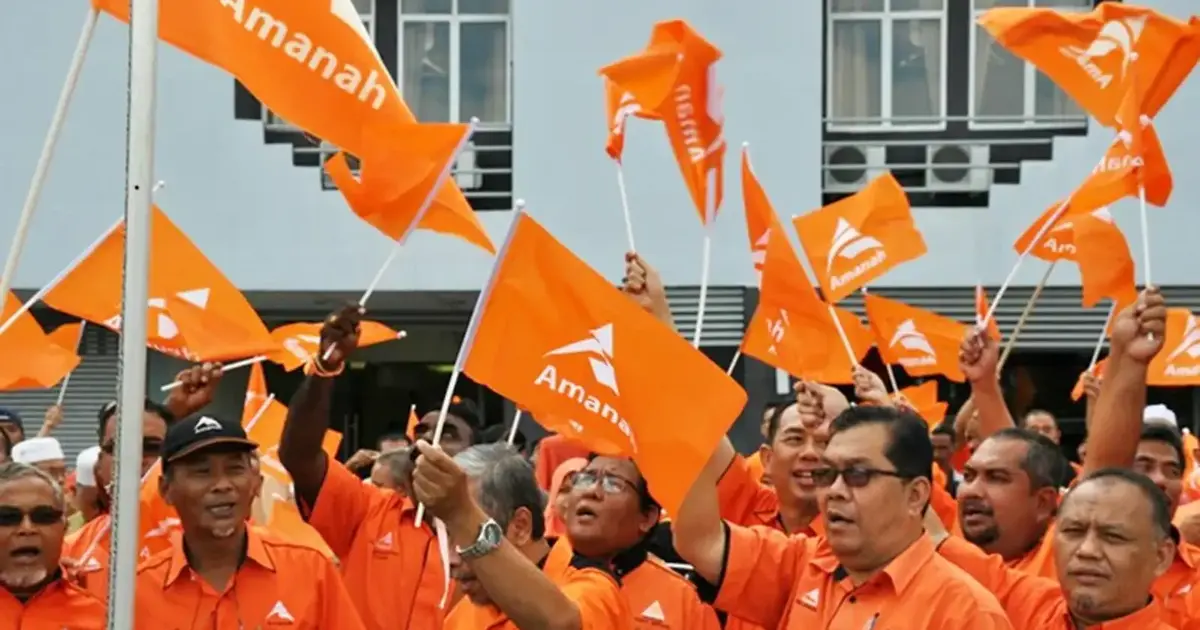
The Amanah party has committed to respecting Pakatan Harapan's determination on candidate selection for the Puteri Wangsa state assembly seat in Johor, shifting focus instead towards maximising the opposition coalition's parliamentary gains in the forthcoming election. This stance was articulated by Amanah secretary-general Faiz Fadzil, who underscored the party's pragmatic approach to seat negotiations within the broader opposition alliance.
Rather than contest PH's seat distribution decisions, Amanah is channelling its energy into a unified electoral strategy aimed at securing sufficient representation to establish a state administration following the Johor polls. The party recognises that internal wrangling over specific constituencies could fracture the coalition's voter appeal, particularly in a state where incumbent Barisan Nasional retains considerable organisational machinery and grassroots support.
For Malaysian political observers, this development reflects an evolving maturity within the opposition sphere, where component parties increasingly prioritise collective victory over individual territorial ambitions. Amanah's flexible position contrasts with pre-election disputes that have historically plagued PH partnerships, suggesting lessons learned from previous state-level campaigns where seat quarrels weakened campaign momentum and voter confidence.
The Puteri Wangsa constituency remains strategically significant within the broader Johor electoral map. Located in a district with mixed demographics spanning urban and semi-urban populations, control of this seat carries implications for which coalition ultimately claims enough state assembly seats to command a legislative majority. PH's choice for this particular constituency will likely reflect considerations around incumbent performance, demographic shifts, and candidate viability against BN opponents.
Amanah's accommodation of PH leadership on this matter also signals confidence in the coalition's broader strategic direction. By ceding discretion on Puteri Wangsa, the Islamic-oriented party demonstrates trust in PH's decision-making architecture whilst maintaining leverage over other contested seats. This quid-pro-quo approach has become characteristic of sophisticated multi-party coalitions operating within Malaysia's first-past-the-post electoral system.
The timing of this announcement carries weight given Johor's political significance. As Malaysia's second-most populous state and a traditional BN stronghold, Johor represents crucial testing ground for opposition credibility. Any PH government formed here would reshape the national political balance, potentially emboldening similar challenges in other BN-held states and complicating the federal administration's legislative agenda.
Regional implications also merit consideration. The Johor election result will reverberate across Southeast Asia's political capitals, where observers track Malaysia's democratic health and power transitions. A successful opposition consolidation in Johor would demonstrate that institutional alternation remains achievable despite incumbent advantages, whereas a decisive BN victory would reinforce perceptions of entrenched establishment control.
Amanah's flexibility does not imply unconditional surrender of party interests. Rather, it reflects calculated pragmatism: the party leadership has evidently determined that accepting PH's Puteri Wangsa judgment better serves overall electoral prospects than pursuing internal conflict. This calculation assumes that successful state government formation—wherein Amanah would likely secure ministerial portfolios—outweighs the symbolic value of contesting every available seat.
Faiz Fadzil's emphasis on maximising PH's seat count underscores the mathematical reality of Malaysian electoral politics. In a tight contest where each seat determines government formation, coalition harmony directly translates to voter mobilisation effectiveness. Voters grow fatigued by allegations of internal feuding and gravitate towards unified messaging, making Amanah's public unity demonstration strategically shrewd.
Looking forward, the outcome of Amanah's willingness to accommodate PH will offer lessons for future opposition coalitions across Malaysia. If this approach yields significant seat gains and eventual state government control, other PH component parties may adopt similar flexibility in subsequent elections. Conversely, should the coalition underperform despite internal cohesion, questions may resurface regarding whether rigid seat distributions best served party interests.
The Johor election thus becomes more than a state-level contest; it represents a test of whether Malaysian opposition politics can mature beyond factional competition towards sustained inter-party coordination. Amanah's stance suggests growing recognition that coalition management requires sacrifice and strategic patience from all constituent parties, a lesson increasingly important as electoral systems worldwide reward cohesive alliances over fragmented opposition movements.

