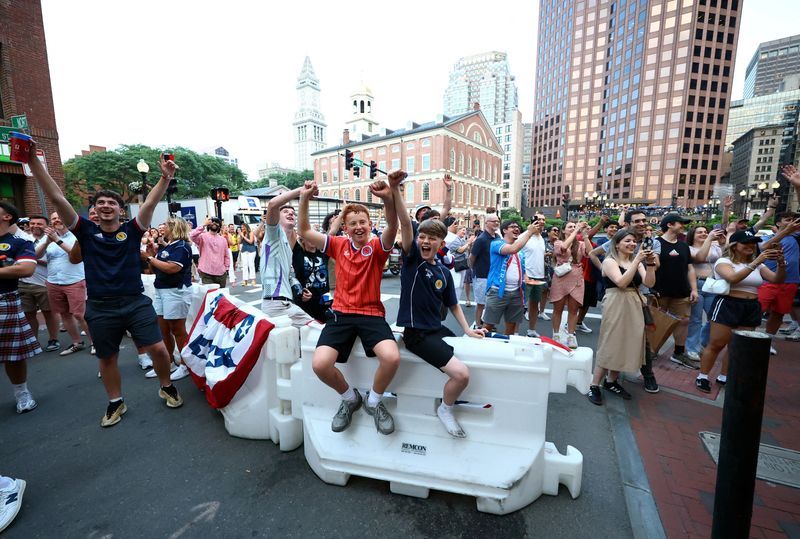
International visitors arriving for the World Cup have become unexpected ambassadors for the United States, sharing warm encounters and cultural discoveries that contradict pre-tournament concerns about visa difficulties, safety, and cost. As matches unfold across the country, social media has become filled with testimonials from fans encountering a welcoming nation that extends far beyond the stereotypical tourist destinations.
Pre-tournament anxiety surrounding the tournament's American hosting had been substantial and legitimate. Global football enthusiasts worried openly about entry restrictions, inflated accommodation and ticket prices, and persistent concerns about gun violence and general sports culture misalignment. Skeptics also questioned whether American audiences truly embraced soccer with the passion required to sustain such a massive international event. These apprehensions did not entirely disappear once play commenced, yet a contrasting narrative has simultaneously emerged from the ground level.
Gail Nicholl, a member of Scotland's fervent Tartan Army supporter contingent, discovered unexpected hospitality in Boston when locals spontaneously welcomed her team's supporters in advance of Scotland's opening match against Haiti. The generosity extended beyond mere politeness—strangers purchased rounds of drinks and embraced visitors as honoured guests. Her experience, replicated across numerous social media platforms, reflects a pattern of Americans extending genuine warmth to international travellers, often going beyond commercial transactions to create memorable personal connections.
These anecdotal reports reveal something strategically valuable that extends beyond typical tourism marketing. According to sports industry researchers, major athletic events function as powerful cultural ambassadors, introducing nations and regions to millions of people who might otherwise never visit. Darin White, founder of Samford University's Sports Industry Program and former soccer coach, articulates this dynamic through architectural metaphor—sporting occasions serve as the front porch of a nation's identity, frequently creating the initial, emotionally significant impressions that reshape long-established perceptions.
Academic research substantiates White's assertion that hosting major sporting competitions genuinely shifts international stereotypes in measurable ways. The 2026 World Cup configuration particularly leverages this phenomenon by distributing matches across secondary and tertiary American cities beyond the typical tourist circuit of New York, Los Angeles, and Orlando. Kansas City, Atlanta, and Houston now receive significant international visitation, exposing global audiences to authentic regional cultures that rarely feature in international consciousness.
These secondary markets offer distinctive cultural experiences that resonate deeply with visiting fans. Argentine supporters, for whom grilled meat consumption represents something approaching cultural religion, encountered Kansas City's distinctive dry-rub barbecue tradition and found genuine appreciation in the culinary exchange. Similarly, German visitors discovered Texan cowboy heritage alongside barbecue culture, embodied by fans proudly sporting newly acquired Stetson hats. These unscripted cultural collisions generate authentic connection far more effectively than official promotional campaigns.
White identifies particular power in encounters occurring away from established tourist infrastructure—a Moroccan fan receiving navigation assistance in Dallas, a German family obtaining directions from a Seattle stranger. These quotidian moments of human decency accumulate into collective consciousness about national character. Though such interactions rarely generate headlines, they constitute what White describes as substantive work on Brand USA, reshaping international perceptions through individual encounters rather than governmental messaging or corporate advertising.
However, significant barriers persist that continue limiting attendance and undermining the tournament's democratizing potential. Citizens from Iran, Haiti, Ivory Coast, and Senegal face partial or total American entry restrictions, preventing populations deeply connected to these nations from experiencing the tournament's atmosphere. While Iranian and Haitian communities within America maintain ancestral ties, Ivory Coast and Senegal supporters possess minimal American constituency to cheer their nations in person. This exclusion introduces an uncomfortable contradiction—the tournament simultaneously welcomes some while systematically barring others from participation based on nationality.
Physical conditions also constrain enjoyment, particularly in Miami and other southern venues where summer heat creates genuinely dangerous conditions for both players and spectators. Additionally, the tournament's financial barriers remain substantial despite positive social interactions; elevated ticket prices and travel costs have already discouraged many international fans from attending matches in person, forcing them to experience events through television broadcast rather than direct participation. These economic realities limit the breadth of humanity experiencing American hospitality firsthand.
Yet within American stadiums, a noteworthy phenomenon has emerged: domestic audiences cheer not exclusively for American teams or ancestral homelands, but enthusiastically embrace underdogs and nations lacking substantial diaspora communities. Brooklyn resident Jessica Ambres, herself a Black American supporter of Senegal, exemplifies this pattern—feeling authentic connection to the African diaspora while passionately representing a nation with minimal official American constituency. This grassroots enthusiasm suggests American audiences increasingly embrace football on its own terms rather than through ethnic or national allegiance exclusively.
American political and commercial leadership explicitly recognises the goodwill's economic and reputational value. Boston Mayor Michelle Wu publicly invited the Scottish Tartan Army to return beyond tournament dates, explicitly framing Boston as an adoptive home for international visitors. Such messaging reflects understanding that momentary tournaments generate lasting impressions that influence future tourism, business investment, and international relationships. Whether such warm welcomes can meaningfully counter the diplomatic damage inflicted by years of nationalist governance remains genuinely uncertain, yet the accumulated testimonies suggest sporting occasions provide platforms for rebuilding international relationships through individual human connection rather than governmental pronouncements.
As the tournament progresses toward its conclusion, questions persist about whether these positive experiences generate sustained shifts in international perceptions or remain ephemeral sentiment soon forgotten once matches conclude. Nevertheless, the contrast between pre-tournament skepticism and ground-level enthusiasm suggests that Americans' genuine warmth and the authentic regional cultures on display may accomplish what official diplomacy has struggled to achieve—presenting the nation as fundamentally welcoming and culturally rich to billions of international observers.

