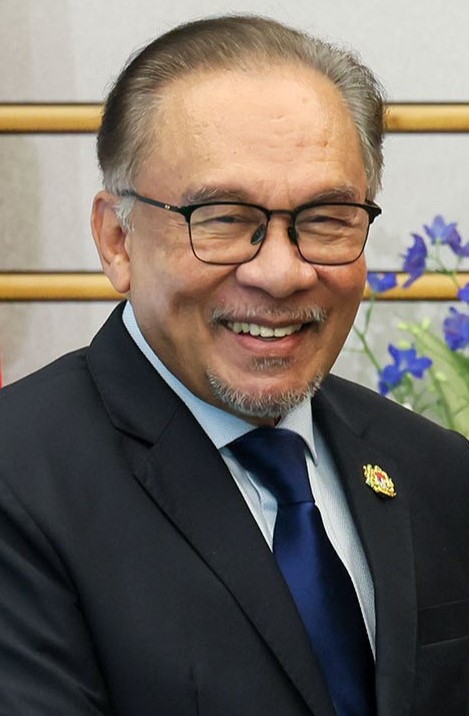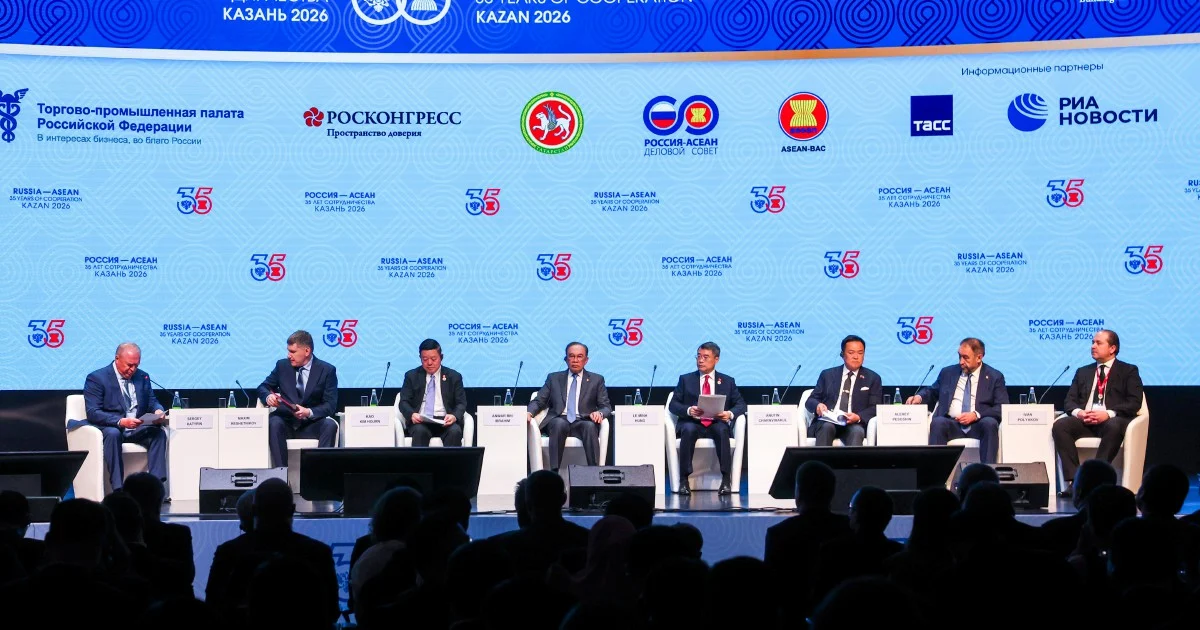
Prime Minister Datuk Seri Anwar Ibrahim has called for a significant expansion of multilateral cooperation between Asean and Russia, focusing on sectors that are fundamental to regional prosperity and stability. Speaking in Kazan, Anwar outlined an ambitious agenda for partnership that encompasses food security, energy resources, advanced manufacturing capabilities, digital technologies and educational development, signalling Malaysia's commitment to strengthening ties between the ten-nation Southeast Asian bloc and Moscow.
The emphasis on food security reflects growing concerns across Asean regarding supply chain vulnerabilities and agricultural resilience in the face of geopolitical tensions and climate pressures. Asean nations, which collectively feed over 600 million people and contain some of the world's most productive agricultural regions, face mounting challenges in ensuring stable domestic food supplies whilst managing export commitments. Russia, as one of the world's largest producers of wheat and other essential grains, represents a critical potential partner for diversifying supply sources and establishing more resilient trading relationships that are less dependent on Western markets.
The energy dimension of Anwar's proposal carries particular strategic significance for Southeast Asia. As regional economies continue their development trajectories, energy demand across Asean is projected to surge substantially over the coming decades. Russia possesses vast reserves of natural gas, oil and coal, and has been actively seeking new markets and partnerships as Western nations implement sanctions and diversify away from Russian energy sources. For Asean nations seeking to balance energy security with economic competitiveness, establishing more robust energy partnerships with Russia could provide valuable alternatives and help negotiate more favourable pricing in an increasingly competitive global market.
Advanced manufacturing represents another critical frontier where Asean-Russia cooperation could yield mutual benefits. The region has positioned itself as an alternative manufacturing hub to China, attracting investment from multinational corporations and seeking to upgrade its industrial capabilities. Russian expertise in certain manufacturing sectors, coupled with Asean's growing technical capabilities and competitive labour costs, could create opportunities for joint ventures and technology transfer. This cooperation could help Asean manufacturers move up the value chain whilst providing Russian companies with access to dynamic Southeast Asian markets and production networks.
The digital technology sector has emerged as perhaps the most dynamic area for potential collaboration. Asean's digital economy has experienced explosive growth, with e-commerce, fintech and digital services becoming increasingly central to regional economic activity. However, many Asean nations continue to grapple with questions of digital infrastructure, cybersecurity governance and technology regulation. Russian expertise in software development and digital innovation, despite international sanctions limiting some sectors, remains respected globally. Cooperation in digital technologies could include knowledge sharing on smart city development, data management systems and digital payment infrastructure.
Educational partnerships form the foundational pillar of Anwar's vision for sustained Asean-Russia engagement. Expanding academic exchanges, scholarship programmes and collaborative research initiatives would build people-to-people connections whilst enhancing human capital development across the region. Russian universities maintain strong reputations in mathematics, physics, engineering and medicine, fields where Asean institutions could benefit from deeper collaboration. Similarly, Asean's expertise in tropical agriculture, maritime sciences and regional development studies could enrich Russian academic institutions.
Anwar's proposal arrives at a moment of shifting geopolitical dynamics in Southeast Asia. As Western nations intensify strategic engagement with Asean to counter China's regional influence, Russia has sought to strengthen its own position in the region and present itself as a reliable non-Western partner. Asean nations, committed formally to the principle of strategic autonomy and non-alignment, have generally resisted pressure to choose sides in great power competition. This stance creates space for expanded Russian engagement provided such partnerships serve genuine development objectives rather than serving as proxies for geopolitical rivalry.
The timing of Anwar's remarks in Kazan, historically significant as the capital of Tatarstan and an important trading hub, underscores Malaysia's proactive diplomacy in cultivating relationships beyond traditional Western partners. Malaysia itself exemplifies the Asean approach to pragmatic engagement, maintaining economic relationships with multiple powers whilst prioritizing regional stability and prosperity. By articulating this vision in Russia, Anwar signals that Asean sees value in diversified partnerships and refuses to accept binary choices in its international relations.
Implementing this expanded cooperation framework will require navigating several practical challenges. International sanctions on Russia limit the scope of certain commercial activities, and some sectors may face regulatory barriers or financing constraints. Additionally, the ten Asean member states possess varying economic interests and capabilities, requiring coordination mechanisms to identify shared priorities and ensure benefits are distributed equitably. Establishing bilateral mechanisms with individual Asean nations whilst simultaneously pursuing bloc-wide initiatives will demand careful diplomatic choreography.
The broader significance of Anwar's initiative lies in its affirmation of Asean's centrality in regional affairs and its refusal to accept external prescriptions regarding strategic partnerships. As Southeast Asia navigates competing spheres of influence from China, the United States, Europe and others, the region's capacity to engage multiple powers on pragmatic terms whilst maintaining internal cohesion remains essential. Deeper Asean-Russia cooperation in development-oriented sectors like food security, energy and education provides a template for mutually beneficial engagement that serves regional interests rather than great power ambitions.