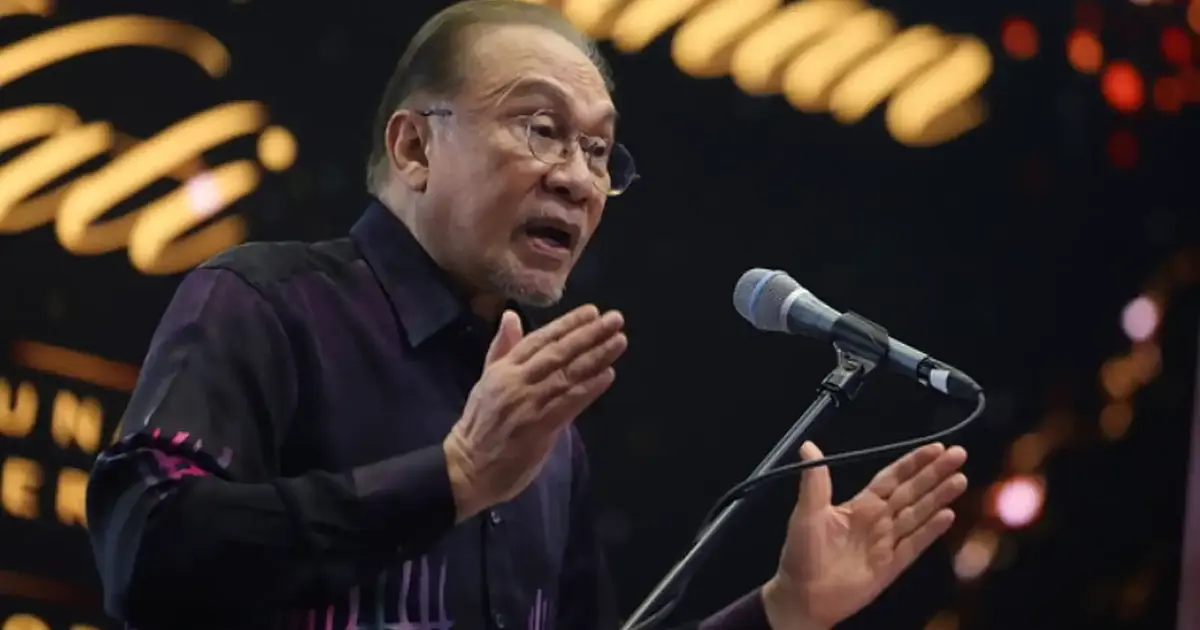
Prime Minister Anwar Ibrahim has issued a direct appeal to Malaysians to disregard incendiary rhetoric being peddled by certain political leaders, positioning ethnic harmony and pluralism as cornerstones of national resilience. Speaking to the broader electorate, Anwar emphasised that Malaysia's capacity to function as a stable, prosperous nation depends fundamentally on citizens refusing to engage with divisive narratives that seek to exploit communal tensions.
The Prime Minister's remarks reflect growing concern within government circles about the tenor of political discourse in recent months. Rather than naming specific individuals or parties, Anwar chose to frame his message around universal principles, suggesting that those promoting prejudice and hatred do not represent the interests of ordinary Malaysians seeking stability and economic opportunity. This approach allows the government to distance itself from inflammatory speech without appearing to engage in partisan attacks.
Anwar's characterisation of diversity as a source of strength carries particular weight in Malaysia's historical context. Since independence, the nation has navigated complex communal relations through constitutional arrangements and political consensus, though this equilibrium has faced periodic strains. The Prime Minister's invocation of diversity as an asset rather than a liability signals his administration's commitment to preserving this delicate balance amid contemporary pressures.
The timing of these comments matters significantly for regional observers. Southeast Asia has witnessed rising identity-based polarisation across several democracies in recent years, and Malaysia has not been immune to this trend. Social media has amplified the reach of inflammatory content, allowing fringe voices to gain disproportionate visibility. By publicly calling out hate-peddling, Anwar positions his government as a stabilising force against these corrosive forces.
For Malaysian business and investment communities, the Prime Minister's emphasis on social cohesion carries material implications. Multinational corporations, foreign investors, and international financial institutions view political stability and inter-communal harmony as fundamental prerequisites for long-term economic engagement. When political leaders resort to divisive language, it signals institutional weakness and unpredictability that ripples through capital markets and foreign direct investment flows. Anwar's message therefore serves a dual purpose: affirming democratic values while reassuring economic actors that Malaysia remains a predictable, rules-based environment.
The assertion that Malaysia's diversity constitutes a comparative advantage also reflects intellectual positioning within regional debates. Neighbouring countries grappling with their own identity questions may view Malaysia's model as either aspirational or cautionary, depending on their perspective. By publicly defending pluralism, Anwar stakes his political legacy on successful multiculturalism, betting that this vision resonates more deeply with voters than appeals to communal grievance.
Within Malaysia's complex party system, such statements often carry coded messages for different audiences. Opposition figures and certain within-party factions have occasionally weaponised identity politics to mobilise support, particularly in rural constituencies where communal narratives have traditional purchase. Anwar's remarks effectively challenge these actors to elevate their discourse, implicitly suggesting that sophisticated political competition can occur without resorting to appeals based on ethnic or religious difference.
The challenge facing the Prime Minister involves translating rhetorical commitment to diversity into tangible policy outcomes. Malaysians increasingly expect government action on economic grievances, educational opportunities, and employment equity across communities. Mere exhortations against hate-peddling ring hollow absent credible mechanisms addressing underlying anxieties that sometimes fuel divisive politics. Anwar's government must demonstrate that its pluralistic vision translates into equitable resource distribution and institutional fairness.
International observers monitoring Malaysia's democratic health will likely view these comments as a positive signal. During periods of communal tension globally, political leaders choosing to publicly defend diversity and condemn hate speech establish important normative standards. Such statements also provide civil society organisations and media institutions with rhetorical cover to challenge inflammatory content, knowing that government leadership aligns with their positions.
The broader implication extends beyond immediate political calculation. Malaysia faces significant economic challenges, regional strategic pressures, and demographic shifts that require cohesive national responses. Anwar's framing suggests that embracing diversity and rejecting hate represent not merely moral imperatives but pragmatic necessities for national prosperity. This reframing potentially shifts discourse from identity politics toward performance-based evaluation of government effectiveness.
Looking ahead, the sustainability of this messaging depends on consistent reinforcement by government institutions and political allies. If divisive rhetoric resurfaces without official pushback, or if economic conditions deteriorate while the government emphasises harmony, the credibility of the pluralism message will erode. Anwar must marshal institutional resources—media platforms, educational channels, religious leaders—to embed these values within broader social narratives.

