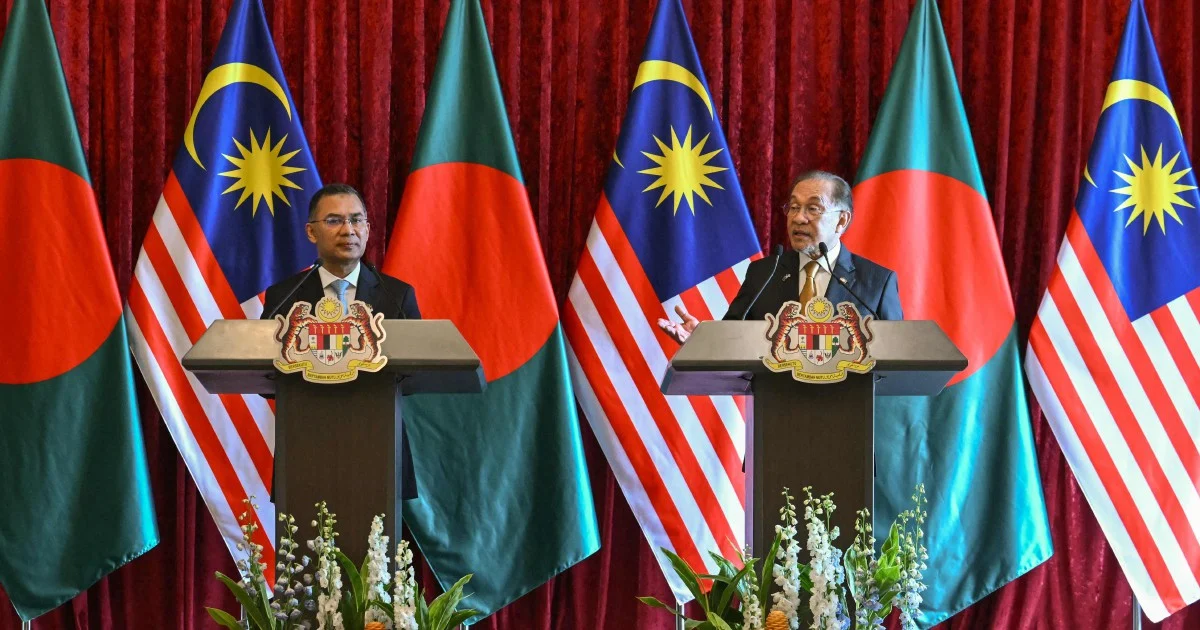
Prime Minister Datuk Seri Anwar Ibrahim has made a firm commitment to eliminate the exploitation and mistreatment of Bangladeshi migrant workers operating in Malaysia, recognising their indispensable role in sustaining the nation's economic growth. Speaking on the matter, Anwar characterised the abuse of these workers as something that cannot be permitted to continue, signalling the government's determination to implement stronger protections and enforcement mechanisms across sectors reliant on migrant labour.
The pledge comes at a time when concerns about labour standards in Malaysia have intensified both domestically and internationally. Bangladeshi workers represent one of the largest contingents of foreign labourers in the country, contributing significantly to construction, manufacturing, agriculture, and domestic services. Their workforce participation has proven essential for maintaining productivity in industries that face chronic labour shortages, particularly in roles considered undesirable by local populations. The prime minister's statement underscores the government's recognition that protecting these workers is not merely a humanitarian imperative but also an economic necessity.
Exploitation of migrant workers in Malaysia has long been documented by international human rights organisations and labour watchdogs. Common grievances include wage theft, excessive working hours, passport confiscation, substandard living conditions, and physical mistreatment. These practices disproportionately affect Bangladeshi nationals, who often arrive in Malaysia through labour recruitment agencies with limited knowledge of their rights or recourse mechanisms. The informal nature of some employment arrangements has historically allowed unscrupulous employers to operate with minimal oversight, creating a cycle of vulnerability that has persisted for years.
Anwar's intervention signals a potential shift in how the government addresses labour standards among foreign workers. Unlike previous periods when such concerns were often treated as peripheral to broader economic policy, the prime minister's direct engagement suggests that worker protection is now receiving ministerial-level attention. This approach could translate into concrete measures including enhanced workplace inspections, stricter penalties for offending employers, improved reporting channels for aggrieved workers, and better coordination between Malaysian authorities and Bangladeshi government officials.
The economic dimension of this commitment cannot be overstated. Bangladesh remains among Malaysia's most reliable sources of skilled and semi-skilled labour, providing workers who are generally willing to undertake challenging assignments at competitive wage rates. Any disruption to this labour pipeline—whether through Bangladesh imposing restrictions on worker emigration or through reputation damage affecting recruitment—could create significant labour market gaps in Malaysia's construction and manufacturing sectors. By positioning worker protection as central to national economic interests, Anwar frames the issue in terms that resonate with both business communities and policymakers concerned about sustained growth.
The timing of Anwar's declaration also reflects broader regional dynamics. Neighbouring countries including Singapore and Thailand have faced international criticism and labour-related sanctions due to inadequate worker protections, particularly concerning migrant populations. Malaysia risks similar reputational and economic consequences if exploitation patterns remain unchecked. Enhanced enforcement of labour standards positions the country more favourably in international labour discussions and potentially shields Malaysian businesses from boycotts or regulatory restrictions imposed by trading partners with strict supply chain transparency requirements.
Implementing this commitment will require coordination across multiple government agencies. The Ministry of Human Resources, Immigration Department, police labour units, and local authorities must work in concert to identify violations and hold perpetrators accountable. Additionally, establishing mechanisms for workers to report abuse without fear of deportation or retaliation remains critical. Many migrant workers currently avoid formal complaints due to anxiety about visa status or wage loss, meaning protective measures must include safeguards that decouple reporting rights from employment conditions.
Engagement with Bangladesh's government will likely prove essential to success. Bilateral cooperation can facilitate better screening of employers, improved training of workers before departure, and streamlined resolution of disputes. Several Southeast Asian nations have established bilateral labour agreements that establish baseline standards and create dispute resolution pathways, models that Malaysia could adapt or strengthen. Such frameworks also help protect Bangladesh's own interests by ensuring that its nationals working abroad are treated according to agreed-upon standards.
The private sector's role cannot be ignored. Large corporations and industry associations must commit to accountability mechanisms, including audits of labour practices and supply chain transparency. Some multinational companies have already begun implementing such measures in response to consumer pressure and investor expectations, creating competitive pressure on smaller firms to improve standards. The government can amplify this trend through procurement policies that favour compliant employers, incentivising broader industry compliance.
For Malaysian consumers and businesses, better-protected migrant workers ultimately translate into more stable production processes and reliable service delivery. Construction projects experience fewer delays caused by labour unrest, manufacturing facilities maintain consistent output, and domestic service arrangements function more reliably when workers can trust that their contractual agreements will be honoured and their safety prioritised. From this perspective, worker protection serves enlightened business interests rather than conflicting with them.
Anwar's pledge must now transform into legislative and administrative action. The credibility of this commitment will be measured by concrete outcomes: prosecutions of exploitative employers, measurable improvements in worker living standards and wage security, reduced complaint volumes from this population, and improved perceptions among Bangladeshi migrants regarding their treatment in Malaysia. Whether the government can translate political will into sustained enforcement will determine whether this represents genuine policy reform or merely political messaging.

