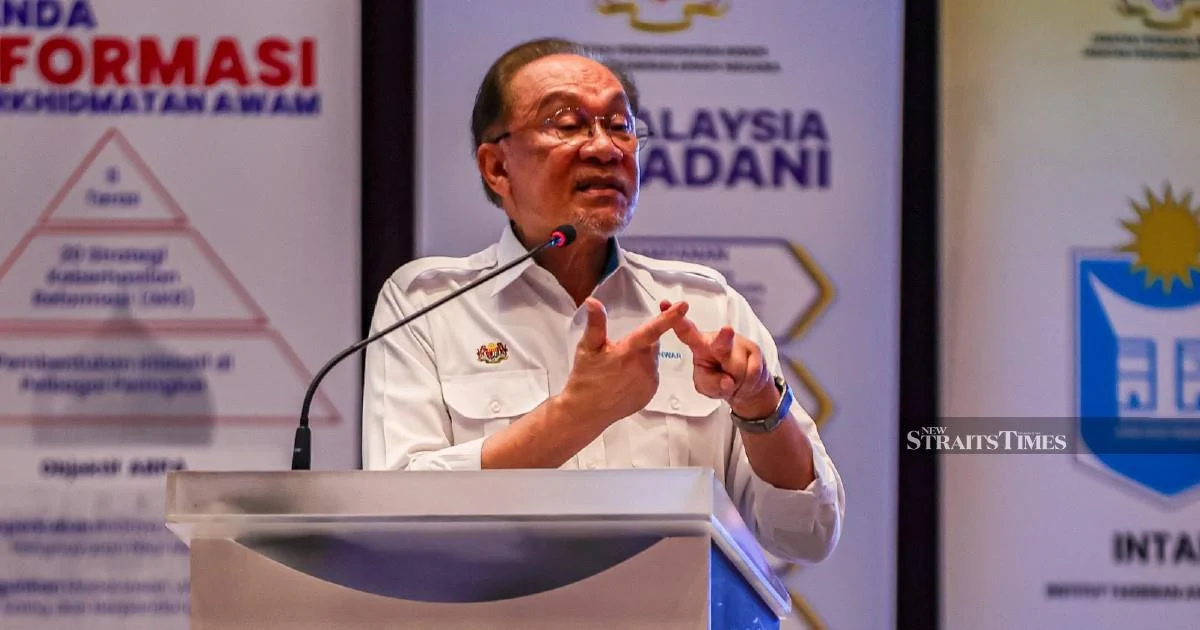
Prime Minister Datuk Seri Anwar Ibrahim sought to defuse mounting tensions within the ruling Pakatan Harapan alliance on Saturday, publicly backing Parti Amanah Negara (Amanah) president Datuk Seri Mohamad Sabu against accusations that he had mocked coalition partners during a candidate unveiling event. Speaking in Alor Gajah, Anwar moved quickly to contain what appeared to be emerging friction between PH's component parties, emphasising that Mohamad Sabu's remarks at Friday's gathering in Tangkak had been mischaracterised.
The intervention underscores the delicate balancing act required to maintain cohesion within Malaysia's fragmented political landscape, where coalition stability remains dependent on managing sensitivities among diverse partners with competing interests. Pakatan Harapan, which returned to power in the 2022 general election, comprises PKR, DAP, Amanah, and several other smaller parties, each nursing different ideological traditions and electoral calculations. Any perceived slight from one faction toward another risks reopening old wounds and destabilising the governing arrangement.
Anwar's decision to publicly exonerate Mohamad Sabu signals the PM's commitment to maintaining the facade of unity, even as underlying tensions periodically bubble to the surface. The Amanah leader has long occupied a complex position within PH, bringing Islamic credentials while advocating for a pluralistic Malaysia—a positioning that occasionally creates friction with more secular-oriented coalition members like DAP. His remarks in Tangkak, whatever their precise content or intent, appear to have triggered concern that he might have crossed a line.
The timing of the controversy is particularly sensitive given Malaysia's volatile political environment. The government continues to face pressure from a strengthened opposition bloc in parliament, with Perikatan Nasional having consolidated support among Malay-Muslim voters. Any visible cracks in PH's facade could be exploited by critics seeking to portray the coalition as fractious and unfit to govern. Anwar's swift damage control reflects awareness of these vulnerabilities.
Mohamad Sabu's public profile has evolved considerably since his earlier tenure as Defence Minister, when he earned a reputation for candid, sometimes provocative commentary on religious and social issues. His elevation to the Amanah presidency placed him in a more prominent coalition-facing role, requiring greater circumspection about intra-alliance sensitivities. The controversy surrounding his Tangkak speech suggests ongoing tensions between his more outspoken instincts and the diplomatic restraint demanded by coalition leadership.
For DAP and other non-Muslim PH components, maintaining confidence in Amanah's commitment to secular constitutional principles remains essential to the coalition's functioning. Any perception that Mohamad Sabu might be abandoning pluralistic rhetoric in favour of appeals to Islamist sentiment threatens these partners' strategic calculations. Conversely, PKR and other Malay-Muslim parties risk appearing insufficiently attentive to Islamic concerns if they appear overly deferential to DAP's preferences.
Anwar's intervention illustrates how coalition management in Malaysia requires constant, often invisible labour to resolve disputes before they metastasise into public confrontations. By characterising Mohamad Sabu's remarks as innocent and suggesting misinterpretation, the PM reassures all parties that the coalition remains fundamentally stable despite surface turbulence. This approach has precedent—Anwar has repeatedly employed similar cooling language during previous coalition flare-ups.
However, such interventions carry risks of their own. Repeated assertions that tensions do not exist risk breeding cynicism about leadership sincerity, particularly among party members who witness real differences being papered over. Coalition partners may increasingly view public denials of friction as code for suppression of legitimate concerns, potentially breeding resentment among those who feel their grievances are being dismissed.
Looking forward, maintaining PH cohesion will require more than rhetorical reassurance. The coalition must find substantive mechanisms for resolving ideological and strategic differences—clearer understandings about red lines, institutional arrangements for managing disputes, and perhaps a more transparent approach to negotiating coalition decisions. Whether Anwar's leadership is prepared to invest in such deeper institutional work remains uncertain.
The Tangkak incident also reflects broader questions about how Malaysia's diverse democracy manages the inevitable tensions between different visions of national identity and governance. Amanah's positioning as a Muslim party committed to pluralism represents an important but precarious space within PH. Sustaining this positioning requires constant calibration—demonstrating sufficient Islamic commitments to retain credibility with Muslim voters while maintaining bonds of trust with secular-leaning coalition partners.

