Prime Minister Datuk Seri Anwar Ibrahim has pushed back against suggestions that his administration has overlooked the interests of Malaysia's urban poor, insisting instead that recent development initiatives demonstrate a genuine commitment to protecting their fundamental rights and improving their living standards.
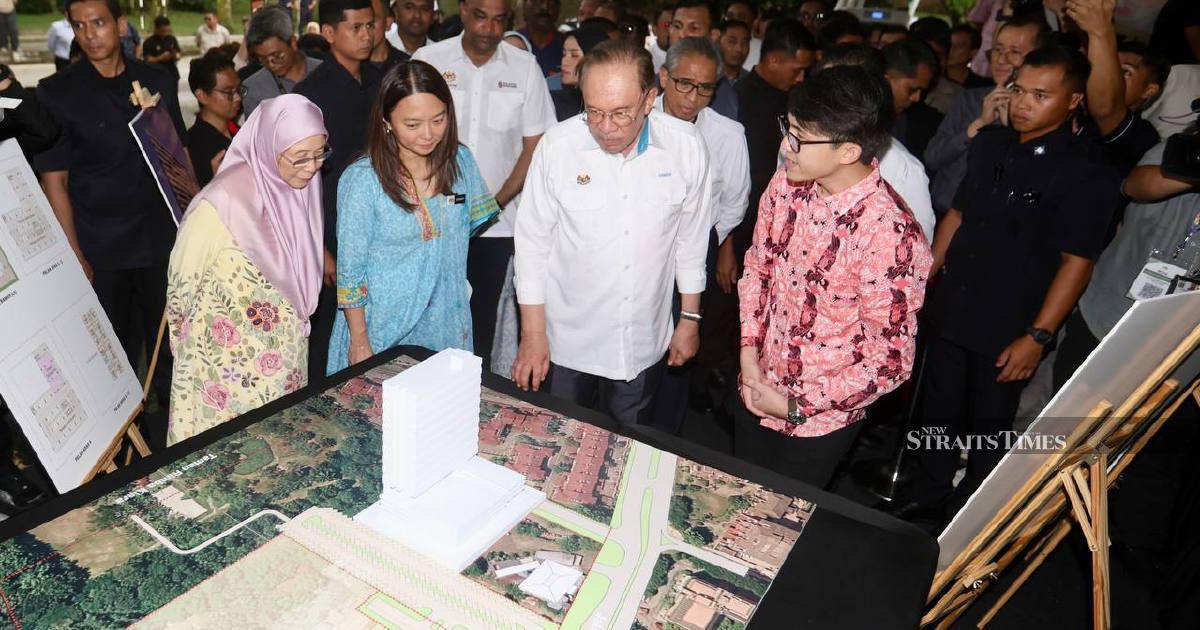
The Prime Minister's remarks come amid ongoing public discourse about the direction of federal spending and urban policy. Anwar used the Bukit Kiara project specifically to illustrate what he characterises as the government's substantive engagement with low-income communities rather than token gestures or rhetorical positioning. The project has become emblematic of the administration's broader developmental approach, functioning as a test case for policies aimed at ensuring equitable growth in Malaysia's major urban centres.
Urban poverty remains a persistent challenge across Malaysian cities, particularly affecting informal settlers and those in overcrowded low-cost housing areas. Kuala Lumpur alone hosts hundreds of thousands of residents living in cramped conditions or precarious circumstances, facing challenges ranging from inadequate infrastructure to limited access to social services. The visibility of this demographic issue has intensified scrutiny on how different administrations allocate resources and design policies affecting this vulnerable population segment.
Anwar's decision to highlight Bukit Kiara reflects a strategic emphasis on demonstrating tangible outcomes rather than merely articulating policy intentions. Development projects that directly impact low-income neighbourhoods serve dual purposes: they address practical housing and infrastructure deficits while simultaneously providing political evidence of government responsiveness to constituent needs. The Bukit Kiara initiative thus functions as both a practical intervention and a symbolic marker of governmental priorities.
The relationship between urban development and social equity has become increasingly complex in Malaysian governance. Rapid modernisation and commercial expansion sometimes conflict with the preservation of affordable housing and community stability, creating tensions between different economic interests and social groups. How administrations navigate these competing demands shapes both material outcomes for residents and public perception of political commitment to inclusive development.
Malaysian policymakers increasingly recognise that urban poverty isn't merely an economic issue but intersects with questions of dignity, political representation, and social mobility. Communities in affected areas often feel disconnected from decision-making processes, even when projects are ostensibly designed for their benefit. Genuine rights protection requires more than project implementation; it demands meaningful participation in planning and execution phases. The extent to which the Bukit Kiara project incorporates such consultation mechanisms remains relevant to assessing the government's commitment.
The Prime Minister's statement also reflects broader ideological positioning within Malaysia's current political landscape. Different coalitions and administrations have previously competed over claims to represent ordinary Malaysians' interests, particularly lower and middle-income groups who constitute crucial voting blocs. Development narratives centred on urban poor welfare thus carry significant political weight beyond their immediate practical implications. Anwar's framing represents an attempt to consolidate support among constituencies that have experienced economic pressures and housing insecurity.
Regionally, Malaysia's approach to urban poverty connects with Southeast Asian debates about inclusive growth and equitable development models. Other nations in the region grapple with similar challenges as rapid urbanisation creates both opportunities and acute social pressures. The strategies that Malaysian administrations adopt therefore hold relevance beyond national borders, potentially informing policy discussions across the region. Successful initiatives addressing urban poor rights could demonstrate viable approaches for other Southeast Asian governments facing analogous circumstances.
Implementation quality ultimately determines whether development projects translate governmental rhetoric into genuine improvements in residents' lives. Well-intentioned policy statements require competent execution, adequate funding, and sustained political commitment beyond initial announcements. The Bukit Kiara project's ultimate success in protecting and advancing urban poor rights will depend on how thoroughly it addresses housing affordability, community stability, and resident agency throughout its development lifecycle.
Looking forward, maintaining credibility on urban poor issues requires the government to systematically demonstrate that such communities feature centrally in budgetary allocations, infrastructure planning, and legislative priorities. Scattered showcase projects, however impressive individually, cannot substitute for comprehensive policy frameworks that consistently privilege equity considerations across multiple sectors. Anwar's defence of the government's record thus represents just the opening of a longer accountability process, where sustained action and measurable outcomes will ultimately determine whether rhetorical commitment translates into substantive rights protection for Malaysia's most economically vulnerable urban residents.