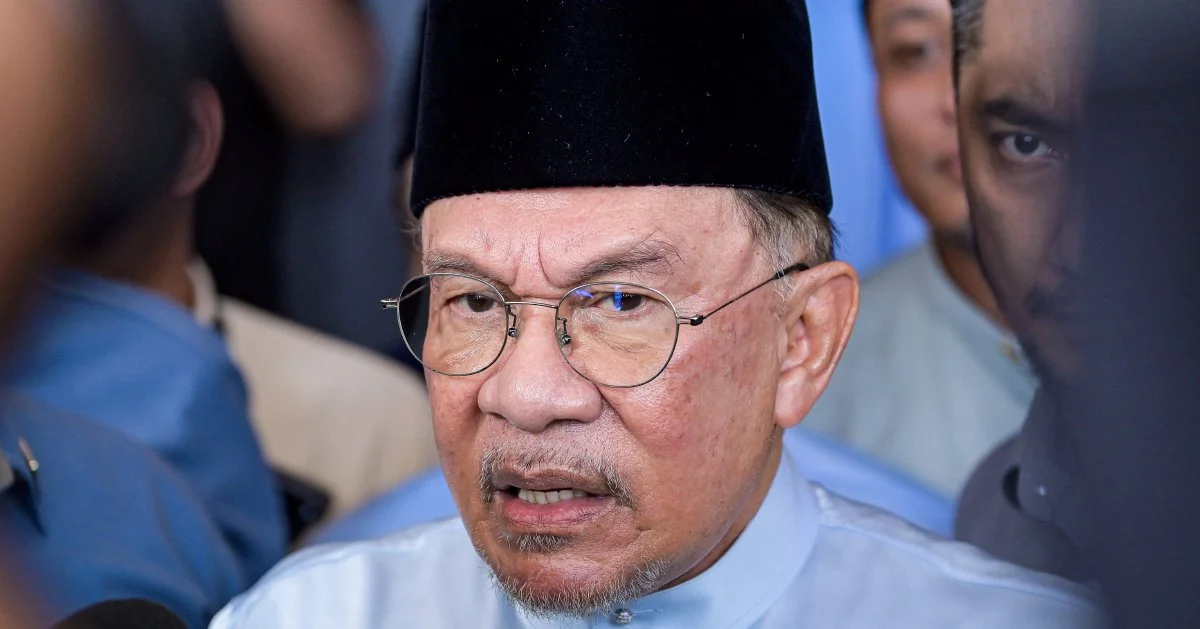
Prime Minister Datuk Seri Anwar Ibrahim has firmly rejected suggestions that instructions were issued to prevent caretaker Johor Menteri Besar Datuk Onn Hafiz Ghazi from entering Felda settlements during an event in Dengkil. The denial comes as speculation intensified regarding alleged restrictions placed on the Johor state leader's movement at official gatherings, raising questions about inter-state political tensions within Malaysia's coalition government.
The timing of these allegations is significant, occurring during a sensitive period when Johor remains under caretaker leadership. The state has not yet held state elections following the dissolution of the state assembly, leaving Onn Hafiz in a transitional administrative role while remaining a prominent political figure in one of Malaysia's most economically important states. Any perception of deliberate exclusion from national development initiatives could carry implications for federal-state relations and the cohesion of ruling coalition members.
Felda settlements represent crucial political territory across multiple constituencies, with substantial voter populations dependent on the Federal Land Development Authority's management and policies. Events involving these communities typically attract significant attention from political leaders seeking to demonstrate engagement with rural constituencies. The prospect of restricting a state leader's access to such gatherings would represent an unusual assertion of federal authority and warrants serious examination of the underlying circumstances.
Anwar's categorical dismissal suggests the Prime Minister viewed the allegations as potentially damaging to the government's public image, particularly regarding democratic norms and fair treatment of coalition partners. His intervention indicates awareness that such claims, if left uncontested, could undermine confidence in the administration's impartiality and fuel narratives about internal political friction. The government's rapid response demonstrates sensitivity to narratives questioning leadership conduct during the election period.
Onn Hafiz has maintained a measured public presence despite the caretaker status, continuing to engage with state affairs and stakeholders. His situation reflects the peculiar limbo faced by state-level leaders during inter-election periods—retaining administrative responsibility while possessing limited authority to implement new policies. This ambiguous position can sometimes create tensions with federal structures, particularly when ceremonial or political precedence requires careful management.
The Felda issue touches on broader questions about resource allocation and political patronage within coalition governance. These settlements possess voting power that both federal and state administrations need to cultivate, making access and inclusion politically meaningful. When formal or informal restrictions occur, they become symbolic representations of political favour or disfavour, regardless of the practical justification offered.
Within Johor's political context, maintaining the caretaker leader's standing remains important for subsequent election administration and state governance. Excessive marginalization of the sitting state chief could create resentment among regional party structures and complicate post-election transitions. The state's significance in national politics—encompassing strategic economic zones and substantial parliamentary constituencies—means that stability of state-federal relations cannot be taken for granted.
The coalition government continues navigating complex inter-party and inter-state dynamics as it campaigns for electoral renewal. Incidents perceived as unfair treatment of coalition members, regardless of their actual basis, can generate friction that extends beyond individual personalities into systemic tensions. Transparency regarding event access and participation protocols helps prevent such perceptions from metastasizing into broader credibility questions.
Onn Hafiz's party affiliation and his standing within Johor's political establishment mean that questions about his treatment carry weight beyond individual grievance. Any perception that federal authorities actively marginalize state-level leaders risks sending counterproductive signals about the government's respect for federal-state partnership principles. This remains particularly relevant in Johor, where political traditions emphasize strong state leadership and autonomy.
The rapid clarification from Anwar's office indicates the administration's determination to prevent misunderstandings from creating unnecessary political controversy during what remains a critical period for electoral consolidation. By addressing the allegations directly rather than permitting speculation to flourish, the government sought to reestablish the narrative around collaborative governance and inclusive participation in national development initiatives.
Looking forward, the management of such incidents provides indication of how the administration intends to balance federal authority with respect for state-level leadership during and after the election period. The principle that no leader should face arbitrary exclusion from official functions represents foundational democratic governance, regardless of interim administrative status. How these situations are resolved affects broader perceptions of fairness and institutional conduct across Malaysia's federal system.

