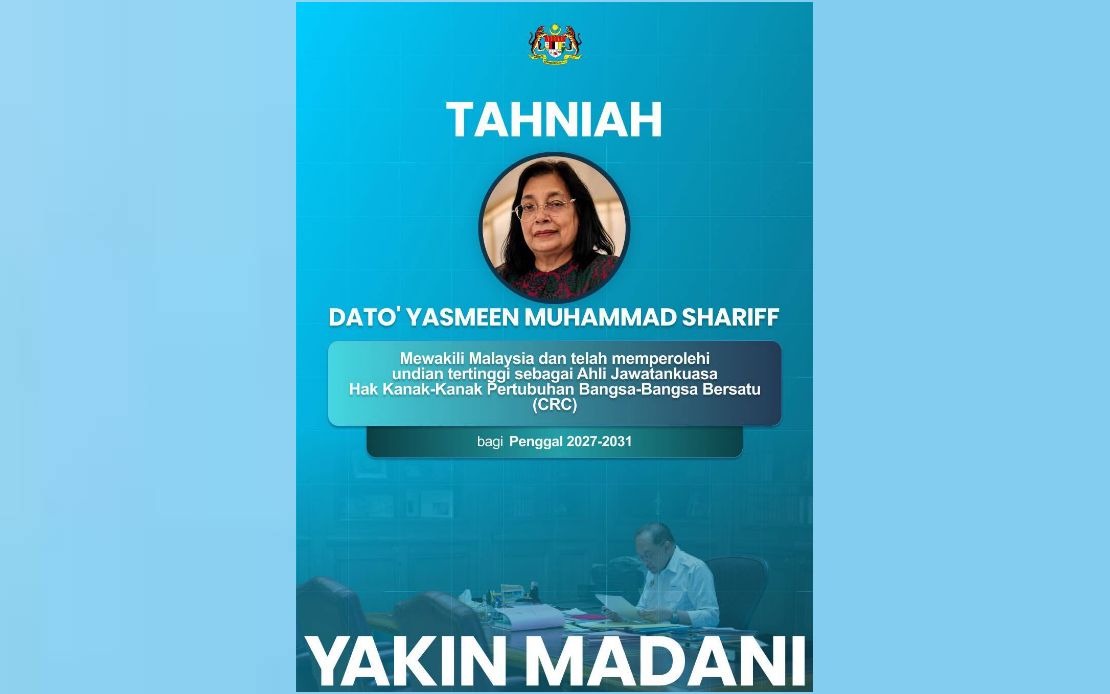
Prime Minister Datuk Seri Anwar Ibrahim has publicly commended Datuk Yasmeen Muhamad Shariff following her election to the United Nations Committee on the Rights of the Child, underscoring what he characterised as a significant moment for Malaysia's standing in international forums. The congratulations, shared via social media on June 25, reflected broader government satisfaction with an outcome that positions the country more prominently within the global child protection governance architecture.
Yasmeen secured 136 votes from the 189 States Parties present during voting at the 21st Meeting of States Parties to the Convention on the Rights of the Child, held at UN headquarters in New York on Tuesday. The Ministry of Women, Family and Community Development subsequently announced the successful outcome, noting that this represents a second term for Yasmeen on the influential committee, having previously served from 2013 to 2017.
Anwar's response highlighted what he viewed as the international community's confidence in Malaysia's institutional capacity and dedication to advancing children's rights on a global platform. In his statement, the Prime Minister expressed optimism that this achievement would catalyse further improvements in Malaysia's efforts to strengthen its international profile and secure additional accomplishments within multilateral organisations. The government perceives such appointments as validation of its diplomatic efforts and commitment to United Nations-led initiatives, particularly those addressing vulnerable populations.
The Committee on the Rights of the Child functions as an independent expert body tasked with monitoring implementation of the Convention on the Rights of the Child and its optional protocols by signatory states. Members serve in their individual capacities as experts rather than as representatives of their governments, though their election nonetheless carries diplomatic significance for their countries of origin. The committee examines periodic reports submitted by states parties and issues recommendations designed to strengthen child protection frameworks and monitoring mechanisms at the national level.
Yasmeen's re-election comes at a moment when Malaysia is navigating evolving international expectations regarding child welfare standards, education accessibility, and protection from exploitation. Her appointment signals that the country's institutional credentials in these domains are recognised beyond its borders, despite ongoing domestic conversations about implementation challenges and resource constraints in executing comprehensive child protection policies. The five-year term running through 2031 positions her to influence discussions shaping global child rights standards during a period marked by emerging concerns around digital safety, climate-related impacts on children, and pandemic recovery challenges affecting vulnerable youth populations.
The Ministry of Women, Family and Community Development, which facilitated her candidacy, stands to benefit from enhanced international visibility and networking opportunities through her participation in the committee's work. This ministry has positioned itself as the focal point for government initiatives concerning family welfare, gender equality, and community development programmes, and Yasmeen's role provides it with a platform to showcase Malaysia's policy frameworks and institutional approaches to international audiences.
Malaysia's track record within UN mechanisms demonstrates its consistent participation in global governance structures, though the country has also faced periodic scrutiny regarding the implementation of children's rights commitments domestically. The committee's oversight functions require members to engage with sometimes-critical assessments of state party performance, suggesting that Yasmeen's role will involve navigating potentially sensitive discussions about Malaysia's child protection practices alongside her broader committee responsibilities.
From a regional perspective, Malaysia's representation on the Committee on the Rights of the Child reflects the broader role Southeast Asian nations play within United Nations structures. The Association of Southeast Asian Nations region contributes multiple representatives to various UN committees and mechanisms, yet such appointments remain competitive and politically significant within individual member states. Yasmeen's election positions Malaysia alongside other regional contributors to global child protection governance and enables the country to shape international standards and best practice discussions.
The appointment arrives as governments worldwide confront mounting pressures to demonstrate commitment to child welfare amid economic constraints and competing policy priorities. Yasmeen's work on the committee will encompass reviewing national progress reports, identifying implementation gaps, and formulating recommendations that states are expected to integrate into their domestic legislative and policy frameworks. Her previous committee experience provides institutional familiarity with these processes, potentially enhancing Malaysia's ability to engage productively with the review cycle and international dialogue on child protection methodologies.
Anwar's public endorsement reflects the government's expectation that such international engagements enhance Malaysia's diplomatic credibility and soft power positioning. The Prime Minister framed Yasmeen's election as a collective achievement shared with the Ministry of Women, Family and Community Development, emphasising organisational contributions to securing international confidence. This framing aligns with broader government narratives about Malaysia's capacity to participate meaningfully in shaping global governance outcomes and maintaining relevance within multilateral institutions during a period of shifting geopolitical dynamics and evolving international priorities affecting Southeast Asian nations.

