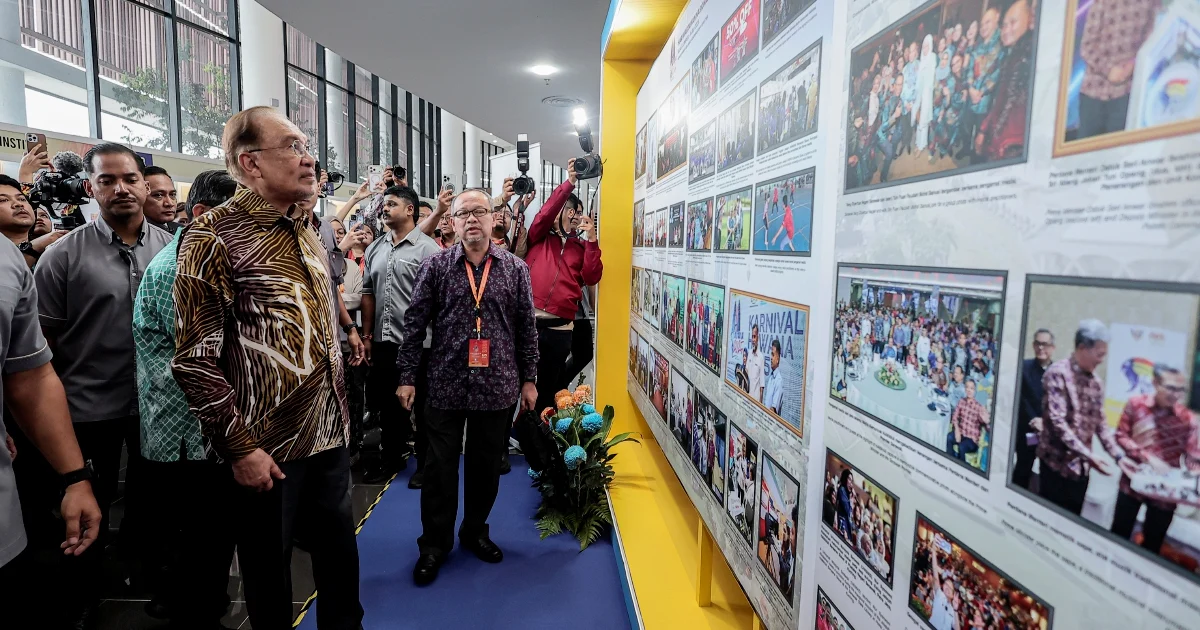
Prime Minister Datuk Seri Anwar Ibrahim has pledged RM1 million to the Tabung Kasih@Hawana 2026 welfare fund during a major gathering in Permatang Pauh, signalling the government's determination to strengthen financial protections for journalists across the country. The announcement underscores a broader policy direction aimed at revitalising Malaysia's media sector through targeted investments in human capital and professional development.
The Tabung Kasih@Hawana 2026 initiative represents a dedicated welfare mechanism designed to provide financial assistance to journalists facing hardship and other industry-related challenges. By channelling public funds into this welfare structure, the government is attempting to address longstanding concerns about precarious employment conditions and inadequate social safety nets affecting media professionals. The timing of this commitment reflects policymakers' recognition that a stable and well-supported journalistic workforce is essential for maintaining press freedom and media quality.
Anwar's remarks emphasise that this funding allocation forms part of a comprehensive strategy to sustain and expand government backing for media industry development. Beyond welfare provision, the Prime Minister indicated that multiple complementary initiatives would continue receiving official support. This multi-pronged approach suggests recognition within government circles that addressing challenges facing journalists requires intervention across several dimensions, from direct financial assistance to institutional reforms and technological modernisation.
The announcement carries particular significance for Southeast Asia's media landscape, where many journalists operate under economic pressures that can compromise editorial independence and reporting quality. Malaysia's experience with funding media welfare initiatives offers a potential model for regional counterparts grappling with similar issues. The government's explicit commitment to continue supporting transformation efforts signals that this is not a one-time gesture but rather part of sustained policy direction, though the specific mechanisms and duration of such support remain subjects for clarification.
For Malaysian journalists specifically, this intervention addresses tangible concerns about income stability and access to healthcare and retirement benefits. Many media practitioners, particularly freelancers and those in smaller publications, operate without comprehensive employment protections. A dedicated welfare fund could help bridge gaps between private sector provisions and the minimal safety nets currently available, though questions remain about eligibility criteria, benefit levels, and fund management structures that would determine the measure's practical impact.
The government's positioning of this welfare initiative alongside broader media transformation rhetoric reveals an attempt to frame financial support for journalists within a modernisation narrative. Rather than presenting welfare spending as a mere social safety measure, officials are characterising it as an investment in professional standards and institutional capacity. This framing may reflect awareness that sustainable journalism requires not just immediate relief but structural improvements in how the profession is valued and resourced across the industry.
Within Malaysia's political context, this announcement also carries implications for government-media relations. Demonstrating willingness to invest public resources in journalist welfare can be interpreted as an effort to build goodwill with the media community, particularly following periods of tension over press freedom and editorial autonomy. The timing and venue of the announcement suggest deliberate attention to maintaining constructive relationships with media stakeholders, though independent observers will likely scrutinise whether such support includes mechanisms protecting editorial independence.
The RM1 million allocation, while meaningful, represents a modest investment relative to the operational scale of Malaysia's media industry. This raises questions about funding adequacy for establishing a comprehensive welfare system capable of meaningfully addressing the diverse needs of journalists across different sectors, from mainstream television and newspapers to emerging digital platforms. Whether this initial commitment will be supplemented by additional allocations in subsequent budget cycles remains to be seen, as will the distribution of funds across different demographic and sectoral groups within the profession.
Industry observers will be monitoring how effectively the Tabung Kasih@Hawana 2026 mechanism translates announced allocations into tangible benefits for journalists. The success of such initiatives depends heavily on transparent administration, clear eligibility guidelines, and responsive management that adapts to changing needs within the profession. The coming months will likely see journalists and media organisations seeking clarification regarding fund accessibility, application procedures, and the range of circumstances qualifying individuals for assistance.
Beyond immediate welfare concerns, Anwar's commitment to ongoing media industry support reflects growing recognition that digital transformation and evolving news consumption patterns require professional adaptation. Journalists require access to training in new technologies, data literacy, and multimedia storytelling, alongside improved working conditions. A comprehensive development strategy addressing both welfare and capability-building could position Malaysian media to maintain professional standards amid rapid industry change.
Regionally, Malaysia's approach offers insights for other Southeast Asian nations considering how governments might support journalism without compromising editorial independence. The challenge lies in designing interventions that genuinely benefit practitioners while maintaining structural independence from political influence. How the Tabung Kasih@Hawana 2026 navigates this tension will provide instructive lessons for media stakeholders across the region grappling with similar questions about journalism's economic sustainability.

