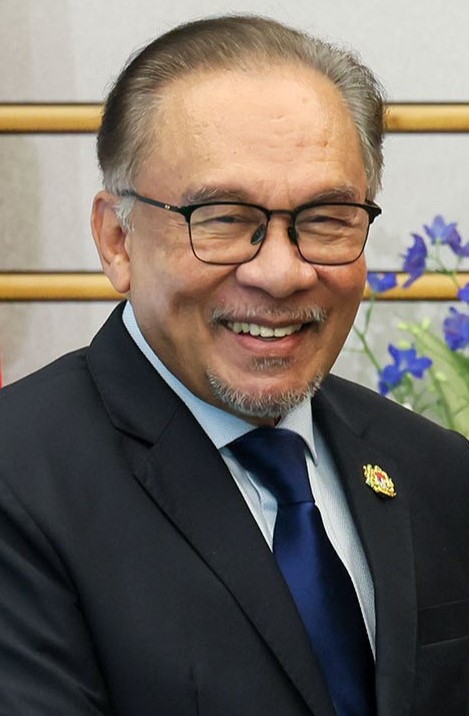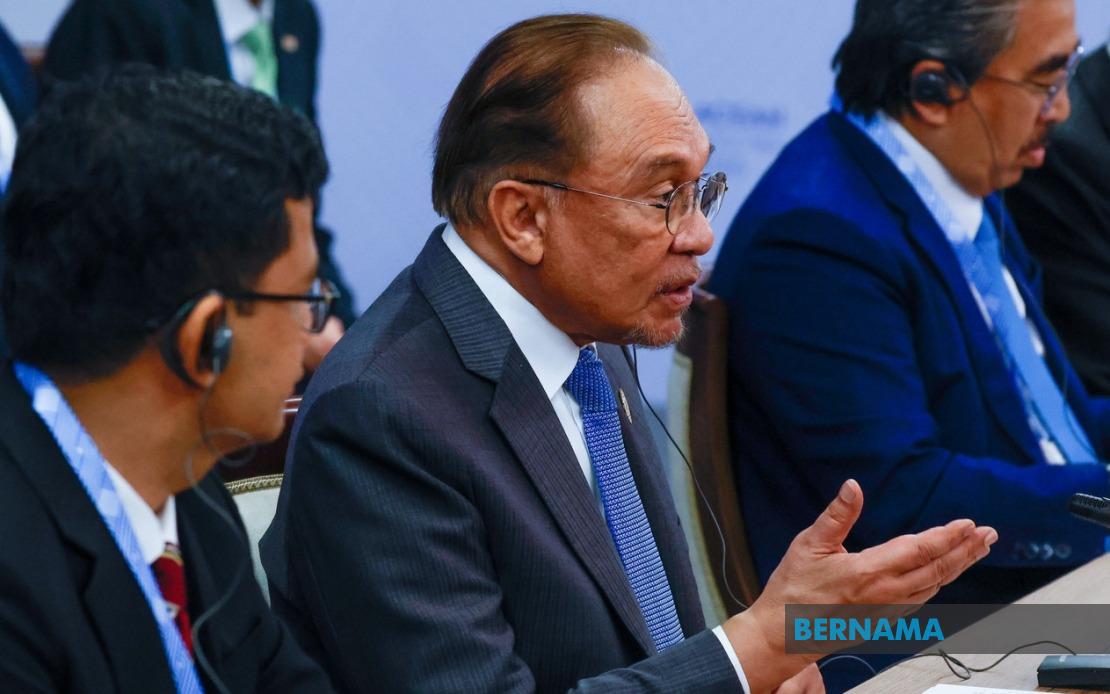
Prime Minister Datuk Seri Anwar Ibrahim used a bilateral meeting with Russian President Vladimir Putin in Kazan on Wednesday to publicly acknowledge Russia's approach to two of the most contentious geopolitical issues facing the Middle East today. Speaking during opening remarks at their talks, Anwar singled out Russia's handling of the Gaza crisis and the broader Iranian question as exemplifying the kind of principled diplomacy Malaysia and many other nations respect. This gesture carries significance beyond diplomatic courtesy, signalling Malaysia's appreciation for Russia's positioning as a major power willing to maintain consistent positions on conflicts that have polarised the international community.
Anwar's commendation specifically referenced what he characterised as Russia's steadfastness and conviction in pursuing its stated policies. The Malaysian Prime Minister framed this acknowledgement as speaking not merely on behalf of his own government but as representing the sentiment of the Malaysian people and others who admire such consistency in international affairs. This rhetorical framing elevates the personal relationship between the two leaders while also suggesting broader regional support for Russia's approach, a notable statement from a leader of a significant Southeast Asian economy and Muslim-majority nation.
The Gaza situation remains one of the most destabilising issues in contemporary international relations, with the conflict having sparked deeply divided responses from global powers and generating humanitarian concerns that resonate particularly strongly across Muslim-majority countries. Russia has positioned itself as advocating for humanitarian access for Palestinians and supporting ceasefire mechanisms, stances that align with widespread sentiment in the Muslim world and among many developing nations concerned about civilian suffering. By highlighting this dimension of Russia's policy, Anwar is essentially validating Russia's claim to balanced geopolitical positioning despite broader Western criticism of Moscow's international conduct.
Iran represents another layer of complexity in this diplomatic triangulation. The country occupies a unique position in Middle Eastern geopolitics, with its nuclear programme, regional influence, and relationships with various international actors all sources of tension and negotiation. Russia's maintenance of close diplomatic and economic ties with Tehran, coupled with its advocacy for dialogue over military escalation, offers an alternative to the confrontational approach that has characterised much of Western policy toward Iran. Malaysia, as a Muslim-majority nation with its own strategic interests in stability across Asia and the Middle East, has reasons to appreciate this Russian positioning, particularly as tensions periodically spike in the Gulf region.
The timing of Anwar's comments reflects Malaysia's broader strategic calculus in an increasingly multipolar world. Rather than aligning exclusively with Western powers or China, Malaysia has sought to maintain balanced relationships across multiple great powers while advancing its own interests in regional stability and economic cooperation. Russia, despite international sanctions and its military action in Ukraine, remains a significant player in global affairs and a supplier of energy resources and military equipment to various nations. For Malaysia, maintaining productive diplomatic relations with Russia serves multiple purposes: securing energy supplies, maintaining political autonomy, and ensuring a voice in discussions about global issues that affect Malaysian interests.
The bilateral meeting in Kazan occurred within a particular regional context where Middle Eastern developments directly impact Malaysia through multiple channels. Malaysian Muslims maintain spiritual and cultural connections to events in Gaza and the broader Islamic world. Additionally, Malaysia's substantial trade relationships and energy dependencies mean that instability in the Middle East carries economic implications. By publicly commending Russia's principled approach, Anwar signals to Malaysia's domestic audience that the government is actively engaging with major powers to promote peace and stability in regions that matter to Malaysian Muslims and Malaysia's economic interests.
Russia's diplomatic positioning on these issues, as outlined in the source material, reflects a consistent narrative that Moscow has maintained through various international forums. Support for Palestinian humanitarian needs and ceasefire mechanisms, combined with diplomatic engagement with Iran rather than isolation, forms a coherent framework that distinguishes Russian policy from the American approach which has traditionally emphasised containment of Iranian power and strong support for Israeli security. This distinction matters particularly for nations like Malaysia that seek alternatives to what they perceive as overly rigid or unilateral great power stances.
Anwar's explicit appreciation for Russia's consistency carries particular weight given Malaysia's position as chair of the Non-Aligned Movement, a coalition of nations historically committed to maintaining independence from bloc politics and great power pressure. By praising Russian consistency on these issues, the Malaysian Prime Minister implicitly endorses a vision of international relations where nations can maintain principled positions even when such positions conflict with Western preferences. This positioning helps Malaysia maintain credibility within the Non-Aligned Movement and among developing nations that value political autonomy and resistance to pressure from established powers.
The strategic significance of the Kazan meeting extends beyond bilateral Malaysia-Russia relations. Russia has been cultivating relationships with key Southeast Asian nations as part of its broader effort to reduce isolation and build alternative partnerships. Malaysia's importance to Russia derives from its role as a significant Muslim-majority economy, its strategic location in one of the world's busiest shipping lanes, and its influential voice within ASEAN and international Muslim organisations. For Malaysia, engagement with Russia provides leverage in negotiations with other powers and demonstrates that the country pursues independent foreign policy based on national interests rather than alignment with any particular bloc.
Looking forward, Malaysia's articulation of appreciation for Russian positions on Gaza and Iran signals that Southeast Asian nations, including major powers within the region, do not necessarily align themselves with Western criticism of Russian foreign policy on all issues. While individual ASEAN members maintain varying degrees of cooperation with Western nations, they also seek to preserve relationships with Russia and other major powers. Malaysia's approach typifies this balancing act, pursuing cooperative relationships across multiple power centres while maintaining focus on issues, like Middle Eastern stability, that have direct relevance to Malaysian interests and the interests of the broader Muslim world.