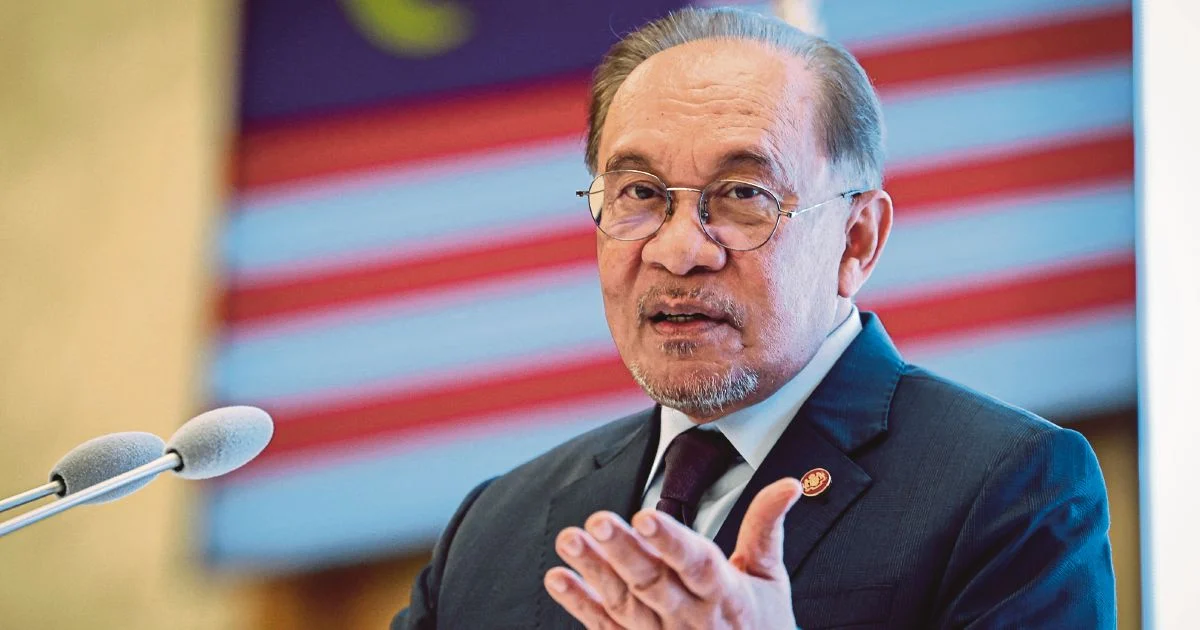
Prime Minister Datuk Seri Anwar Ibrahim has framed Petronas's recent acquisition of a stake in one of the world's largest gas fields in Turkmenistan as a milestone reflecting broader international confidence in Malaysia's institutional strength and economic trajectory. Speaking at Batu Kawan, he underscored how the appointment signals the international business community's faith in the country's political foundations, social cohesion, and capacity to execute major resource development projects at the highest operational standards.
The Petronas deal represents a significant expansion of Malaysia's footprint in Central Asian energy markets, regions that have traditionally been dominated by state-backed operators from Russia, China, and Europe. By securing a position in this strategically important asset, Petronas gains exposure to one of the planet's most prolific hydrocarbon reserves, diversifying the national oil and gas portfolio beyond traditional Southeast Asian and Middle Eastern sources. The timing of the agreement underscores how Malaysian operators continue to compete effectively on the global stage despite regional and international energy market turbulence.
Anwar's remarks carry particular weight given Malaysia's recent political trajectory. Over the past decade, the country experienced considerable institutional volatility, with multiple changes in government and questions about governance standards. The Turkmenistan contract award, therefore, becomes emblematic of a broader narrative: that Malaysia has stabilized, reformed its institutional frameworks, and restored its reputation in international business circles. International energy companies and governments making billion-dollar commitments require assurance that their partners possess political continuity and transparent regulatory environments—attributes that the Petronas appointment implicitly validates.
For Petronas specifically, the Turkmenistan venture expands the company's upstream portfolio at a time when the organization is transitioning toward a portfolio that balances traditional hydrocarbon production with low-carbon energy initiatives. The Central Asian gas field offers substantial reserves that can support decades of production, providing long-term revenue streams even as the broader energy sector undergoes structural shifts. This geographic diversification also reduces Petronas's exposure to potential supply disruptions in the South China Sea or Middle East, enhancing energy security for Malaysia and its regional partners.
The broader implications for Malaysian business and investment extend beyond energy. When multinational corporations and foreign governments select Malaysian partners for flagship infrastructure and resource projects, it sends market signals that ripple across sectors. Financial institutions take note of Malaysia's international positioning, credit rating assessments reflect restored confidence, and investor appetite for Malaysian equities and bonds typically strengthens. The Turkmenistan contract thus functions as a confidence multiplier, potentially attracting further foreign direct investment in manufacturing, technology, and services.
Central Asia itself has become an increasingly attractive theatre for Malaysian energy operators. Turkmenistan possesses proven natural gas reserves among the world's top ten, and demand from China, India, and Europe continues to underpin long-term project economics. As traditional Southeast Asian gas fields mature and production curves flatten, accessing Central Asian reserves offers Petronas and Malaysia an alternative growth vector. The geopolitical risks associated with Central Asian operations differ from those in the Middle East or South China Sea, providing portfolio benefits through genuine diversification.
Anwar's characterization also reflects Malaysia's measured diplomatic positioning in a multipolar world. Rather than aligning exclusively with any single great power, Malaysia maintains pragmatic commercial relationships across the Western and non-Western blocs. The Turkmenistan engagement exemplifies this approach: neither China nor the United States dominates this particular deal, allowing Malaysia to expand its sphere of economic influence independently. This autonomy in foreign economic policy has become increasingly valuable as nations worldwide seek partners that are neither geopolitically vassal states nor ideologically aligned blocs.
The energy sector remains fundamental to Malaysia's fiscal position and currency stability. Oil and gas revenues, though diminished from historical peaks due to field depletion and price volatility, continue to underpin government spending capacity and foreign exchange reserves. International contracts like the Turkmenistan stake extend the operational horizon for Petronas and defer the timeline during which Malaysia must fully execute its economic diversification strategy. While medium-term energy transition remains inevitable, agreements of this scale provide valuable transition decades during which the country can strengthen non-commodity sectors.
Petronas's operational track record in international projects has been tested across numerous jurisdictions and regulatory environments. The company has demonstrated technical competence, project delivery capability, and financial stability—qualities that Turkmenistan's government and state energy enterprise would have thoroughly evaluated before granting participation rights. The award thus vindicated Malaysia's years of investment in developing world-class petroleum engineering and project management expertise, capabilities that generate both direct economic returns and reputational capital in international business networks.
The agreement also carries symbolic weight for Malaysian professionals in the energy sector. Petronas engineers, geologists, and project managers now gain experience in frontier Central Asian environments, building human capital and technical knowledge that enhance Malaysia's standing as a centre of energy sector expertise. These professional networks extend Malaysian influence into international energy forums and deliberative bodies, where Malaysian voices contribute to discussions shaping global energy policy and market evolution.
For Southeast Asian regional dynamics, Malaysia's successful engagement in Central Asian energy projects reinforces the region's presence in transcontinental commerce networks. Rather than remaining confined to intra-ASEAN energy trade, Malaysians are participating in projects that link Asia's economic heartlands to Middle Eastern and European markets. This positioning strengthens Malaysia's relevance in broader Asian geopolitical calculations and elevates its status beyond a regional power into a participant in global resource competition.
Looking forward, the Turkmenistan venture exemplifies how Malaysia can leverage its accumulated institutional advantages—professional workforce, technical capacity, financial resources—to access premium international opportunities. As energy markets transition and hydrocarbon demand geography reshapes, operators with proven international experience and strong partner relationships will navigate these shifts more successfully. Petronas's expanding Central Asian portfolio positions the company and Malaysia favourably for these evolving dynamics, ensuring continued relevance in global energy markets despite the inevitable long-term shift toward renewable and low-carbon sources.

