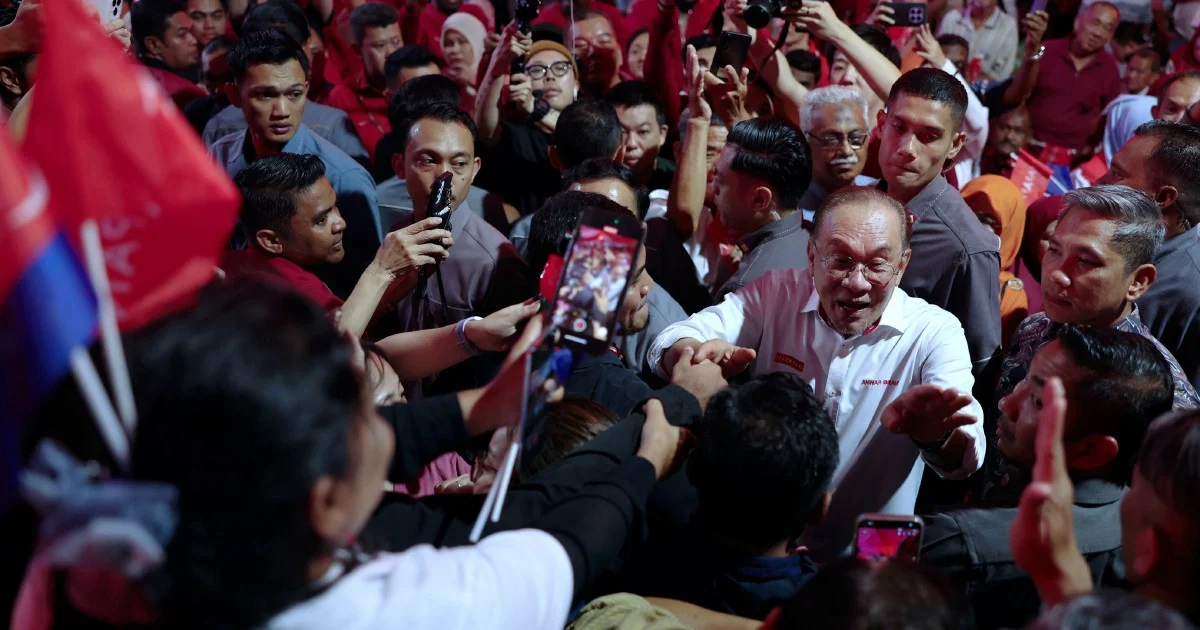
Pakatan Harapan has thrown down its electoral gauntlet in Johor, with coalition chairman Datuk Seri Anwar Ibrahim formally unveiling the complete list of 56 candidates vying for the state assembly during a ceremony in Tangkak. The announcement represents a crucial moment in the coalition's bid to maintain and expand its political footprint in the southern state, one of Malaysia's most important electoral battlegrounds that has shifted hands multiple times in recent years.
The timing of the candidate announcement comes as political momentum builds toward the July 11 polling day, with all parties now locked in intensive campaign preparations. For Pakatan Harapan, the selection process reflects careful calculations about seat distribution among its constituent parties, candidate viability in their respective constituencies, and the coalition's broader strategic priorities in a state where competition remains fierce among multiple political groupings.
Johor's electoral significance cannot be overstated within the Malaysian political landscape. The state holds 56 state assembly seats, making it the third-largest state legislature by seat count after Sarawak and Sabah. Control of Johor carries substantial implications for national politics, given the state's economic importance as a manufacturing and commercial hub, its strategic location near the Singapore border, and its role as a traditional kingmaker in federal politics. A strong showing in Johor can significantly enhance any coalition's bargaining position at the national level.
For Pakatan Harapan specifically, the Johor contest builds on the coalition's performance in the 2022 federal election, when it emerged as the largest bloc in Parliament. However, translating that federal success into sustained state-level dominance remains an ongoing challenge across Malaysia. The Johor election offers the coalition a platform to demonstrate that its federal mandate carries weight in state politics and that it can deliver on governance promises to voters at the state level.
The state has experienced considerable political turbulence in recent years. The leadership and direction of Johor's government has been contested territory, with shifting alliances and factional disputes within various parties creating openings and challenges for competing coalitions. Pakatan Harapan's candidate selections inevitably reflect attempts to address these dynamics by fielding candidates capable of winning previously held seats while also contesting marginal constituencies where the coalition believes it can make gains.
Candidate selection processes in Malaysian elections carry implications far beyond the technical matter of picking individuals to stand for office. The composition of any party's or coalition's lineup signals priorities regarding representation of different demographic groups, geographic regions, and interest bases within the electorate. PH's choice of its 56 candidates therefore communicates messages about whom the coalition believes it can mobilise and which communities it expects to support its vision for Johor's future.
The election also occurs within Malaysia's broader political context of coalition fluidity and non-traditional alignments. The multipolar nature of current Malaysian politics means that state elections no longer follow simple binary contests between two major blocs. Multiple competing coalitions, independent candidates, and shifting party affiliations create complex electoral mathematics that affect strategic calculations around candidate placement and campaign priorities. For Pakatan Harapan, this environment requires careful positioning to compete effectively without alienating coalition partners or voter segments.
Economic considerations loom large in Johor politics, particularly given the state's manufacturing base and its dependence on cross-border trade and investment. Voters in Johor constituencies increasingly evaluate political parties based on their track records in delivering economic growth, job creation, and infrastructure development. Pakatan Harapan's candidate announcements implicitly promise that the coalition can deliver these outcomes, and the individuals selected carry responsibility for translating that promise into community-level advocacy and grassroots mobilisation.
The July 11 election date provides both opportunities and constraints for the coalition's campaign strategy. A mid-year polling date offers certain logistical advantages while also creating scheduling challenges around the ongoing parliamentary session and other political commitments. Pakatan Harapan must now coordinate its campaign machinery across all 56 constituencies while managing internal coalition dynamics and responding to opposition strategies.
Looking ahead, the success of Pakatan Harapan's 56 candidates will largely determine whether the coalition strengthens its grip on Johor or faces a setback that could ripple through Malaysian politics more broadly. Each candidate's personal campaign efforts, local credibility, and ability to connect with voters in their constituencies will ultimately determine outcomes. The coalition's organisational capacity to provide effective support to these candidates across such a large slate will also prove crucial, particularly in constituencies where the race appears competitive.
For Malaysian observers and political analysts, Pakatan Harapan's candidate announcement marks the formal beginning of the substantive electoral contest in Johor. The coming weeks will test whether the coalition's selection process has produced a slate capable of delivering election day victory while also preparing a competent bench of state assemblymen ready to govern if voters entrust PH with another term in Johor.

