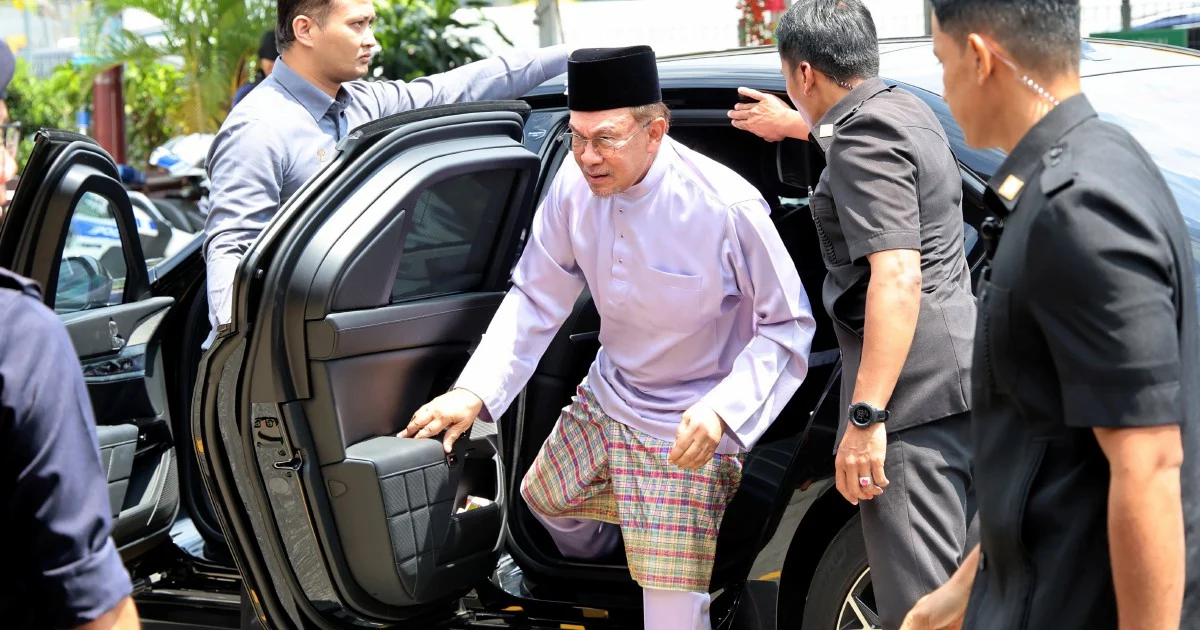
Prime Minister Datuk Seri Anwar Ibrahim has issued a direct appeal to all political parties preparing for the Johor state election, urging them to approach their campaigns with respect and humility rather than arrogance. Speaking in Dengkil, the premier underscored the importance of maintaining proper conduct throughout the electoral period, signalling his expectation that parties will observe high standards of behaviour regardless of their political affiliation or electoral prospects.
The call reflects growing concerns about the tone and tenor of political campaigns across Malaysia, where intense competition frequently spills into territory that many observers consider disrespectful or divisive. By intervening publicly at this stage, Anwar appears to be attempting to set a benchmark for acceptable political discourse before the campaign season potentially escalates. His emphasis on restraint and dignity suggests an awareness that unchecked partisan rhetoric can undermine public confidence in democratic institutions and poisoned the political environment for years to come.
Anwar's message carries particular weight given his position as the nation's chief executive and his long personal history within Malaysia's fractious political landscape. Throughout his career, he has experienced firsthand the corrosive effects of aggressive political attacks and character assaults. His current stance therefore suggests a deliberate effort to model the behaviour he wishes to see from competing parties, using his platform to advocate for a higher standard of political engagement.
The timing of this intervention is significant. The Johor election represents one of the major electoral contests on Malaysia's political calendar, and the state remains a crucial battleground between Barisan Nasional, Pakatan Harapan, and other competing coalitions. The outcome will carry implications not only for state-level governance but potentially for the broader political balance at the federal level. In this high-stakes environment, Anwar's reminder about maintaining respectful conduct takes on added importance.
Campaigning with respect encompasses multiple dimensions beyond simply avoiding personal attacks. It involves treating opponents as legitimate political rivals rather than enemies to be destroyed, acknowledging the validity of different policy perspectives, and refraining from deliberate misrepresentation of rivals' positions. It also means respecting voters' intelligence by engaging substantively with issues rather than relying on divisive identity politics or inflammatory rhetoric designed primarily to provoke emotional reactions.
The emphasis on upholding good values alongside respectful conduct suggests Anwar's concern extends beyond mere civility to encompass the ethical foundations of political competition. This distinction matters because campaigns can technically avoid direct personal attacks while still engaging in morally questionable behaviour—spreading misleading information, making false accusations without naming individuals, or exploiting social divisions for electoral gain. By explicitly mentioning values, Anwar appears to be reaching beyond surface-level courtesy to advocate for genuine ethical conduct.
The risk of arrogance in political campaigns often emerges when parties believe their victory is assured or when they become disconnected from community concerns in their enthusiasm for electoral competition. Arrogance manifests in dismissive attitudes toward voters, condescension toward smaller parties, or assumptions that conventional wisdom guarantees particular outcomes. Anwar's warning implicitly acknowledges that some parties may be tempted toward such behaviour, particularly if they enter the contest with confidence based on previous electoral performance or polling data.
For Malaysian voters in Johor, this prime ministerial intervention provides a framework for evaluating campaign conduct during the election period. Rather than passively accepting whatever rhetoric parties choose to deploy, voters can reference Anwar's public standard—respect, good values, and humility—when assessing whether candidates and campaign materials meet acceptable norms. This empowers the electorate to demand better from their political representatives and to penalise excessive negativity or arrogance through their voting decisions.
The broader context of this appeal also reflects evolving expectations around political conduct in Southeast Asia. Across the region, democracies have increasingly grappled with questions about how to maintain healthy electoral competition without allowing campaigns to become toxic. Some nations have established electoral commissions with explicit authority to sanction campaigns that violate conduct codes, while others have relied primarily on political parties' internal discipline and social pressure. Anwar's approach represents Malaysia's tradition of relying on moral suasion from senior political figures rather than institutional enforcement mechanisms.
Implementation of this standard will depend ultimately on whether parties choose to heed the Prime Minister's advice. Political calculations frequently override such appeals when parties believe aggressive tactics offer electoral advantages. The degree to which parties respect Anwar's exhortation will therefore indicate how seriously Malaysia's political actors take such calls for elevated conduct and whether they prioritise long-term institutional health over short-term competitive advantage.
Looking forward, the Johor campaign will serve as a test case for whether Malaysian politics can maintain substantive competition while avoiding the arrogance and disrespect that Anwar has cautioned against. The outcome of this election will carry implications extending well beyond the state, shaping public perception of how Malaysian democracy functions and whether political competition can occur without sacrificing fundamental values of dignity and respect.

