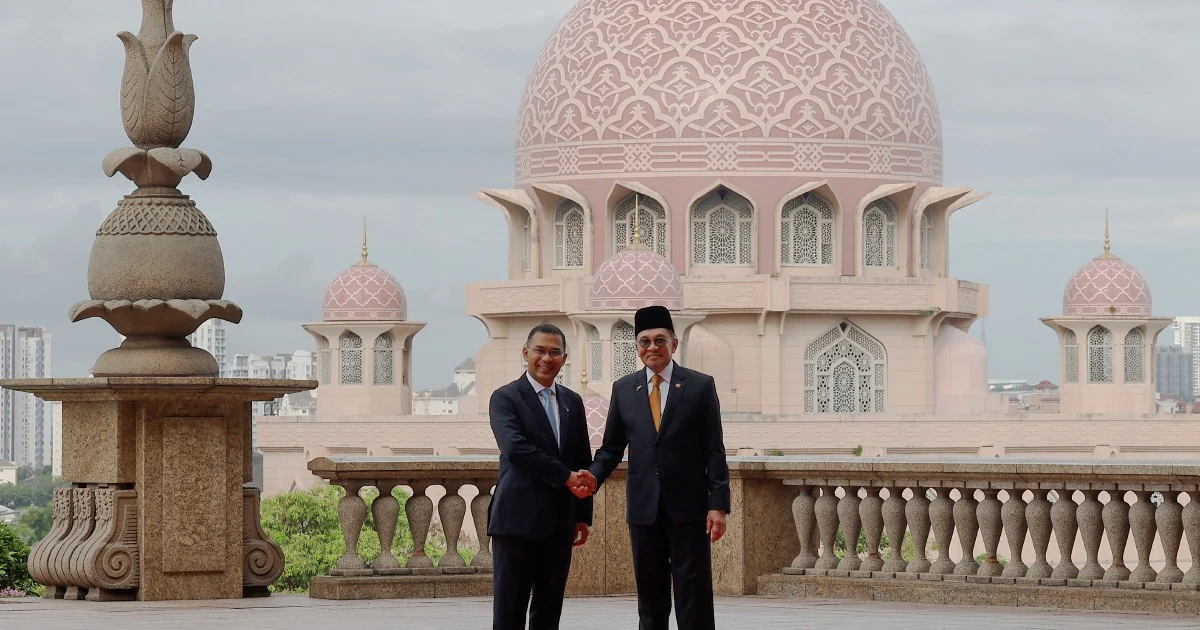
Prime Minister Anwar Ibrahim has hosted Bangladesh Prime Minister Tarique Rahman at Malaysia's administrative capital for an official two-day state visit, underlining the two countries' commitment to deepening their bilateral relationship. The reception at the Perdana Putra Complex in Putrajaya featured the customary ceremonial protocols extended to visiting heads of government, reflecting the diplomatic significance accorded to the visit.
The timing of Rahman's visit comes as Bangladesh continues to navigate a significant political transition following considerable domestic upheaval. Rahman's assumption of leadership has marked a new chapter for the South Asian nation, and his decision to undertake an early international visit to Malaysia signals a strategic prioritization of regional engagement. For Malaysia, the visit represents an opportunity to strengthen ties with a fellow Muslim-majority nation that shares important economic, cultural, and strategic interests across the Indian Ocean region.
Malaysia and Bangladesh maintain longstanding connections rooted in shared heritage and religious identity. Both nations are members of key regional and international organizations, including the Organisation of Islamic Cooperation and the United Nations, providing multiple forums for cooperation. The bilateral relationship has historically encompassed trade, investment, labour mobility, and cultural exchange, making the high-level engagement particularly meaningful for both capitals.
From an economic perspective, the visit offers potential to expand commercial ties between the two economies. Bangladesh, with its substantial garment manufacturing sector and growing pharmaceuticals industry, represents meaningful trade opportunities for Malaysian businesses. Conversely, Malaysian investors have identified Bangladesh's developing infrastructure and large consumer base as attractive investment destinations. Official visits at this level typically provide momentum for negotiating new trade agreements and facilitating business partnerships that might otherwise move more slowly through conventional diplomatic channels.
The labour dimension of Malaysia-Bangladesh relations deserves particular attention. Bangladesh represents one of Malaysia's significant sources of migrant workers across various sectors, from manufacturing to domestic service. Issues affecting this workforce—wage standards, working conditions, skills training, and remittance facilitation—constitute important agenda items in bilateral discussions. Recent regional discourse has emphasized the need for comprehensive frameworks that protect vulnerable migrant workers while meeting labour demands in destination countries, making this aspect of engagement increasingly prominent.
Rahman's visit also carries regional implications extending beyond bilateral concerns. As one of South Asia's major economies and a nation straddling crucial maritime routes, Bangladesh's foreign policy orientation influences broader regional dynamics. Malaysia, similarly positioned as a significant Southeast Asian player with interests in maritime security and regional stability, finds common ground with Bangladesh on numerous strategic questions. The two nations can coordinate on issues ranging from piracy prevention in the Strait of Malacca to maritime boundary management and freedom of navigation principles.
Cultural and educational cooperation form another substantive area for advancement. Both nations benefit from expanding student exchange programmes, academic partnerships, and cultural initiatives that foster mutual understanding between their populations. Malaysia's significant diaspora communities and Bangladesh's growing middle class create organic constituencies interested in cross-cultural engagement. Educational exchanges, in particular, can yield long-term dividends by cultivating networks of professionals and leaders familiar with each other's contexts.
The visit's significance extends to religious and civilizational dimensions as well. Both nations view Islam as a central component of their national identity and foreign policy orientation. Enhanced cooperation on Islamic scholarship, interfaith dialogue initiatives, and halal industry development reflects this shared identity while producing tangible economic benefits. Bangladesh's substantial Muslim scholarly traditions complement Malaysia's established position in Islamic finance and education, creating opportunities for knowledge transfer and collaborative projects.
From a diplomatic standpoint, Rahman's visit demonstrates Bangladesh's interest in maintaining robust engagement with ASEAN and ASEAN-aligned nations. This positioning is particularly relevant given the complex geopolitical environment in South Asia and the Indian Ocean region, where multiple great powers compete for influence. Malaysia, as an established ASEAN member with respected diplomatic credentials, can serve as an important partner for Bangladesh as it charts its international course.
The official visit format signals that both governments view their relationship as deserving elevated attention. Unlike routine working visits or ministerial consultations, prime ministerial encounters typically result in joint statements, coordinated policy announcements, and potentially new bilateral agreements. Such high-level engagement creates institutional momentum for subsequent cooperation across multiple ministries and agencies, establishing frameworks that persist beyond the personalities involved.
Looking forward, the success of this visit will likely be measured by any substantive outcomes—whether new trade protocols emerge, labour agreements are strengthened, or academic partnerships are formalized. Beyond such tangible results, however, the visit reinforces an important principle: that countries across different regions, with different development levels and strategic positions, recognize mutual benefit in closer engagement. For Malaysian readers, the visit underscores their nation's role as a credible partner for engagement with South Asian states, a position that reflects Malaysia's diplomatic experience and its positioning at the intersection of South Asian and Southeast Asian concerns.

