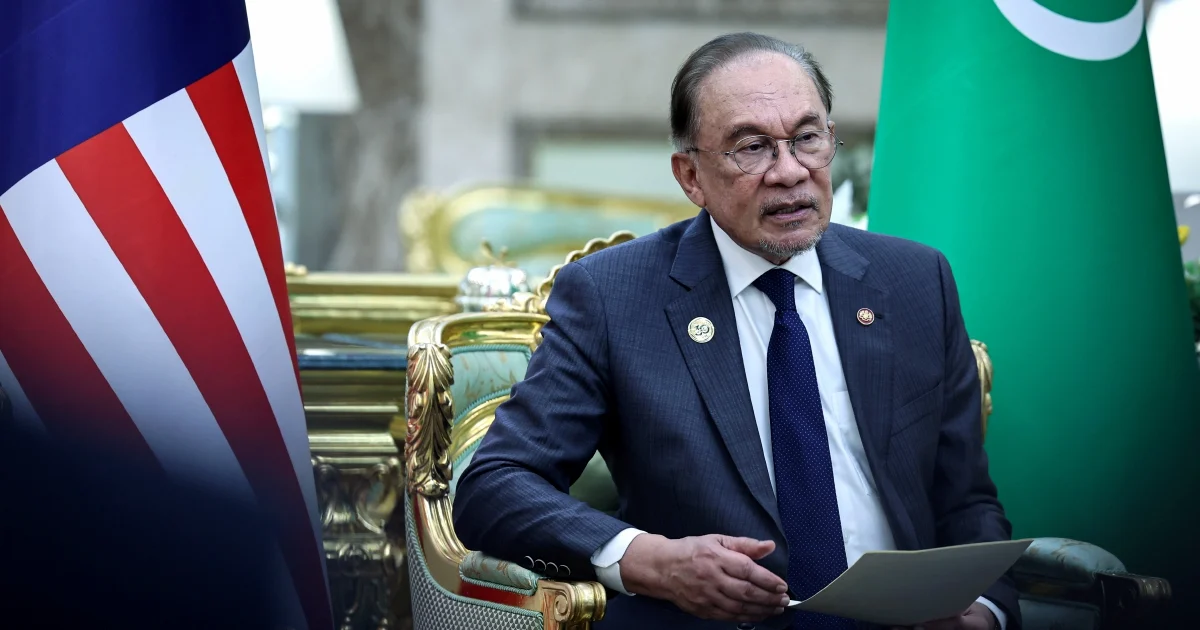
Prime Minister Datuk Seri Anwar Ibrahim has expressed cautious optimism over reports of an initial breakthrough between the United States and Iran, viewing the reported agreement as a significant step toward reducing tensions in a historically volatile region. Speaking at Batu Kawan, Anwar framed the development as positive news extending beyond bilateral relations between Washington and Tehran, instead emphasizing its broader implications for global stability and the international order.
The potential accord represents a notable diplomatic opening in one of the world's most consequential geopolitical standoffs. The United States and Iran have been locked in adversarial relations for more than four decades, with tensions occasionally escalating into military confrontation and proxy conflicts across the Middle East and beyond. Any meaningful breakthrough between them carries implications for energy markets, regional security architectures, and the balance of power across Asia and beyond.
For Malaysia and Southeast Asia, developments affecting Middle Eastern stability hold considerable economic and strategic significance. The region remains a crucial hub for global energy supplies, international shipping lanes, and ongoing diplomatic alignments that shape the broader Indo-Pacific strategic environment. Disruptions stemming from US-Iran tensions have historically created ripple effects across global markets and security architectures, making regional de-escalation directly relevant to Malaysian interests.
Anwar's measured response reflects Malaysia's traditional foreign policy orientation toward non-alignment and constructive engagement in international affairs. The Prime Minister's comments align with Malaysia's consistent advocacy for dialogue-based solutions to international disputes and rejection of zero-sum geopolitical competition. This positioning allows Malaysia to maintain relationships with both Western powers and nations across the Islamic world, a balance increasingly important as regional divisions deepen.
The timing of Anwar's remarks follows a period of intense international diplomacy involving multiple state and non-state actors seeking to manage US-Iran relations. Previous diplomatic efforts have produced the Joint Comprehensive Plan of Action in 2015, though subsequent American withdrawal created prolonged uncertainty. Any new agreement would need to address underlying structural issues that have repeatedly derailed previous initiatives, including sanctions regimes, nuclear programme oversight, and regional security concerns.
From Malaysia's perspective, a stabilized Middle East creates space for productive engagement on other pressing regional issues. The country has diverse interests across the region, including substantial energy imports, significant Muslim diaspora communities, and growing economic partnerships. De-escalation of US-Iran tensions would support Malaysia's ability to pursue these interests without being drawn into wider geopolitical divisions or forced into uncomfortable binary choices between major powers.
Anwar's optimism, however, carries implicit recognition of the fragility characterizing such agreements. Multiple domestic constituencies in both the United States and Iran have consistently opposed rapprochement, viewing compromise as betrayal of national interests. Implementation of any accord would require sustained political commitment and careful management of nationalist sentiment on both sides—a challenge that has repeatedly hindered previous peace processes in the region.
The Prime Minister's endorsement reflects broader Southeast Asian interest in maintaining a rules-based international order capable of accommodating multiple powers and perspectives. Malaysia, as part of the Association of Southeast Asian Nations, has long advocated for such arrangements precisely because they provide smaller nations with mechanisms to influence outcomes and protect interests that might otherwise be overwhelmed by great power competition.
Economically, reduced Middle Eastern tensions would benefit Malaysia through stabilization of oil prices, improved shipping security across vital maritime routes, and expanded opportunities for Malaysian businesses operating throughout the region. The country has invested considerably in Middle Eastern markets across energy, finance, and services sectors, making regional stability directly consequential for Malaysian economic performance.
Anwar's statement also positions Malaysia as a voice for constructive engagement in international affairs at a moment when global polarization is deepening. As chair or participant in various regional and international forums, Malaysia's Prime Minister regularly emphasizes the necessity of dialogue and the risks inherent in allowing disputes to calcify into permanent hostilities. His remarks on the US-Iran situation illustrate this consistent messaging.
Moving forward, the sustainability of any US-Iran agreement will depend on whether both parties can address the underlying interests and security concerns motivating their respective positions. For Malaysia and the broader Southeast Asian region, the outcome carries implications extending far beyond Middle Eastern geography, affecting the viability of multilateral cooperation frameworks and the degree to which smaller nations retain meaningful agency in an increasingly fractious international system. The Prime Minister's measured welcome reflects sophisticated understanding that while diplomatic progress deserves encouragement, the hard work of building durable peace remains ahead.

