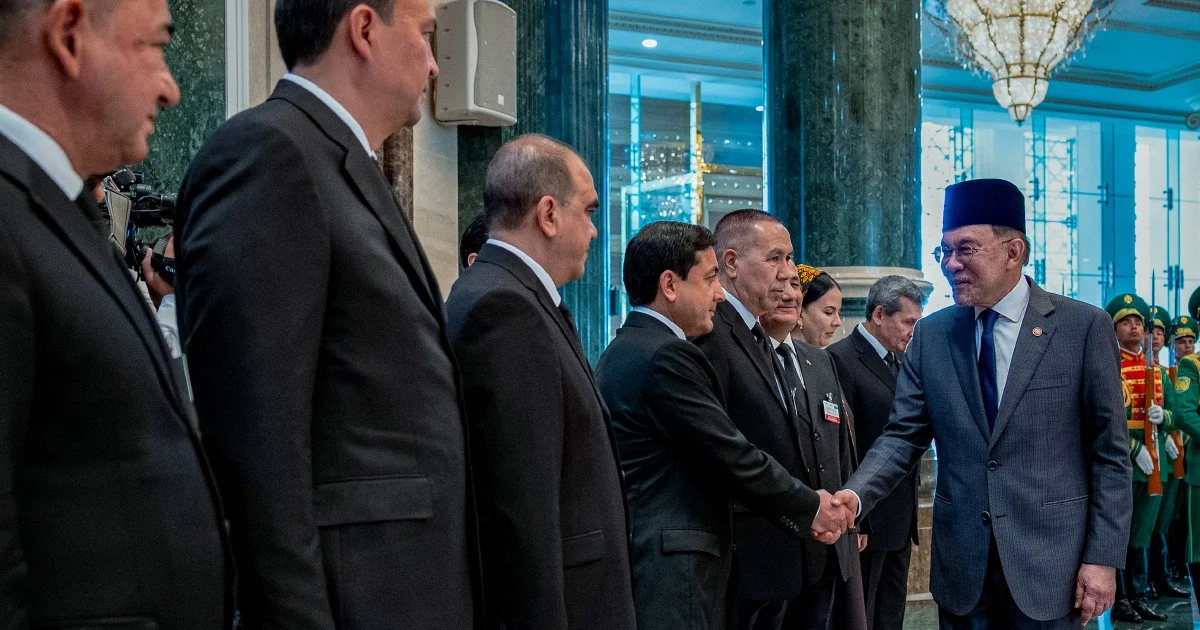
Prime Minister Datuk Seri Anwar Ibrahim's expanding diplomatic agenda is gaining traction among scholars and policymakers as a deliberate strategy to fortify Malaysia's economic foundations during an era of significant global uncertainty. The aggressive pursuit of international relationships and multilateral engagements is increasingly seen as more than ceremonial statecraft—it represents a calculated effort to secure Malaysia's competitive positioning in the regional and global marketplace.
The rationale behind this diplomatic intensification stems from Malaysia's structural vulnerabilities as an open, trade-dependent economy. With approximately 130 percent of gross domestic product stemming from international commerce, the nation faces considerable exposure to supply chain disruptions, protectionist trade policies, and shifting investment flows. Regional analysts note that Malaysia's geographic position along critical sea lanes and its role as a semiconductor manufacturing hub elevate the stakes for maintaining stable, productive relationships with major trading partners and investment sources.
Anwar's engagement strategy encompasses multiple geographical vectors and economic sectors. His administration has prioritised deepening ties with traditional partners in ASEAN, while simultaneously strengthening connections with major economies including China, India, Japan, and South Korea. These relationships extend beyond ceremonial courtesy calls; they translate into preferential trading terms, sector-specific investment commitments, and participation in emerging regional economic frameworks that could reshape trade patterns across Southeast Asia.
The timing of this diplomatic push proves particularly consequential given current global circumstances. Trade tensions between major powers, supply chain realignments following geopolitical shocks, and the energy transition create both risks and opportunities for a nation like Malaysia. A robust network of bilateral and multilateral relationships provides alternative pathways for export diversification, reduces dependence on any single market, and positions Malaysia as an attractive diversification destination for manufacturing and technology companies seeking to reduce geographic concentration risk.
Foreign direct investment inflows constitute a critical metric for assessing diplomatic effectiveness. When international business leaders and government officials perceive a country as a stable, engaged participant in regional affairs with strong institutional relationships, capital allocation decisions favour that destination. Malaysia's success in attracting semiconductor manufacturing investment, renewable energy ventures, and digital economy initiatives directly correlates with the credibility and effectiveness of its diplomatic representation.
The current geopolitical landscape amplifies these considerations. Tensions in the Taiwan Strait, competition for influence across Southeast Asia, and the reshaping of technology supply chains create an environment where countries must actively cultivate relationships rather than assume historical partnerships will persist. Malaysia's strategic location and economic sophistication make it a valuable partner, but only if the government consistently demonstrates engagement, reliability, and the ability to navigate competing interests.
Anwar's diplomatic approach also addresses Malaysia's longer-term development aspirations. The transition toward high-value manufacturing, financial services, and technology sectors requires not merely transactions but sustained partnerships. When foreign corporations and investment firms observe a prime minister actively engaged in relationship-building across multiple continents, it signals institutional stability and strategic commitment that encourages long-term capital deployment rather than transactional engagements.
Regional economic integration initiatives take on heightened significance within this diplomatic framework. Malaysia's participation in arrangements including the Regional Comprehensive Economic Partnership, bilateral trade agreements, and emerging digital economy frameworks depends substantially on the relationships and political capital that diplomatic engagement generates. These institutional arrangements can amplify Malaysia's comparative advantages and provide formal structures through which economic opportunities materialise.
The domestic implications warrant equal attention. When Malaysia's international standing strengthens through demonstrable diplomatic achievement, domestic confidence in economic prospects typically improves. Business investment decisions, hiring patterns, and consumer spending all reflect perceptions of national economic trajectory. Diplomatic success thus generates multiplier effects throughout the economy by improving sentiment and expanding the horizons for private sector expansion.
Challenges remain, however, in translating diplomatic engagement into concrete economic outcomes. International relationships provide the foundation, but Malaysia must simultaneously address infrastructure gaps, workforce development requirements, regulatory clarity, and competitive positioning in emerging sectors. Diplomacy without domestic policy coherence produces limited returns; conversely, outstanding policy frameworks without international relationships cannot access global opportunities effectively.
The emphasis on diplomatic engagement also reflects recognition that economic competition increasingly encompasses strategic, technological, and geopolitical dimensions beyond traditional trade metrics. Countries that maintain strong relationships across the ideological and economic spectrum can better navigate competing demands, secure access to critical technologies and resources, and position their firms within global value chains dominated by partners with whom they maintain robust connections.
Moving forward, the sustainability of Anwar's diplomatic agenda depends on consistent follow-through and the emergence of tangible economic benefits that filter into employment growth, income expansion, and improved living standards across Malaysia. The international community judges diplomatic effectiveness not merely through relationship breadth but through measurable outcomes in trade volumes, investment flows, technology transfer, and collaborative development initiatives.

