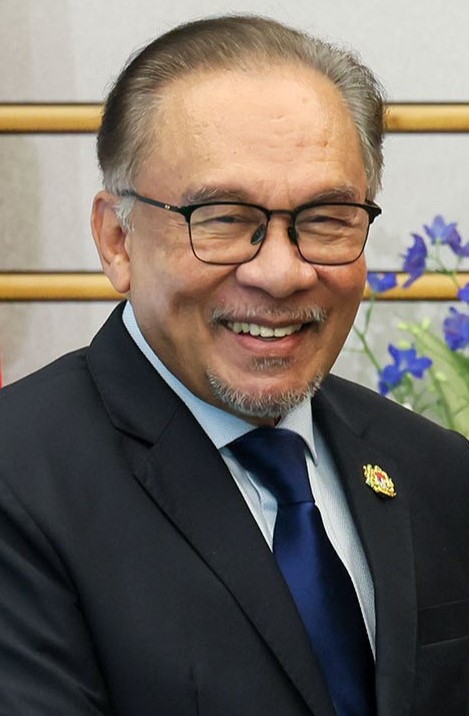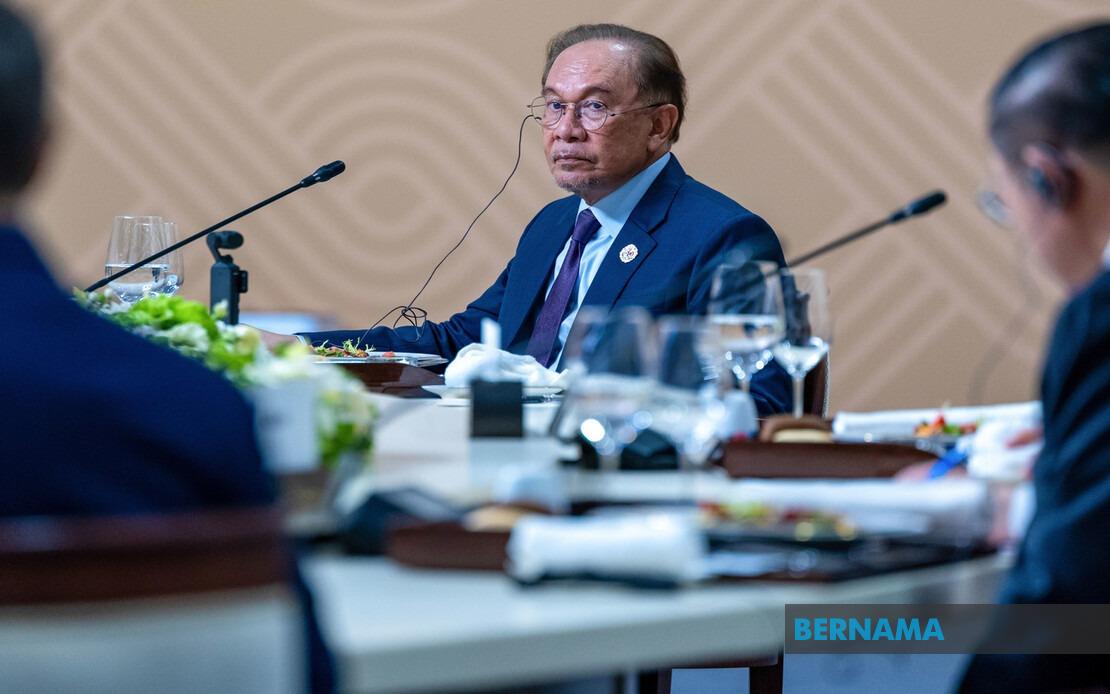
Prime Minister Datuk Seri Anwar Ibrahim has called on ASEAN and the Shanghai Cooperation Organisation to combine their institutional strengths in confronting transnational crime and fortifying energy cooperation, arguing that neither challenge can be effectively addressed through fragmented national approaches alone. Speaking during an ASEAN-Russia working lunch in Kazan on June 18, Anwar emphasised that both blocs possess established mechanisms and complementary capabilities that remain underutilised, particularly given the accelerating pace at which criminal enterprises operate across borders.
The Malaysian leader pointed to a foundational 2005 memorandum of understanding between ASEAN and the SCO that explicitly covers counter-terrorism, narcotic trafficking, money laundering, and economic cooperation. However, Anwar argued that this framework has largely remained dormant in practical terms. He stressed the necessity of moving beyond symbolic commitments to identifying specific domains where measurable outcomes can be achieved within defined periods, thereby demonstrating tangible value to member states and building political momentum for deeper integration.
The scale and sophistication of organised crime networks operating across ASEAN and SCO territories underscore the urgency of Anwar's appeal. Online fraud, human trafficking, and illicit financial flows now traverse national boundaries with such velocity that individual governments struggle to mount effective responses through conventional enforcement mechanisms. These criminal enterprises exploit regulatory gaps, disparities in technology adoption, and limited information-sharing protocols between nations. Anwar highlighted that collaborative intelligence networks and capacity-building initiatives could substantially improve detection and prosecution rates, while simultaneously raising the operational costs for criminal organisations seeking to exploit territorial divisions.
On the energy dimension, Anwar noted that the SCO encompasses substantial hydrocarbon producers and possesses concentrated expertise in energy technology infrastructure. This composition creates natural opportunities for bilateral and multilateral cooperation on energy security matters that extend beyond resource extraction to encompass technological transfer and market integration. Malaysia, he observed, maintains particular interest in pragmatic energy initiatives grounded in technological advancement and sustainability principles rather than purely political objectives.
The Prime Minister identified several priority areas where energy cooperation could advance. These include improving efficiency across generation and distribution networks, ensuring grid stability as renewable integration accelerates, developing liquefied natural gas infrastructure and conventional gas markets, and establishing shared knowledge frameworks addressing operational safety and system resilience. Such cooperation would benefit developing economies within both blocs by reducing capital expenditures through technology-sharing while simultaneously advancing climate transition objectives.
Beyond security and energy, Anwar extended his cooperative vision to encompass ASEAN's engagement with the Eurasian Economic Union, which similarly possesses existing institutional frameworks that require activation. He identified private sector engagement as a critical missing element in current ASEAN-EAEU relations. Business communities across the two blocs operate with limited awareness of investment opportunities, trade partnerships, and complementary supply chains. Anwar advocated for structured mechanisms enabling regular private sector interaction, including participation in major economic forums and business dialogues held alongside flagship events such as the Eastern Economic Forum and St Petersburg International Economic Forum.
Small and medium enterprises represent a particular concern within Anwar's regional integration vision. These firms face asymmetric barriers when attempting to access markets across ASEAN and EAEU territories, lacking the resources for market research, technology adaptation, and compliance navigation that larger corporations maintain. Anwar proposed that both blocs should establish targeted support mechanisms including preferential market access arrangements, technology transfer agreements, and skills development initiatives specifically designed to enhance competitive capacity of smaller enterprises.
Emerging economic domains present nascent opportunities for collaborative advancement. The digital economy, artificial intelligence applications, cybersecurity frameworks, and food security initiatives represent areas where ASEAN and EAEU interests increasingly converge despite geographical separation. Rather than allowing competition over these emerging sectors to drive divisive bilateral dynamics, Anwar suggested that coordinated development approaches could establish regional standards, harmonise regulatory approaches, and distribute benefits across broader constituencies. This strategy would contrast sharply with the fragmented national approaches that typically generate inefficiencies and regulatory arbitrage opportunities.
Anwar's intervention reflects Malaysia's distinctive positioning within both regional architecture. As ASEAN's current chair and an active participant in regional forums, Malaysia maintains diplomatic relationships with SCO member states and EAEU participants while simultaneously anchoring Southeast Asian interests within broader Indo-Pacific frameworks. This positioning grants Malaysian leadership distinctive credibility when advocating for inclusive multilateral mechanisms that do not subordinate ASEAN autonomy to external great power preferences. The Prime Minister's emphasis on pragmatic cooperation focused on demonstrable benefits speaks to legitimate regional concerns that grand geopolitical schemes often generate compliance burdens without commensurate advantages for smaller member states.
The Kazan summit itself reflects intensifying ASEAN-Russia engagement following earlier tensions associated with European security developments. By articulating concrete cooperation proposals rather than engaging in diplomatic abstraction, Anwar seeks to establish a substantive foundation for sustained engagement that survives cyclical fluctuations in broader geopolitical relationships. Energy cooperation particularly appeals to Southeast Asian governments given their exposure to global petroleum price volatility and their strategic interest in diversifying energy sourcing across multiple suppliers and technology platforms.
Implementation challenges should not be minimised, however. Divergent governance structures, varying regulatory standards, and competing strategic priorities across ASEAN and SCO member states have historically impeded institutional cooperation initiatives. Intelligence sharing in particular raises sovereignty concerns and requires sophisticated capacity-building in secure information management. Private sector integration faces practical obstacles related to language barriers, currency volatility, and incompatible commercial law frameworks. Overcoming these obstacles demands sustained political commitment from senior leadership combined with investment in technical infrastructure and bureaucratic training.
The timing of Anwar's proposals carries significance given broader regional dynamics. As great power competition intensifies and maritime security challenges compound, smaller regional powers increasingly seek frameworks through which they can advance collective interests without aligning exclusively with any single external power. ASEAN's traditional preference for non-alignment finds expression through strategic partnerships with multiple external actors simultaneously. Anwar's emphasis on practical cooperation mechanisms rather than alignment declarations reflects this enduring ASEAN strategic doctrine while acknowledging the imperative for enhanced institutional collaboration on genuine shared challenges.
Moving forward, the critical test will involve translating diplomatic rhetoric into institutional mechanisms staffed with appropriately qualified personnel and resourced with sufficient budgetary allocations. Establishing working groups dedicated to priority sectors, organising regular coordination meetings among enforcement agencies, and creating business forums with meaningful participation incentives require sustained administrative effort extending beyond ceremonial summit declarations. Malaysian leadership during its ASEAN chairmanship provides an opportunity to convert these aspirational proposals into operational reality through bilateral engagement with major stakeholders and institutional architecture refinement.