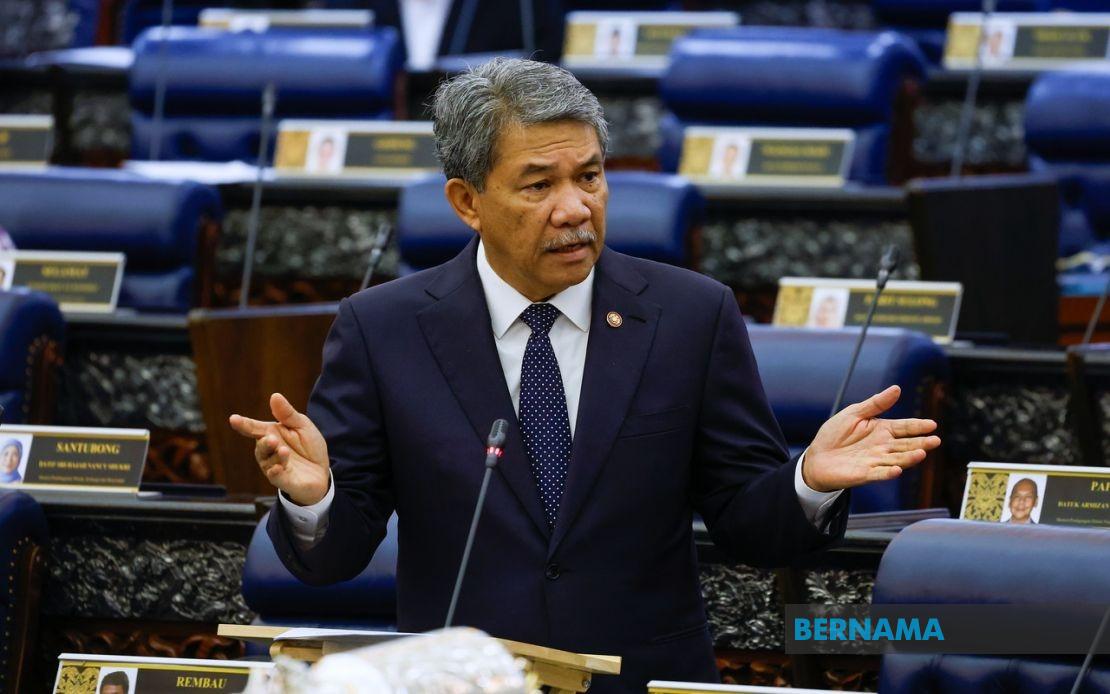
The Association of Southeast Asian Nations is actively reconsidering how to breathe new life into its flagship Myanmar peace framework, acknowledging that the existing strategy requires recalibration to move beyond rhetorical commitments. Foreign Minister Datuk Seri Mohamad Hasan disclosed on June 25 that regional capitals are searching for alternative methods to operationalise the Five-Point Consensus, which has struggled to translate diplomatic accord into tangible progress on the ground since its adoption in April 2021.
While Myanmar has recorded scattered improvements in recent months, the nation continues to fall substantially short of the benchmarks stipulated under the Five-Point Consensus, the cornerstone document for ASEAN-mediated resolution efforts. The framework, initially billed as a pathway to ending Myanmar's civil conflict following the military coup, remains the primary instrument guiding regional diplomacy, yet its implementation has repeatedly hit obstacles. This disconnect between stated objectives and ground realities has prompted regional leaders to explore structural and procedural adjustments to maximise the framework's effectiveness.
At the 48th ASEAN Summit convened in Cebu on May 8, heads of state delegated responsibility to foreign ministers to undertake a series of informal consultations with Myanmar, tasked with evaluating the current trajectory and charting potential pathways forward. This shift signals growing recognition that traditional bilateral and multilateral engagement channels may require supplementation with more flexible, exploratory dialogue mechanisms. The directive reflects frustration within ASEAN capitals over the persistence of violence and humanitarian deterioration despite repeated calls for adherence to peace processes.
Modifying the Five-Point Consensus framework itself is not off the table, though any substantive revision would require formal approval from ASEAN heads of state, preserving the bloc's hierarchical decision-making structure. Mohamad articulated this carefully during parliamentary questioning, indicating that while the framework endures as the foundational architecture, foreign ministers now bear responsibility for developing joint implementation strategies with the Myanmar junta. This delegation suggests a pragmatic acknowledgment that foreign ministries, operating with greater tactical flexibility than heads of state forums, may navigate practical obstacles more effectively.
Malaysia has specifically advocated for extending the six-month ceasefire that Myanmar implemented and scheduled to expire at the end of July, proposing that an extension constitute the opening phase of a more expansive peace architecture. This proposal reflects strategic thinking about sequencing: rather than abandoning incremental progress, Malaysia seeks to build successive phases that gradually incorporate broader stakeholder participation and institutional depth. The argument posits that maintaining pause in active hostilities creates space for confidence-building measures that might otherwise prove impossible amidst ongoing combat.
Accompanying this ceasefire extension proposal, Malaysia has pressed Myanmar to articulate a transparent roadmap detailing how the peace process will advance beyond current positions. Critically, this roadmap must encompass inclusive dialogue architecture bringing together the military government, pro-democracy opposition elements including the National Unity Government, armed resistance movements such as the People's Defence Force, and the constellation of ethnic armed organisations controlling substantial territorial areas. Constructing such an inclusive mechanism poses enormous challenges given the profound antagonisms separating these actors and their incompatible visions for Myanmar's political future.
Underlying ASEAN's renewed emphasis on Myanmar engagement is an acute concern that prolonged international marginalisation of the country could create strategic vacuums inviting external powers to pursue narrower geopolitical interests. ASEAN leadership worries that if Myanmar remains excluded from regional economic and diplomatic structures, Beijing, Delhi, Washington, and other extraregional actors will intensify their respective involvements, each pursuing their own strategic calculus without coordination or restraint. This fragmentation would compound Myanmar's internal fractures whilst complicating the regional security landscape.
For Southeast Asia's stability and cohesion, Myanmar's trajectory carries outsized significance. A collapsed state descending into civil war, with competing external powers jockeying for influence, would generate refugee flows, transnational criminal networks, and proxy conflicts affecting neighbouring Thailand, Laos, and Bangladesh. ASEAN's principle of non-interference in members' internal affairs, whilst traditionally a cornerstone doctrine, must be balanced against the reality that Myanmar's internal collapse becomes an external security concern for the broader region. This tension explains why ASEAN has invested unprecedented diplomatic capital in Myanmar despite Myanmar's government's limited receptiveness to external mediation.
Malaysia's commitment to sustained engagement with all contending parties—the junta authorities, the National Unity Government operating from exile, the People's Defence Force leading armed resistance, and ethnic armed groups—positions Kuala Lumpur as a particularly active node in ASEAN's Myanmar diplomacy. Malaysian officials maintain channels across this fractious political landscape, enabling a degree of shuttle diplomacy that more aligned parties struggle to execute. This role reflects Malaysia's own experience managing ethno-religious complexity and its diplomatic infrastructure developed through decades of engagement with Myanmar's diverse stakeholder base.
The foreign minister's emphasis on preventing a strategic vacuum occupied by external powers reflects a sophisticated appreciation of great power competition dynamics in Southeast Asia. Myanmar's geographic location astride key trade routes, its resource endowments, and its strategic depth make it a natural arena for competing influence. China's Belt and Road Initiative investments in Myanmar infrastructure, India's counter-balancing engagement, and the United States' intermittent interest in Myanmar's democratic trajectory create a multipolar competition that ASEAN prefers to manage collaboratively rather than witnessing bilateral power struggles.
Moving forward, the success of ASEAN's revised approach depends substantially on whether Myanmar's military leadership demonstrates willingness to negotiate beyond tactical adjustments to ceasefire mechanics. The junta has shown limited appetite for power-sharing arrangements or fundamental political transformation, viewing concessions as threats to institutional interests. Yet ASEAN's strategy implicitly assumes that sustained diplomatic engagement, economic incentives, and security partnerships can gradually shift calculations within Myanmar's ruling circles. This assumption may require testing against eventual reality.
The Six-Month window until the ceasefire expires presents both opportunity and deadline. If ASEAN can engineer meaningful extension accompanied by visible progress toward inclusive dialogue, the revised approach may gain credibility. Conversely, if the ceasefire lapses into renewed combat with minimal diplomatic breakthrough, the consensus-based ASEAN mechanism may face questions about its capacity to influence outcomes in member states resisting external pressure. The stakes extend beyond Myanmar to encompass ASEAN's broader credibility as a conflict resolution mechanism and the region's ability to manage internal crises without extraregional intervention.

