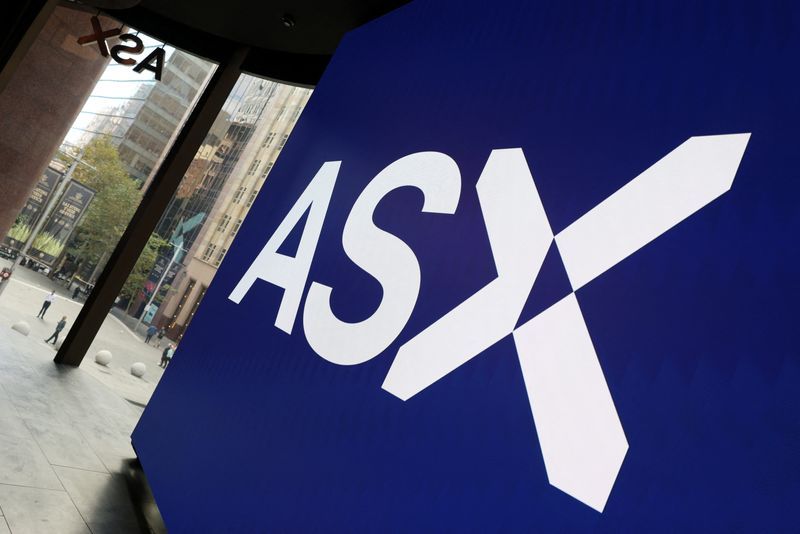
Australia's ASX has admitted to making misleading public statements about progress on a major software overhaul project and agreed to pay a substantial penalty to settle regulatory action by the nation's corporate watchdog. The exchange will pay A$20.5 million (approximately US$14.5 million), pending Federal Court approval, alongside an additional A$3 million contribution towards the regulator's legal costs, marking a resolution to enforcement action initiated nearly a year ago.
The Australian Securities & Investments Commission (ASIC) launched legal proceedings against ASX in August 2024, targeting communications issued in 2022 regarding the Clearing House Electronic Subregister System (CHESS) initiative. This modernisation project had been earmarked for launch in 2023, but the exchange made representations about its trajectory while internal risk assessments painted a far grimmer picture of its viability and timeline prospects.
Internal documentation revealed that by late 2021, ASX had categorised the CHESS initiative with a "red" status designation—a critical risk flag indicating substantial jeopardy to on-schedule delivery. Notably, the exchange's audit and risk committee received explicit briefings on this deteriorating status a mere seven days before the company issued a February 2022 trading update to the broader investment community, according to details emerged during ASIC's legal action.
When announcing the then-Chief Executive Officer Dominic Stevens' forthcoming retirement on February 10, 2022, ASX characterised the replacement CHESS project as "progressing well" in its statement to the market. This description stood in stark contrast to the "red" alert status that internal governance structures had assigned to the programme just days earlier, creating a substantial disconnect between what stakeholders heard publicly and what company leadership understood privately about operational realities.
The troubled project ultimately proved unworkable. ASX formally abandoned the original CHESS initiative in November 2022 following a catalogue of technical failures, cost overruns, and reassessment efforts that consumed considerable corporate resources. The fundamental rethink that followed led to a materially different approach, with the revised clearing system eventually commencing operations in April 2024.
The rebuilt CHESS framework is now projected to reach full operational completion by 2029, representing a significantly extended timeline compared to the 2023 target that informed the 2022 public communications. This multi-year extension underscores the magnitude of the challenges that the exchange had encountered but not adequately disclosed to investors during the relevant period.
For market participants and institutional stakeholders across Southeast Asia and the broader region, this settlement carries important implications about governance standards and disclosure practices at a major exchange operator. ASX serves as a critical trading venue for numerous Malaysian institutional investors, sovereign wealth funds, and multinational corporations with Australian exposure. The integrity of communications from major exchange operators directly affects confidence in listed markets and the information asymmetries between management and investors.
The financial settlement will appear in ASX's fiscal 2026 accounts as a non-recurring significant item, with both the A$20.5 million penalty and the A$3 million cost contribution processed through the same reporting period. This accounting treatment ensures transparency with shareholders about the one-off nature of these regulatory costs and separates them from ordinary operational results.
Market reaction proved modest, with ASX shares closing up 2.6 percent at A$50.46, a performance that outpaced the broader Australian benchmark index's 1.3 percent advance. The muted response suggests investors may have already priced in the potential for regulatory consequences, or view the settled matter as removing a lingering source of uncertainty that had weighed on valuations.
Industry analysts note that while the financial penalty provides formal closure to the legal dispute, the reputational dimensions may linger. One observer suggested that the settlement "closes a legal chapter, but the reputational discount and deeper structural questions will persist until ASX faces real competitive pressure or demonstrates genuine cultural reform through delivery." This assessment points to broader concerns about institutional culture, disclosure practices, and whether the exchange will implement substantive operational improvements to prevent similar episodes.
The CHESS modernisation initiative remains critical infrastructure for Australian financial markets, affecting settlement efficiency, clearing operations, and system resilience across the region's largest economy. Any further delays or technical complications could have cascading effects on trading venues throughout Southeast Asia that maintain interconnections or operational dependencies with Australian clearing and settlement systems.
For Malaysian market participants monitoring ASX governance developments, this case underscores the importance of rigorous information verification when assessing public statements from major exchange operators and infrastructure providers. The incident illustrates how substantial gaps can emerge between internal risk assessments and external communications, particularly during periods of organisational transition or technically complex projects requiring cross-border participant coordination.
%22%2F%3E%3C%2Fpattern%3E%3C%2Fdefs%3E%3Crect%20width%3D%22100%25%22%20height%3D%22100%25%22%20fill%3D%22url(%23phsfqfg)%22%2F%3E%3Crect%20width%3D%22100%25%22%20height%3D%22100%25%22%20fill%3D%22url(%23phsfqfp)%22%2F%3E%3Ctext%20x%3D%2250%25%22%20y%3D%2250%25%22%20text-anchor%3D%22middle%22%20dominant-baseline%3D%22central%22%20fill%3D%22rgba(255%2C255%2C255%2C0.95)%22%20font-family%3D%22Georgia%2C%20'Times%20New%20Roman'%2C%20serif%22%20font-weight%3D%22700%22%20font-size%3D%22194%22%20letter-spacing%3D%22-0.02em%22%3EINSIGHT%3C%2Ftext%3E%3C%2Fsvg%3E)
%22%2F%3E%3C%2Fpattern%3E%3C%2Fdefs%3E%3Crect%20width%3D%22100%25%22%20height%3D%22100%25%22%20fill%3D%22url(%23ph39uxag)%22%2F%3E%3Crect%20width%3D%22100%25%22%20height%3D%22100%25%22%20fill%3D%22url(%23ph39uxap)%22%2F%3E%3Ctext%20x%3D%2250%25%22%20y%3D%2250%25%22%20text-anchor%3D%22middle%22%20dominant-baseline%3D%22central%22%20fill%3D%22rgba(255%2C255%2C255%2C0.95)%22%20font-family%3D%22Georgia%2C%20'Times%20New%20Roman'%2C%20serif%22%20font-weight%3D%22700%22%20font-size%3D%22136%22%20letter-spacing%3D%22-0.02em%22%3EArchitect%E2%80%A6%3C%2Ftext%3E%3C%2Fsvg%3E)
%22%2F%3E%3C%2Fpattern%3E%3C%2Fdefs%3E%3Crect%20width%3D%22100%25%22%20height%3D%22100%25%22%20fill%3D%22url(%23ph2xyy5g)%22%2F%3E%3Crect%20width%3D%22100%25%22%20height%3D%22100%25%22%20fill%3D%22url(%23ph2xyy5p)%22%2F%3E%3Ctext%20x%3D%2250%25%22%20y%3D%2250%25%22%20text-anchor%3D%22middle%22%20dominant-baseline%3D%22central%22%20fill%3D%22rgba(255%2C255%2C255%2C0.95)%22%20font-family%3D%22Georgia%2C%20'Times%20New%20Roman'%2C%20serif%22%20font-weight%3D%22700%22%20font-size%3D%22226%22%20letter-spacing%3D%22-0.02em%22%3EShared%3C%2Ftext%3E%3C%2Fsvg%3E)