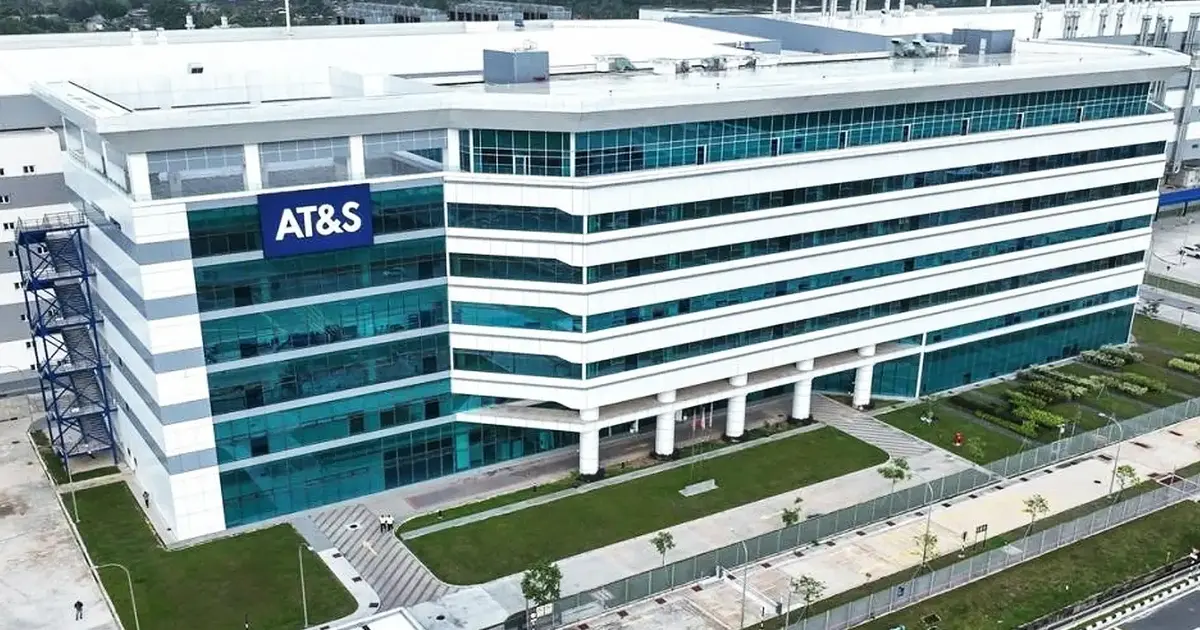
Austria's AT&S has announced plans to invest RM9.4 billion in constructing a cutting-edge semiconductor manufacturing facility in Kulim, Kedah, in what Prime Minister Anwar Ibrahim characterised as a validation of Malaysia's investment climate and institutional standards. The substantial commitment represents one of the region's most significant foreign direct investments in the semiconductor space this year and underscores renewed optimism among multinational technology firms regarding Malaysia's capacity to host high-value manufacturing operations.
Anwar described the Austrian company's decision as concrete evidence that international capital continues to view Malaysia as a credible and stable destination for technology investments. The Premier emphasised that such large-scale commitments are predicated not solely on cost considerations but increasingly on a nation's governance structures, regulatory predictability, and workforce capabilities. He framed the Kulim project within a broader narrative of Malaysia's economic transformation and its positioning as a regional hub for semiconductor research, development, and production.
The AT&S investment comes at a critical juncture for Malaysia's semiconductor industry, which has faced intensifying competition from other Southeast Asian countries and established manufacturing hubs in East Asia. Kulim, located in Kedah's industrial zones, has emerged as a strategic node in Malaysia's chipmaking ecosystem, attracting several related manufacturing and supply-chain operations. The new facility will significantly expand the country's assembly, testing, and packaging capacity—critical segments of the semiconductor value chain that generate substantial employment and downstream economic activity.
Semiconductor manufacturing has become increasingly important to Malaysia's economic strategy, particularly given the sector's resilience and high-value exports during global trade disruptions. The industry currently contributes billions to Malaysia's annual export revenues and employs tens of thousands of workers across multiple skill levels. By securing projects like AT&S's Kulim plant, Malaysia strengthens its bargaining position in semiconductor supply chains and reduces dependency on individual markets or competitor nations for critical manufacturing infrastructure.
The timing of AT&S's announcement reflects broader geopolitical and economic shifts reshaping semiconductor geography. Major manufacturers have increasingly sought to diversify production away from concentration in Taiwan and China, driven by supply-chain vulnerabilities exposed during recent global crises and rising geopolitical tensions. Southeast Asia, particularly Malaysia, presents an attractive alternative, offering existing industrial ecosystems, experienced workforces, competitive operating costs, and proximity to key markets across Asia-Pacific.
AT&S, as a major global player in electronics manufacturing services, brings significant technical expertise and international clientele to the Kulim operation. The company's decision to establish manufacturing presence in Malaysia rather than alternative locations suggests confidence in the state's industrial governance, reliability of utilities and logistics infrastructure, and stability of the regulatory environment. These factors carry particular weight for semiconductor firms that cannot tolerate production disruptions or quality inconsistencies.
The investment carries substantial implications for Kedah's economic development trajectory. Beyond the direct manufacturing employment, the facility will generate multiplier effects through construction activity, supply-chain development, and ancillary services. The project may also catalyse additional investments from suppliers and complementary technology firms seeking to cluster near major manufacturing nodes. Kulim's positioning as a growing electronics hub could accelerate further if properly supported by state and federal infrastructure investments in transportation, power supply, and telecommunications.
For Malaysia's broader economic objectives, the AT&S commitment demonstrates that the country remains competitive in attracting technology-intensive manufacturing despite labour cost increases and rising competition from neighbours like Vietnam and Thailand. The project validates policy frameworks designed to position Malaysia as a high-technology manufacturing destination rather than purely a low-cost assembly location. This positioning is essential for sustaining wage growth and employment quality even as automation reduces overall labour requirements across manufacturing sectors.
However, realising the full potential of such investments requires sustained attention to complementary factors beyond the initial investment decision. Worker training and skills development remain critical bottlenecks in Malaysia's semiconductor sector, particularly as manufacturing becomes more technically sophisticated. Educational institutions and industry bodies must collaborate to develop talent pipelines capable of filling roles across engineering, technical operations, and management. The government's commitment to supporting such workforce initiatives will significantly influence whether investments like AT&S's plant translate into lasting competitive advantages.
The Kulim facility also highlights Malaysia's capacity to attract manufacturing investment that aligns with global sustainability and technological advancement goals. Modern semiconductor plants embody significant engineering complexity and require sophisticated supply chains and skilled management. By succeeding in securing such facilities, Malaysia demonstrates capabilities beyond simple labour arbitrage, positioning itself within knowledge-intensive global networks. This positioning enhances the country's long-term economic resilience and supports higher-value employment opportunities across the workforce.
Regionally, Malaysia's success in attracting AT&S's investment sends signals to other major semiconductor firms evaluating Southeast Asian locations. Successful execution of the Kulim project, delivering on schedule and quality commitments, could generate positive momentum for future investment recruitment. Conversely, any operational challenges or implementation delays could signal weakness to potential investors considering the region. The stakes extend beyond individual corporate decisions to encompass Malaysia's broader competitiveness within the critical semiconductor industry.