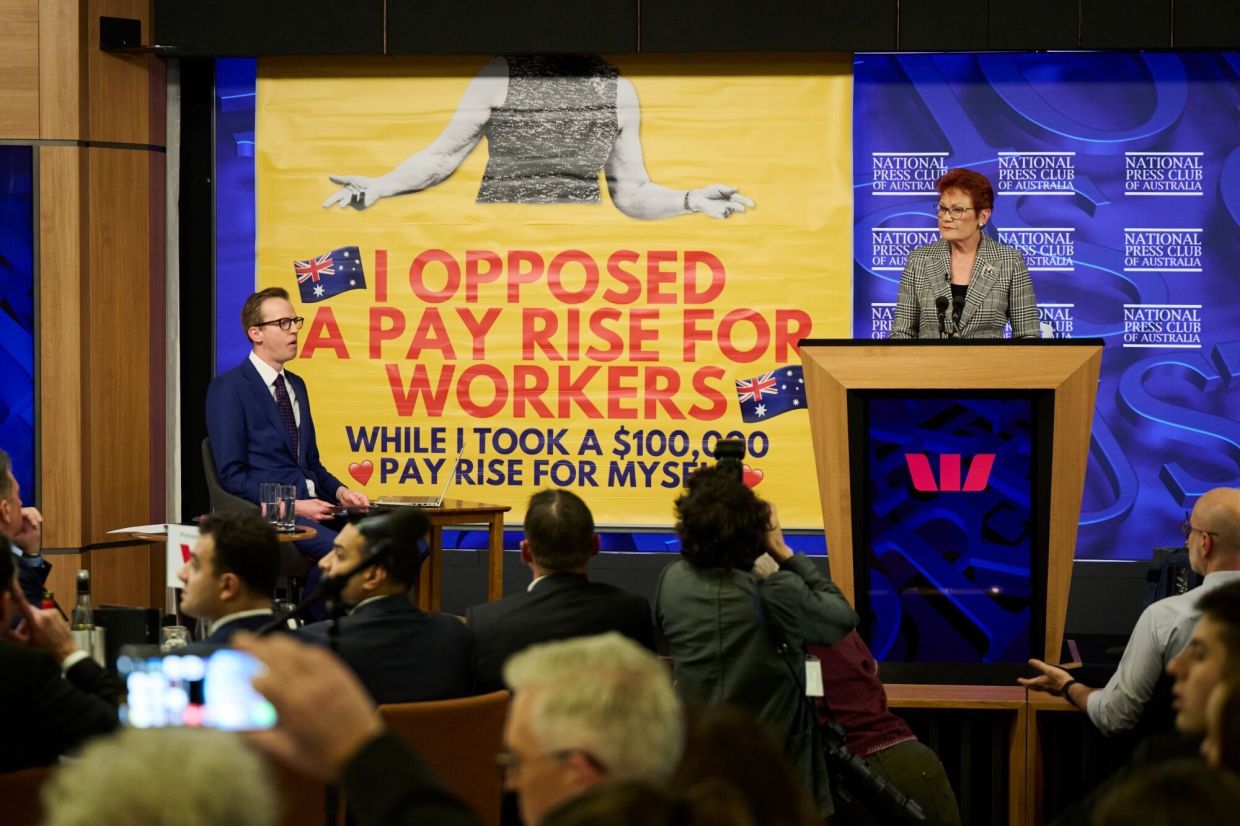
Australia's hard-right One Nation party, led by Pauline Hanson, is intensifying its political assault on the nation's multicultural framework, arguing instead for a unified cultural identity despite remaining racially diverse. Speaking at the National Press Club in Canberra on Wednesday, Hanson drew a distinction between racial and cultural cohesion, claiming Australians can maintain demographic diversity while adhering to a single cultural model. Her remarks represent the first address she has delivered at the venue during three decades in politics, underscoring the platform her party has secured amid shifting public sentiment.
Hanson's central argument pivots on linking multiculturalism to Australia's acute housing affordability crisis, a growing pain that has emerged as a defining political issue across the nation. She contends that the "utterly flawed policy of multiculturalism" sits at the heart of residential unaffordability, positioning immigration restriction as a remedial solution to supply shortages and skyrocketing property prices. This framing connects abstract cultural concerns to concrete economic grievances, a rhetorical strategy that resonates with voters struggling to secure adequate housing. The claim that immigration directly drives housing scarcity represents a convenient causal narrative that simplifies complex real estate dynamics involving zoning restrictions, construction capacity, investment patterns, and demographic shifts.
The One Nation leader has pledged to substantially reduce migration intake, extending restrictive measures to exclude individuals from regions she characterises as "immersed in extremism like radical Islam." This formulation echoes broader Western anxieties about religious and cultural assimilation, though it operationalises those concerns through immigration policy. Hanson's framing avoids explicit reference to specific countries or religions while maintaining implicit targeting through coded language about extremism, a rhetorical device that maintains plausible deniability while clearly signalling intent to voters attuned to such messaging.
One Nation's recent electoral momentum reflects genuine shifts in Australian political dynamics. The party has surged in opinion polling over the past year, with acceleration following the centre-right coalition government's electoral collapse in May of the previous year. This repositioning has occurred as major established parties lose voter confidence, creating space for populist insurgents to capture disaffected constituencies. The party's rise suggests deeper public dissatisfaction with mainstream political responses to economic hardship, a phenomenon replicated across developed democracies where populist movements have gained traction during periods of economic stress.
Australia's economic landscape has deteriorated substantially, creating conditions favorable to anti-establishment messaging. Resurgent inflation, elevated interest rates, and fuel cost spikes—partly attributable to geopolitical tensions including conflict in Iran—have compressed household budgets and eroded purchasing power. These pressures accumulate upon existing anxieties about housing affordability, creating a perfect storm of economic anxiety. One Nation has positioned immigration and green energy transition costs as culprits in this economic malaise, offering voters simple explanations for complex phenomena and clear targets for resentment.
Prime Minister Anthony Albanese's Labor government has attempted to cushion these economic pressures through targeted interventions, including temporary reductions to fuel excise tax and proposed reforms addressing housing affordability constraints. These measures represent orthodox policy responses to cost-of-living challenges, though they operate within existing frameworks rather than fundamentally restructuring economic arrangements. Albanese has publicly identified the rise of populist movements and grievance-driven political rhetoric as symptoms of deeper economic dysfunction, suggesting that when conventional political economy fails ordinary citizens, alternative movements inevitably gain hearing.
Hanson's distinction between multiracialism and multiculturalism proves analytically revealing about the philosophical basis for her argument. By accepting demographic diversity while rejecting cultural pluralism, she proposes a model wherein immigrants retain visible difference while conforming to an undefined but apparently singular Australian cultural essence. This framework echoes assimilationist models popular in earlier decades, demanding cultural homogenisation as the price for residential inclusion. The approach differs from both genuinely multicultural frameworks that celebrate plural traditions and exclusionary nationalism that rejects immigration altogether, occupying an intermediate position that may explain its appeal to voters uncomfortable with both extremes.
The resonance of Hanson's message across Australian society reflects legitimate anxieties about rapid change, economic insecurity, and social cohesion. Rather than dismissing populist concerns, mainstream policymakers might recognise that when conventional parties fail to adequately address housing shortages, wage stagnation, and inflation, voters rationally seek alternatives. However, the causal mechanisms linking immigration to these outcomes remain contestable, with housing constraints reflecting regulatory and investment patterns at least as much as population growth. Hanson's framing offers explanatory satisfaction rather than empirical precision, converting diffuse economic anxiety into concrete political grievance.
For Southeast Asian observers, Hanson's ascendancy carries particular significance given Australia's regional role and the substantial diaspora populations from the region residing in Australian cities. Political movements that frame cultural pluralism as incompatible with social stability potentially influence bilateral relationships and affect security cooperation frameworks spanning the region. Australia's approach to immigration and multiculturalism shapes regional perceptions of the country's commitment to inclusive development and cross-cultural engagement, dimensions affecting everything from trade relationships to strategic partnerships.

