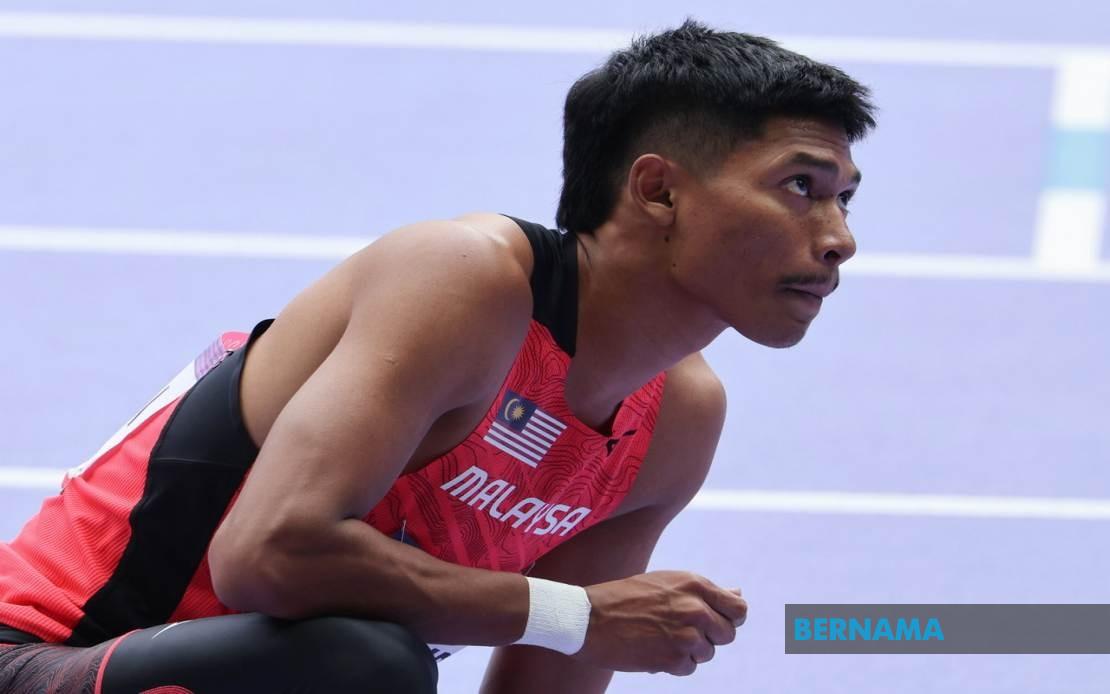
Malaysia's 100-metre national record holder Muhammad Azeem Mohd Fahmi has signalled his intention to remain in the country to pursue his athletics ambitions, having recently concluded his academic programme at Auburn University in the United States after a four-year stint abroad. The 22-year-old sprinter, whose personal best of 10.09 seconds stands as the national benchmark in his discipline, made the announcement in Kuala Lumpur on June 20, emphasizing his desire to prioritize family reconnection over immediate overseas opportunities.
The decision reflects a deliberate shift in Azeem's priorities as he enters a critical phase of his athletic development. Having spent the better part of his late teens and early twenties pursuing education in Alabama, the sprinter now seeks to recalibrate his focus towards the people who have supported his trajectory. His comments underscore the often-overlooked toll of international athletic scholarships on family bonds, a reality resonating across Southeast Asian sporting circles where young talents frequently pursue opportunities abroad at considerable personal and relational cost.
Azeem's training arrangement moving forward demonstrates a pragmatic hybrid approach designed to maintain international standards whilst anchoring his development in Malaysian soil. His American coach Ken Harnden, who guided him during his Auburn years, will continue providing technical programming and strategic direction remotely. This partnership will be complemented by day-to-day supervision from local coach Muhammad Amir Izwan Tan Abdullah, creating a two-tier coaching model that leverages both international expertise and domestic familiarity with Malaysian athletic infrastructure and conditions.
The significance of Azeem's decision extends beyond personal preference to carry implications for Malaysian athletics development. Sprint performance represents one of the sport's most globally competitive disciplines, and maintaining momentum in this arena requires consistent access to world-class coaching and training facilities. By remaining domestically based whilst preserving his relationship with an international coach, Azeem positions himself as a potential catalyst for elevating Malaysia's sprinting programme, particularly if his achievements continue upward trajectory.
Azeem's national record of 10.09 seconds, whilst impressive for Malaysia, reflects the competitive gap between Southeast Asian sprint standards and global benchmarks. Elite sprinters across major athletic nations regularly compete in the 9.5 to 9.8 second range, indicating substantial room for improvement. The availability of quality training partnerships and medical support systems in Malaysia will therefore prove crucial in determining whether Azeem can narrow this performance differential through sustained domestic development.
The sprinter also articulated intentions to pursue postgraduate education, revealing a commitment to intellectual development alongside athletic progression. He indicated plans to undertake a master's degree programme, though he has deferred formal academic enrolment to concentrate entirely on sporting preparation over the immediate months ahead. This sequencing reflects mature prioritization, recognizing that athletic performance windows are finite and that attempting to balance intensive training with demanding graduate studies could compromise both pursuits.
Azeem's preference for remaining in Malaysia aligns with broader conversations within Southeast Asian sports about talent retention and domestic capacity building. Historically, regional athletes have pursued opportunities in developed sporting nations, sometimes resulting in permanent emigration or reduced contributions to home country programmes. By choosing to remain locally whilst retaining international coaching support, Azeem models an alternative pathway that may appeal to younger Malaysian athletes contemplating similar decisions.
The coaching arrangement Azeem has established reflects practical realities of contemporary distance athletics management. Digital communication platforms enable real-time feedback and programme adjustments regardless of geographic separation, allowing elite coaches to maintain involvement with athletes across continents. This technological enabling has democratized access to international expertise to some extent, reducing the absolute necessity for physical relocation that characterized previous generations of elite athlete development.
From a broader Southeast Asian perspective, Azeem's commitment to remaining in Malaysia carries implications for regional sprint development. Malaysia has historically produced competitive middle-distance runners but has struggled to establish consistency in sprint events. Should Azeem continue improving, he could help shift perceptions about Malaysian sprint potential, potentially inspiring investment in dedicated sprint coaching infrastructure and programmes that might benefit the next generation of regional athletes.
The athlete's emphasis on family support throughout his previous four years abroad underscores an often-underappreciated dimension of athletic achievement. Behind Azeem's personal records stand parental sacrifice, sibling encouragement, and coach investment in his potential. His decision to prioritize proximity to these supporters reflects recognition that sustainable athletic development requires emotional and psychological infrastructure alongside physical and technical preparation.
Looking forward, Azeem's programme will test whether the hybrid coaching model can produce continued improvements in an increasingly competitive global sprint landscape. His development trajectory over the coming months will provide valuable data for Malaysian athletics administration regarding optimal support structures for aspiring elite sprinters. Success could validate a domestic-development approach enhanced by international expertise, whilst challenges might highlight limitations requiring additional investment in Malaysian sporting infrastructure.

