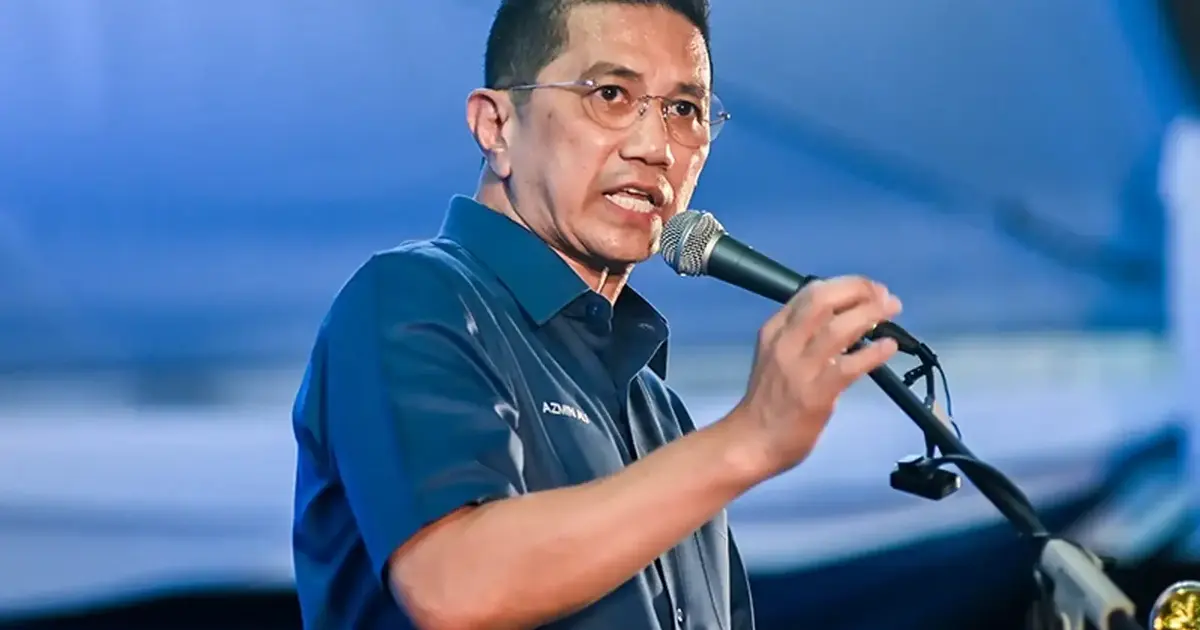
Azmin Ali's established relationships across Malaysia's fractured opposition landscape have positioned him as a potential facilitator of reconciliation between Bersatu and Pakatan Harapan, according to political analysts observing the evolving dynamics within the opposition bloc. The Bersatu secretary-general's unique standing stems from his lengthy history as a senior figure in PKR, the People's Justice Party, before his controversial departure that contributed to the political turbulence of recent years. This background, spanning a full decade at PKR's deputy leadership level, has endowed him with deep connections to the broader coalition ecosystem that could prove valuable if party restructuring becomes necessary.
The speculation regarding Azmin's potential role emerges against a backdrop of sustained tensions within Bersatu over leadership direction and the party's relationship with the broader Pakatan Harapan alliance. Political observers suggest that should the current party leadership under Muhyiddin Yassin undergo transition, Azmin's profile as someone trusted across multiple party structures could make him instrumental in bridging divides that have widened over recent political cycles. His history as a PKR deputy president provides what analysts term a crucial "institutional memory" of coalition mechanics and personal relationships that transcend current factional boundaries.
The significance of Azmin's position extends beyond mere party politics, reflecting deeper questions about how Malaysia's opposition parties might reorganise themselves. His tenure at PKR's deputy helm exposed him to the complex network of alliances, policy discussions, and personal bonds that characterise coalition governance. This experience distinguishes him from other Bersatu figures who may lack comparable familiarity with Pakatan Harapan's operational culture and interpersonal frameworks. Political commentators note that successful coalition building requires individuals who comprehend multiple party cultures and command respect across factional lines—qualities analysts ascribe to the Bersatu secretary-general.
Bersatu itself has occupied an ambiguous position within Malaysian opposition politics since its establishment, having alternated between alignment with and distance from Pakatan Harapan. The party founded by former Prime Minister Mahathir Mohamad remains structurally distinct from the coalition's core parties—PKR, DAP, and Amanah—though periodic reconciliation attempts have punctuated recent years. Azmin's potential intermediary role suggests that future realignment might prioritise individuals capable of translating between these distinct party cultures rather than entrenching further division through incompatible leadership choices.
Analysts emphasise that such scenarios remain speculative, contingent upon internal Bersatu dynamics and broader political developments that remain unpredictable. Nevertheless, the attention devoted to Azmin's potential reflects recognition that opposition coalition restoration requires particular types of leaders—those with credibility rooted in sustained engagement across multiple party structures. His decade as PKR deputy president represents precisely this category of experience, distinguishing him from contemporaries whose careers have unfolded primarily within single party boundaries.
The broader implications for Malaysian politics extend to questions about how opposition parties might recalibrate themselves during a period of sustained government-led consolidation. Coalition renewal, should it occur, would demand leaders capable of restoring trust among groups that have experienced recent estrangement. Azmin's background as someone who transitioned from PKR to Bersatu positions him uniquely as someone whose career trajectory itself exemplifies the possibility of movement between these supposedly distinct political camps. This lived experience of navigating inter-party relationships could prove invaluable in conversations centred on renewed cooperation.
Within Bersatu specifically, Azmin's role as secretary-general places him at the party's organisational epicentre, responsible for internal machinery and coordination. This operational responsibility, combined with his cross-coalition background, creates conditions where he might influence both internal party sentiment and external relationships simultaneously. Political observers suggest that such positioning matters considerably if Bersatu leadership were to contemplate strategic reorientation toward closer Pakatan Harapan engagement.
The question of Muhyiddin's continued leadership remains central to speculation about Azmin's potential future prominence. The current Bersatu chairperson commands significant support within his party, yet circumstances in Malaysian politics shift with notable rapidity. Should circumstances evolve such that internal party mechanisms generated pressure for leadership reconfiguration, Azmin's profile as someone simultaneously embedded in Bersatu's current structure while maintaining soft power across coalition boundaries might render him a natural successor figure capable of pursuing different strategic directions.
For Malaysian readers observing opposition politics, the focus on Azmin reflects deeper anxieties about whether fractionalised opposition structures can reconstruct themselves into effective counterweights to government initiatives. Coalition effectiveness has historically depended on leadership capable of managing diverse party interests while maintaining overall strategic coherence. Analysts suggest that Azmin's particular experience—PKR deputy president turned Bersatu secretary-general—encapsulates precisely the type of career progression required to navigate such complex requirements, positioning him as someone whose advancement might signal broader opposition realignment possibilities.
Looking forward, the analytical attention devoted to Azmin's potential role underscores how Malaysian opposition reconstruction, should it occur, may prioritise leaders whose personal histories embody coalition cooperation rather than entrenched factional loyalty. His decade in PKR leadership before transitioning to Bersatu suggests someone capable of maintaining relationships across party boundaries while executing substantial organisational responsibilities. Whether such speculative scenarios materialise depends on political developments beyond his control, yet the conversation itself reflects recognition that rebuilding opposition cohesion would benefit from particular types of leadership—individuals whose credentials span the institutional landscape that contemporary Malaysian politics increasingly requires.

