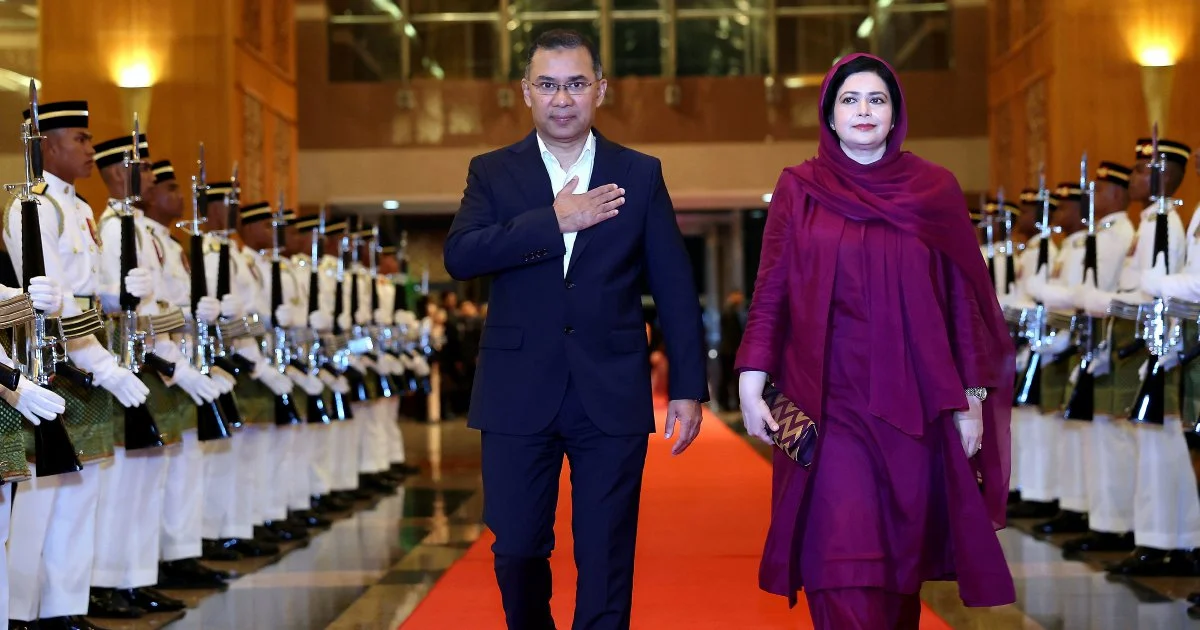
Bangladesh Prime Minister Tarique Rahman has made an open appeal to the Malaysian business community, encouraging companies to seize fresh investment opportunities emerging across the South Asian nation. Speaking at a gathering in Kuala Lumpur, Rahman emphasised that Bangladesh is undergoing a period of significant economic transformation, characterised by improving regulatory frameworks and a government commitment to fostering entrepreneurship and foreign direct investment.
The timing of Rahman's outreach reflects broader regional positioning as Bangladesh seeks to diversify its economic partnerships beyond its traditional trading blocs. Malaysian firms, particularly those with expertise in manufacturing, telecommunications, financial services, and infrastructure development, represent a strategic fit with Bangladesh's current developmental priorities. The country has been steadily improving its ranking in global competitiveness indices, and business leaders have been signalling receptiveness to quality foreign capital that can drive technology transfer and employment generation.
Bangladesh's appeal to Malaysian investors carries particular significance given the existing trade relationship between the two Muslim-majority nations and their membership in regional organisations like ASEAN and the Organisation of Islamic Cooperation. Malaysia has accumulated considerable experience in industrial development, financial sector modernisation, and infrastructure megaprojects—expertise that could address specific bottlenecks in Bangladesh's growth trajectory. The reciprocal benefits are clear: Malaysian investors gain access to a market of over 170 million people with rising consumption capacity, while Bangladesh secures capital, technical knowledge, and management expertise.
The South Asian nation has in recent years undertaken substantial reforms aimed at enhancing the business environment. These include streamlining corporate registration processes, improving power generation capacity to address longstanding energy constraints, and expanding digital infrastructure. The government has also designated special economic zones with tax incentives and streamlined customs procedures designed specifically to attract multinational enterprises. Rahman's message underscores that these institutional changes are now bearing fruit and creating tangible opportunities for incoming investors.
Malaysian investors already have footprints across various sectors in Bangladesh, particularly in pharmaceuticals, garment manufacturing, and telecommunications. However, analysts suggest there remains significant untapped potential, especially in infrastructure financing, renewable energy projects, and technology-driven industries. Malaysian companies with established regional networks and capital deployment experience could play a catalytic role in unlocking these opportunities while addressing current constraints in Bangladesh's development landscape.
The invitation also reflects geopolitical calculus, as South Asian nations look to strengthen economic ties with Southeast Asian partners to build a more resilient regional economic architecture. Bangladesh's strategic location at the crossroads of South Asia and Southeast Asia makes it an attractive hub for companies seeking to serve multiple markets. For Malaysian firms, particularly those with supply chain operations or distribution networks, establishing presence in Bangladesh could enhance their competitive positioning across the Indo-Pacific region.
Infrastructure represents one of the most promising sectors for Malaysian investment consideration. Bangladesh faces significant demand for port improvements, transportation networks, power generation facilities, and telecommunications infrastructure. Malaysian construction and engineering firms, along with companies experienced in financing and operating public-private partnerships, could address these needs while securing stable, long-term returns. The Bangladeshi government has indicated willingness to work with competent foreign investors on complex infrastructure projects that require substantial capital commitment and technical expertise.
The business-friendly ecosystem that Rahman highlighted includes ongoing improvements in contract enforcement, intellectual property protections, and dispute resolution mechanisms. These institutional improvements are critical for sophisticated investors concerned about legal certainty and asset protection. Bangladesh has been gradually enhancing its legal frameworks and training specialised commercial courts to handle complex business disputes more efficiently, signalling seriousness about attracting quality foreign capital.
Manufacturing and export-oriented industries present another compelling opportunity for Malaysian investors exploring Bangladesh. The country's relatively young, skilled labour force, combined with competitive wage structures compared to Southeast Asian peers, makes it attractive for companies considering production relocation or expansion. The government has been investing in vocational training and industrial parks with supporting infrastructure, creating increasingly viable operational environments for multinational manufacturers.
Rahman's appeal to Malaysian investors should be understood within the context of Bangladesh's broader strategy to accelerate economic growth and reduce its reliance on traditional sectors like garment manufacturing and remittances. Policymakers recognise that attracting diverse foreign investment flows is essential for achieving middle-income status and building a more resilient, innovation-driven economy. Malaysian investors, bringing capital, technology, and regional expertise, align well with these developmental ambitions.
From a Malaysian perspective, Bangladesh represents a growing market with rising disposable incomes and expanding consumer bases for goods and services. Companies in retail, telecommunications, financial services, and consumer goods have opportunities to tap this expanding demographic dividend. The geographic proximity of Bangladesh to Southeast Asia also means lower logistics costs and faster market access compared to investments in more distant locations.
Rahman's visit and investment pitch underscore a broader trend whereby South and Southeast Asian nations are increasingly recognising the complementary nature of their economies and seeking deeper commercial integration. For Malaysian investors with appetite for emerging market exposure and long-term growth potential, Bangladesh offers an avenue to participate in the development of a major South Asian economy at a formative stage of its economic transition.

