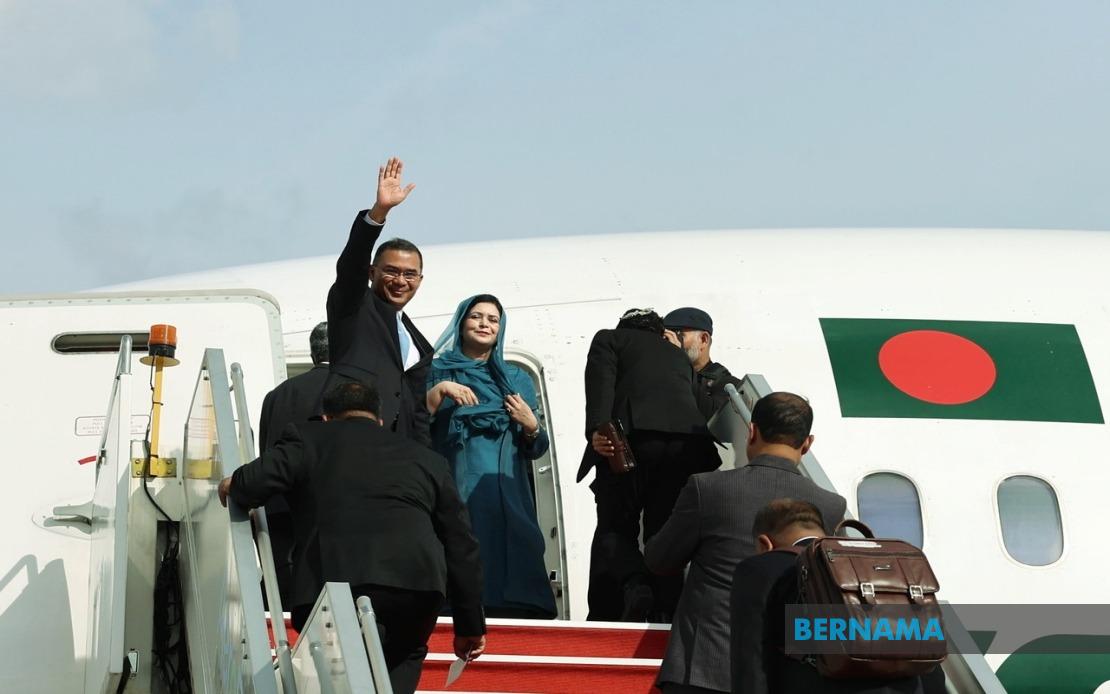
Bangladesh Prime Minister Tarique Rahman departed from Kuala Lumpur International Airport on Saturday afternoon, concluding a two-day official visit to Malaysia that focused on deepening ties between the two nations. The premier's aircraft lifted off from the Bunga Raya Complex at 5 pm, accompanied by his spouse Dr Zubaida Rahman and senior delegation members. Minister in the Prime Minister's Department (Religious Affairs) Dr Zulkifli Hasan attended the ceremonial farewell, which included a full guard of honour featuring 28 officers and personnel from the First Battalion of the Royal Ranger Regiment.
Rahman's visit marks his first bilateral foreign tour since taking office in February 2026, underscoring Malaysia's strategic importance in Bangladesh's early diplomatic engagements. The timing reflects both nations' commitment to revitalising their partnership, which has historically been shaped by cultural affinity and economic complementarity within South Asia and broader Asian frameworks. His subsequent travel to China signals Bangladesh's multi-directional diplomatic approach, balancing engagement across major Asian powers.
The centrepiece of the visit was a substantial bilateral meeting between Rahman and Prime Minister Datuk Seri Anwar Ibrahim at the Perdana Putra Complex. During these discussions, both leaders examined pressing regional and international challenges requiring coordinated responses. The agenda encompassed not merely bilateral commerce but also global geopolitical questions, reflecting a sophisticated understanding that economic partnerships thrive only within stable political environments.
Trade and investment emerged as primary discussion points, with both governments committed to establishing a fast-track free trade agreement to expedite commercial integration. Currently, bilateral trade reached RM12.18 billion in 2025, with Malaysian exports—dominated by petroleum products—accounting for RM10.08 billion. Bangladesh supplied RM2.10 billion in imports, principally textiles, apparel and footwear. Ranking as Malaysia's second-largest trading partner in South Asia after India and 28th globally, Bangladesh represents substantial untapped potential for Malaysian exporters and investors seeking diversification beyond traditional markets.
Beyond conventional commerce, the leaders identified strategic growth sectors demanding collaborative investment. Semiconductors, energy, human resource development, agriculture and education featured prominently in discussions, acknowledging that sustainable economic growth requires technological advancement and human capital development. The semiconductor sector particularly resonates given Malaysia's established position in semiconductor manufacturing and testing, where Bangladesh's large labour force and manufacturing ambitions create natural partnership opportunities.
The halal industry loomed large in deliberations, reflecting Bangladesh's Muslim-majority population and Malaysia's established credentials as a halal certification hub. Enhanced cooperation in this domain positions both nations to capture expanding global halal markets while strengthening Islamic economic frameworks. Such initiatives also address Malaysian concerns about market diversification as competition from other regional halal producers intensifies.
Both governments formalised their commitment through binding instruments including a Memorandum of Understanding on Cultural Cooperation and two Exchanges of Notes covering Counter-Terrorism Research and Investment Promotion and Facilitation. These documents institutionalise cooperation frameworks, creating mechanisms for sustained engagement beyond political cycles. Counter-terrorism collaboration particularly holds relevance given both nations' security challenges and the transnational nature of modern security threats.
Bangladesh's institutional ambitions featured significantly in conversations. Rahman reiterated his country's aspiration to secure ASEAN Sectoral Dialogue Partner status, a progression that would deepen institutional participation in Southeast Asian affairs. Simultaneously, Bangladesh expressed interest in joining the Regional Comprehensive Economic Partnership, the world's largest trade bloc by GDP. Malaysian support for both initiatives would substantially facilitate their realisation, positioning Dhaka closer to integration with dynamic regional economic structures.
Global affairs discussions revealed remarkable alignment on contentious international matters. Both nations expressed unequivocal support for the Palestinian cause while voicing deep humanitarian concerns regarding Gaza's civilian population. This convergence reflects both countries' substantial Muslim populations and principled commitment to international humanitarian norms. Additionally, both leaders stressed the importance of achieving lasting peace in the Gulf region and Iran, acknowledging that Middle Eastern instability reverberates through Asian energy markets and investment flows.
The Rohingya refugee crisis commanded particular attention, with both governments pledging to strengthen cooperation through ASEAN mechanisms toward a durable solution. Malaysia, hosting over one million Rohingya refugees, faces acute humanitarian and security challenges requiring sustained regional support. Bangladesh's commitment to engagement with Myanmar authorities, while maintaining pressure for refugee returns, aligns with Malaysian interests in achieving comprehensive regional resolution rather than indefinite displacement.
Rahman's visit unfolds against a backdrop of Bangladesh's dramatic political transformation. His assumption of power follows significant domestic upheaval, making international engagement crucial for establishing governmental legitimacy and securing investment confidence. Malaysia's ceremonial reception and substantive engagement signalled regional acceptance and willingness to support Bangladesh's political stabilisation.
The broader implications for Southeast Asia are substantial. A strengthened Malaysia-Bangladesh partnership contributes to regional stability and economic integration, particularly as South Asian nations increasingly orient toward ASEAN participation. Bangladesh's potential integration into ASEAN-centred institutions and trade arrangements would expand the regional bloc's reach into South Asia, creating economic networks spanning hundreds of millions of consumers and producers.
Looking forward, success in implementing the fast-track free trade agreement will prove decisive. Tangible commercial benefits must accompany diplomatic goodwill to sustain momentum. Malaysian businesses should particularly explore opportunities in textiles, garments and agricultural product sourcing, while Bangladeshi entrepreneurs require facilitated access to Malaysian capital, technology and expertise. The next phase requires institutional follow-up converting bilateral statements into practical results that demonstrably enhance prosperity for citizens of both nations.

