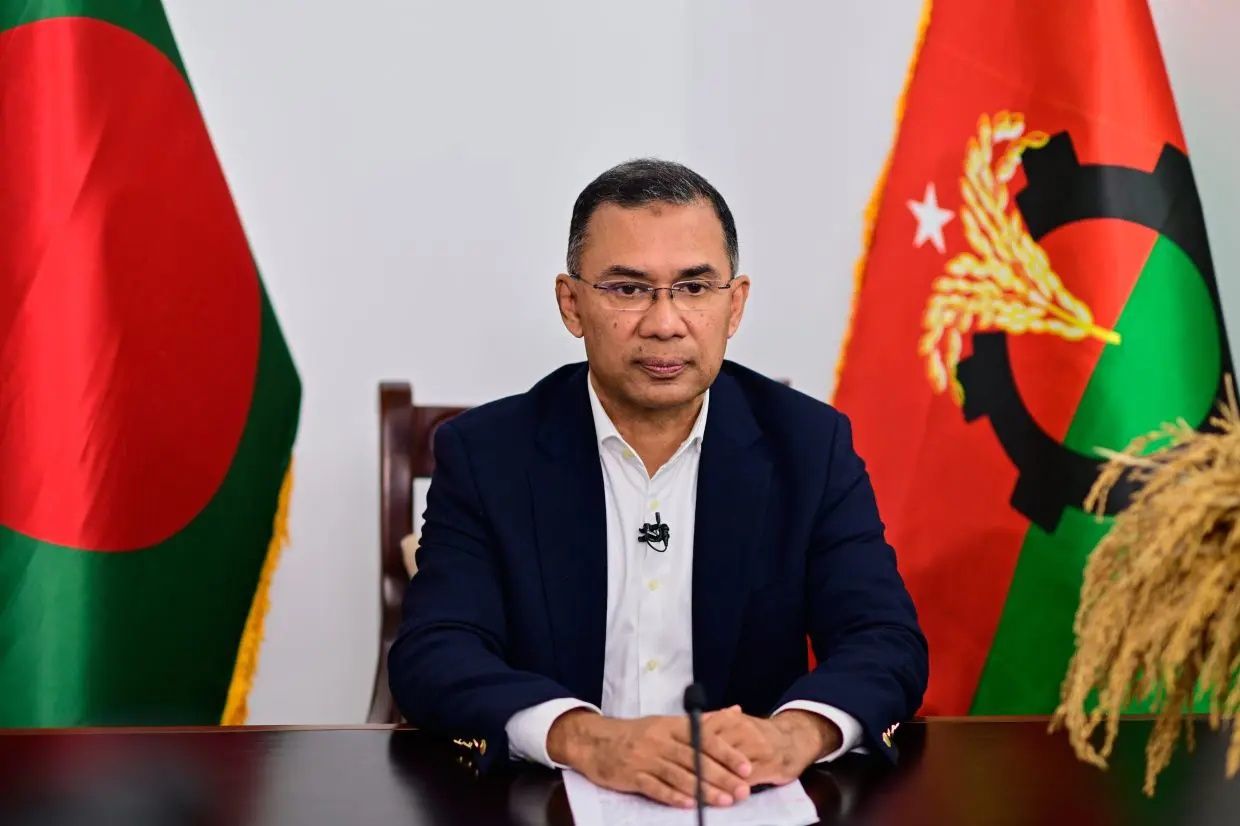
Bangladesh's Prime Minister Tarique Rahman is embarking on his debut international tour this weekend, with stops in Kuala Lumpur followed by Beijing, a diplomatic itinerary that deliberately sidesteps India and signals a deliberate recalibration of Dhaka's foreign policy priorities. The announcement, disclosed by the foreign ministry through state news agency BSS on Saturday, marks a pivotal moment in Bangladesh's regional positioning at a time when the country continues to navigate complex geopolitical terrain and fractious relations with its larger neighbour.
The choice to visit Malaysia first carries considerable weight. With approximately 800,000 Bangladeshi workers embedded throughout Malaysian industries—representing more than one-third of the country's foreign workforce—the bilateral relationship carries profound economic and social dimensions that extend far beyond diplomatic protocol. These migrants remit substantial earnings back to Bangladesh annually, making the relationship directly relevant to household finances across rural and urban areas alike. Rahman's presence in Kuala Lumpur will likely focus on labour issues, worker protections, and the broader investment climate that keeps Bangladeshi nationals gainfully employed across Malaysia's manufacturing, construction, and service sectors.
The subsequent leg to China underscores Bangladesh's strategic pivot toward deepening economic partnerships with Beijing as it simultaneously manages strained ties with India. According to foreign ministry briefings, the Beijing agenda will revolve around trade expansion and infrastructure collaborations, with particular emphasis on the long-stalled Teesta River Project. This initiative, which has languished in the planning phases for years, envisions comprehensive restoration and management of the critical transnational waterway through systematic dredging, embankment reinforcement, and expanded irrigation networks. Chinese technical expertise and financial backing could prove instrumental in finally translating this decades-old vision into concrete development, particularly given Beijing's extensive experience managing large-scale river engineering across the Yangtze and other major waterways.
The diplomatic timing reflects the profound shifts in Bangladesh's internal politics and external relationships over the past year. The 2024 uprising that toppled the government of Sheikh Hasina represented a seismic rupture in the country's political landscape, with cascading consequences for regional alignments. Hasina, closely aligned with New Delhi, had cultivated particularly warm relations with India, but her ouster created immediate uncertainty about the trajectory of Bangladesh-India ties. When interim governance structures took control following her departure, and subsequently when Rahman secured electoral victory and assumed the premiership in February this year, questions about future bilateral dynamics with India intensified considerably.
The formal improvement in Bangladesh-India relations following Rahman's election victory proved ephemeral at best. While initial hopes surfaced that the new administration might stabilise the relationship through calibrated engagement, significant friction points have persisted and in some cases escalated. The question of Sheikh Hasina's extradition remains particularly contentious, with Bangladesh repeatedly demanding her return from Indian territory where she has remained in hiding since fleeing the revolution. The fact that New Delhi has declined these requests, citing various legal and procedural justifications, has become a source of persistent irritation in official Dhaka circles.
Border management has emerged as another flashpoint. India has reportedly intensified efforts to push individuals it classifies as illegal migrants across the frontier into Bangladesh, effectively offloading what New Delhi perceives as an internal security challenge onto its neighbour. This practice has generated popular resentment within Bangladesh and strained official relations further, contributing to an atmosphere of mutual suspicion rather than confidence-building. For Rahman, demonstrating alternatives to India-centric foreign policy through high-profile visits to Malaysia and China communicates to both domestic audiences and regional observers that Bangladesh possesses strategic options and is not obligated to defer to New Delhi's preferences.
China's emergence as a preferred partner carries particular significance given the broader Indo-Pacific strategic competition between Beijing and New Delhi. India has historically viewed Chinese regional expansion with deep wariness, recognising that every gain Beijing achieves in South Asian influence represents a corresponding diminishment of India's predominant position. The world's two most populous nations vie continuously for political leverage and economic foothold across the region, competing for infrastructure contracts, investment opportunities, and diplomatic alignment from smaller neighbours. By publicly elevating its partnership with China, Bangladesh demonstrates capacity for agency in navigating this competition, rather than finding itself subordinated to Indian preferences.
The sequencing of these visits—Malaysia preceding China—merits careful interpretation. The Malaysian leg addresses the immediate, bread-and-butter concerns of hundreds of thousands of Bangladeshi families whose livelihoods depend on employment in that country. This signals that Rahman's government recognises the centrality of labour migration to its social compact and economic stability. The subsequent Chinese engagement shifts attention toward long-term infrastructure transformation and developmental capacity. Together, the two-nation tour presents a narrative of Bangladesh simultaneously attending to immediate worker welfare while positioning itself for structural economic advancement through major engineering and development projects.
For Malaysian policymakers and observers, the visit of Bangladesh's new prime minister carries implications for the governance of the substantial Bangladeshi worker population within the country. It offers an opportunity to reinforce labour standards, address grievances, and ensure that the bilateral relationship continues delivering mutual benefits for both economies. For broader Southeast Asia, the tour exemplifies how smaller nations navigate great power competition by cultivating multiple partnerships and refusing to accept predetermined spheres of influence that earlier regional dynamics might have implied.
The foreign ministry's characterisation of these visits as a comprehensive diplomatic initiative aimed at fortifying Bangladesh's economic partnerships reflects the pragmatic calculations underlying Rahman's foreign policy approach. Rather than ideology or historical alliance patterns, economic capability and development prospects appear to be driving Dhaka's diplomatic compass. This represents a notable departure from the Hasina era, when bilateral relations with India held primacy. For Malaysia, the visit affirms its significance as a destination country for South Asian workers and as a partner in regional economic integration, while also signalling that smaller nations like Bangladesh retain meaningful choice in calibrating their international engagements despite geographic constraints and neighbourhood pressures.

