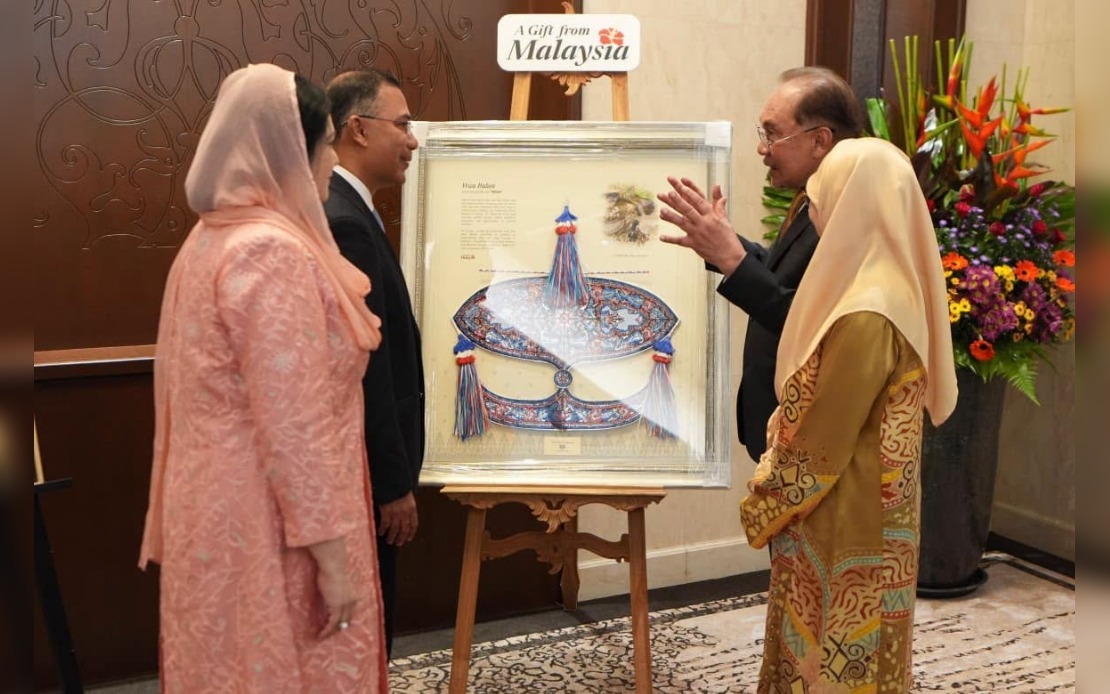
Bangladesh Prime Minister Tarique Rahman wrapped up his inaugural state visit to Malaysia on Monday with a resolute commitment to expand cooperation across all dimensions of the bilateral relationship. Speaking through the Bangladesh Ministry of Foreign Affairs, the premier underscored his determination to work in close partnership with Malaysian Prime Minister Datuk Seri Anwar Ibrahim to elevate ties that already span multiple sectors and touch the lives of millions across both societies.
The visit itself carried symbolic weight as Rahman's first official trip abroad as Bangladesh's head of government, a choice that underscores the strategic importance Dhaka places on its relationship with Kuala Lumpur. Bangladesh recognizes Malaysia not merely as a neighbouring nation but as a crucial partner in regional affairs, a stance reflected in the comprehensive nature of bilateral engagement spanning trade, investment, education, defence and people-to-people exchanges.
During his time in Malaysia, Rahman and Anwar engaged in substantive discussions that reaffirmed the enduring foundations of diplomatic partnership between Dhaka and Kuala Lumpur. These conversations transcended routine diplomatic pleasantries, instead reinforcing shared commitments to regional stability, economic prosperity and cooperative advancement. The premier highlighted how the dialogue moved beyond procedural matters to address the deeper bonds of friendship and mutual respect that characterize ties between the two nations.
Rahman's personal remarks, extended alongside his wife Dr Zubaida Rahman, conveyed genuine appreciation for the exceptional hospitality extended by the Malaysian government and its people. The warmth of his gratitude towards Prime Minister Anwar Ibrahim and his spouse Datuk Seri Dr Wan Azizah Wan Ismail suggested a personal rapport that could facilitate smoother collaborative efforts going forward. Such personal connections between leaders often translate into more effective governmental cooperation and stronger institutional relationships.
The Bangladeshi premier also acknowledged an audience with His Majesty Sultan Ibrahim, King of Malaysia, expressing sincere appreciation for the royal engagement. The involvement of Malaysia's constitutional monarch in receiving the visiting leader underscored the high protocol status afforded to Rahman's visit and signified the importance both nations attach to their relationship at the highest levels of government and the monarchy.
A particularly significant element of Rahman's remarks centred on the historical depth of Bangladesh-Malaysia ties, which he traced to his family's foundational role in his nation's development. By referencing his father Shaheed President Ziaur Rahman and his mother Begum Khaleda Zia—both of whom held the highest offices in Bangladesh during critical periods of nation-building—Rahman positioned current cooperation within a continuum of friendship spanning decades. This historical narrative serves to anchor contemporary bilateral ties in proven diplomatic traditions and long-standing mutual respect.
The emphasis on people-to-people connectivity emerging from Rahman's statements reflects recognition that sustainable partnerships require engagement across multiple societal levels. Bangladesh and Malaysia maintain substantial communities within each other's borders, with significant cultural, religious and commercial ties binding ordinary citizens. These grassroots connections provide the foundation upon which governmental relationships rest, creating resilience against short-term political fluctuations and ensuring broad-based support for bilateral initiatives.
For Malaysia, this visit represents an opportunity to solidify relationships with a significant South Asian nation during a period when regional geopolitics are in flux. Bangladesh, with its large Muslim-majority population, strategic location on major shipping routes, and emerging economic significance, holds considerable importance for Malaysian foreign policy. Strengthening ties with Dhaka complements Kuala Lumpur's broader efforts to position itself as a connector between South Asia and Southeast Asia.
The multifaceted nature of the partnership that both leaders committed to strengthening encompasses diverse areas requiring sustained diplomatic and technical engagement. Trade relationships, educational exchanges, defence cooperation, and cultural programmes all require ongoing attention and institutional support. The clear reaffirmation from both premiers suggests these mechanisms will receive continued focus and resource allocation in coming months.
Rahman's inaugural state visit as prime minister sending him first to Malaysia carries strategic messaging within South Asian and Southeast Asian contexts. It signals Bangladesh's prioritization of deepened engagement with established ASEAN partners and reflects calculations about where the nation's immediate interests lie regarding regional integration, trade partnerships and diplomatic positioning. The choice conveys recognition that Malaysian cooperation remains foundational to Bangladesh's regional strategy.
Looking ahead, both nations face opportunities to translate these rhetorical commitments into concrete collaborative outcomes. Areas including maritime cooperation, investment promotion, educational scholarships, technology transfer and emergency response coordination offer fertile ground for expanded engagement. The personal rapport evidenced during this visit suggests administrative machinery will be primed to facilitate such initiatives efficiently.

