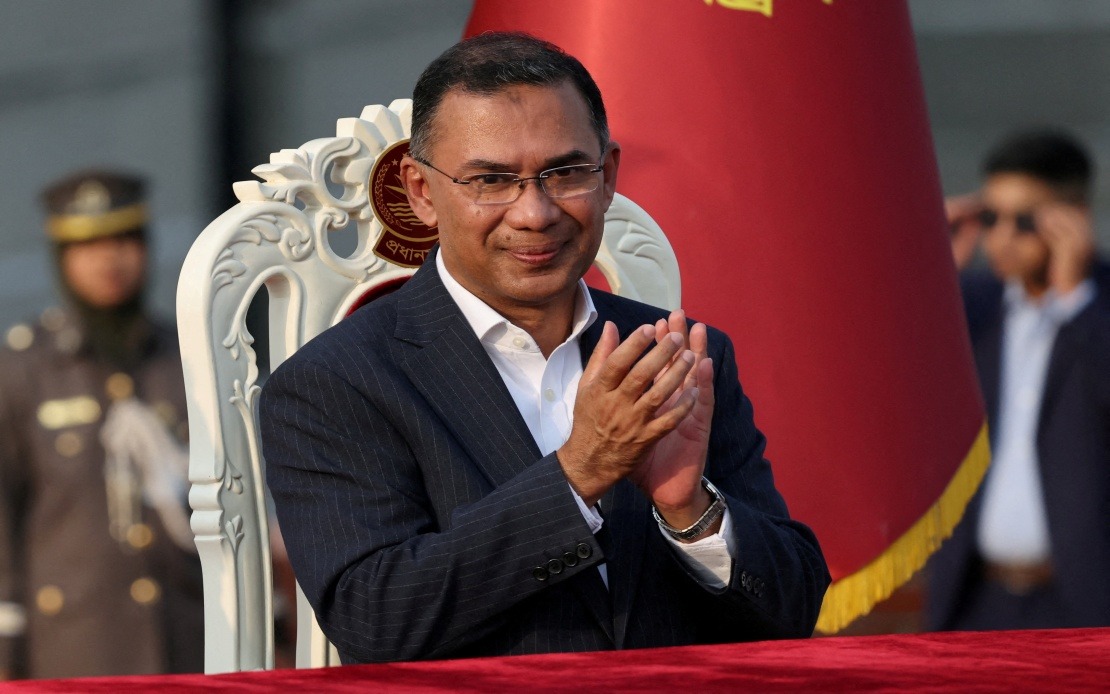
Bangladesh Prime Minister Tarique Rahman is set to visit Malaysia on June 22 in what represents his first official bilateral trip since assuming the top office earlier this year. Arriving at the formal invitation of Prime Minister Datuk Seri Anwar Ibrahim, the visit signals deepening engagement between two important Southeast Asian and South Asian economies amid a period of regional diplomatic repositioning. The timing carries significance for both nations as they navigate complex trade dynamics and seek to expand their sphere of regional influence.
The diplomatic itinerary reflects Malaysia's strategic priority toward South Asian engagement. Upon arrival, Rahman will receive an official welcoming ceremony at the Perdana Putra Complex, where he and Anwar will conduct substantive bilateral talks. This ceremonial treatment underscores Malaysia's recognition of Bangladesh's importance as a regional player and its desire to elevate the partnership beyond routine diplomatic protocols. The formal nature of the reception also demonstrates Malaysia's investment in building personal rapport between the two leaders during this critical early phase of Rahman's leadership.
Both nations have identified multiple sectors for expanded cooperation that carry economic and geopolitical implications for Southeast Asia. The bilateral agenda encompasses trade and investment acceleration, workforce development programmes, semiconductor manufacturing, energy infrastructure, agricultural initiatives, and educational collaboration. These sectors reflect Malaysia's technological aspirations and Bangladesh's manufacturing capabilities—a complementary relationship that could reshape supply chains across South Asia and Southeast Asia. The semiconductor focus is particularly notable, given regional competition with Vietnam, Thailand, and Indonesia for higher-value manufacturing work.
The institutional scaffolding for this partnership will be reinforced through formal agreements being signed during the visit. A memorandum of understanding on cultural cooperation will establish frameworks for people-to-people exchanges, potentially easing migration pathways and fostering civil society ties. Simultaneously, two exchanges of notes addressing counter-terrorism research and investment promotion will create structures for security coordination and economic facilitation. These documents represent incremental but meaningful steps toward institutionalising the relationship and reducing friction in bilateral dealings.
Commercial ties between the nations have already demonstrated robust growth. During 2025, bilateral trade reached RM12.18 billion, equivalent to USD2.84 billion, positioning Bangladesh as Malaysia's 28th largest global trading partner and its second most significant partner within South Asia after India. Malaysia exported goods worth RM10.08 billion, predominantly petroleum products reflecting Bangladesh's energy import requirements and Malaysia's downstream petroleum processing advantage. Conversely, Bangladesh supplied RM2.10 billion worth of imports, primarily textiles, apparel, and footwear—sectors where Bangladesh maintains competitive manufacturing advantages through labour cost structures and established supply networks.
The commodity composition of this trade relationship reveals complementary economic structures that suggest untapped potential. Malaysia's role as a petroleum supplier to Bangladesh reflects both nations' energy security concerns, particularly as Bangladesh industrialises and expands electricity generation capacity. However, the limited penetration of Malaysian semiconductors, electronics, and value-added services in Bangladesh's market suggests considerable room for Malaysian companies to establish presence in the South Asian market. Similarly, Bangladesh's textile sector—which serves global brands from facilities across the country—offers Malaysian retailers, traders, and logistics companies opportunities to deepen integration into regional garment supply chains.
Rahman's delegation composition signals the seriousness attached to this inaugural visit. His spouse Dr Zubaida Rahman's attendance personalises the diplomatic engagement, while the participation of Foreign Minister Dr Khalilur Rahman and senior officials ensures operational depth to technical discussions. The inclusion of Foreign Minister Khalilur Rahman creates direct channels for bilateral consultations on regional security matters, humanitarian issues, and multilateral coordination within forums such as the ASEAN Regional Forum and SAARC, where both nations hold membership.
Anwar's hosting of an official luncheon provides informal settings for candid discussions beyond the formal bilateral meeting structure. Such occasions often facilitate discussions on matters too sensitive for formal agendas—regional security concerns including China's Belt and Road Initiative expansion, maritime disputes in the Indian Ocean, the Myanmar crisis affecting Bangladesh through refugee flows, and climate change adaptation in vulnerable riverine and deltaic regions. These informal moments frequently yield agreements that appear in official communiqués only after careful diplomatic language has been agreed.
For Malaysia, elevating ties with Bangladesh responds to strategic imperatives in South Asia policy. As India dominates South Asian affairs, Malaysia has sought to build direct relationships with other major regional players rather than approaching South Asia exclusively through Indian intermediation. Bangladesh's 170 million population, significant manufacturing base, and growing digital economy make it an attractive economic partner. The nation's geostrategic position controlling Bay of Bengal approaches and its emerging defence capabilities position it as relevant to regional balance-of-power considerations.
For Bangladesh, the visit reflects Rahman's effort to establish international credibility following his recent assumption of office. The selection of Malaysia as the destination for his first overseas bilateral visit—rather than major powers or neighbouring India—signals Bangladesh's commitment to Southeast Asian connectivity and its desire to position itself as a bridge between South Asia and Southeast Asia. This diplomatic approach distinguishes his administration and potentially opens space for Bangladesh to assume greater roles in ASEAN-related forums and mechanisms.
The visit also carries implications for Myanmar, given both nations' strategic interests in the country's stabilisation. Bangladesh hosts over one million Rohingya refugees displaced by Myanmar's military actions, while Malaysia hosts significant Rohingya populations and maintains complex relations with Myanmar. Coordinated approaches to the Myanmar crisis, support for ASEAN efforts at diplomatic resolution, and humanitarian coordination could emerge from this visit, though official statements may obscure the depth of such discussions.

