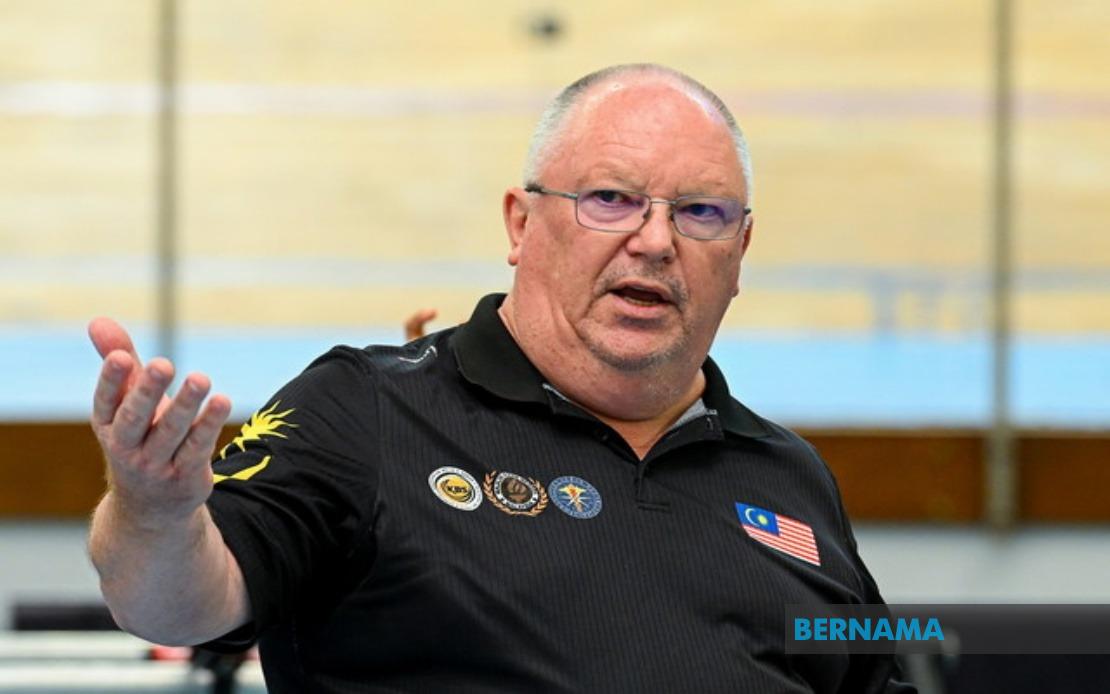
The Malaysian National Cycling Federation (MNCF) moved swiftly this week to quell speculation about the future of its Technical Director John Beasley, with MNCF President Datuk Amarjit Singh Gill issuing a definitive statement that the Australian coach will fulfil his obligations through the end of January 2027. Speaking at a press conference in Kuala Lumpur, Amarjit made clear that recent media reports suggesting Beasley had stepped down were misleading, clarifying instead that the 65-year-old had merely signalled an intention to conclude his tenure once his current agreement concludes rather than departing the programme immediately.
The clarification comes at a sensitive time for Malaysian cycling, with the national squad deep in preparation for major continental competitions. Amarjit emphasised that any hint of instability surrounding the coaching structure risked undermining the psychological focus athletes require during this critical phase. He stressed that both the federation and Beasley had deliberately prioritised maintaining momentum for the upcoming Commonwealth Games and Asian Games, recognising that the cycling contingent has cultivated strong working relationships with the long-serving technical director over many years. This institutional continuity becomes particularly valuable when riders are navigating the demanding technical and strategic demands of elite international competition.
During a conversation held two days before the public announcement, Amarjit and Beasley apparently reached consensus that shielding the athlete development pipeline from external noise should take precedence over any organisational friction. The federation president characterised this understanding as reflecting a shared commitment to programme stability, with Beasley reportedly pledging to sustain active support for national cyclists throughout the remainder of his contract. Such reassurance matters considerably given that coaching relationships in elite cycling require months or years to develop full effectiveness, particularly in track disciplines where marginal gains in technique and timing separate medal winners from the broader field.
Amarjit's remarks also reflected significant respect for Beasley's contributions to Malaysian cycling over a two-decade period. The federation chief acknowledged that the Australian had fundamentally shaped the nation's cycling infrastructure and competitive trajectory, implying that his departure represents the conclusion of an influential chapter rather than a sudden organisational rupture. This framing suggests that the MNCF views the transition period not as a crisis but as an orderly succession requiring careful management to preserve the institutional knowledge Beasley has accumulated.
Interestingly, Amarjit did not entirely close the door on Beasley's continued involvement beyond January 2027, particularly if Malaysian track cycling icon Datuk Mohd Azizulhasni Awang pursues an Olympic campaign targeting Los Angeles 2028. The suggestion indicates that the federation might explore alternative arrangements with Beasley post-contract, potentially in advisory or specialist coaching roles if circumstances warrant. Such flexibility could prove valuable given the rarity of coaches possessing Beasley's depth of experience in Malaysian cycling's competitive ecosystem.
Behind the measured public statements lies evidence of organisational turbulence that the MNCF felt compelled to address through disciplinary action. Amarjit disclosed that the federation had issued a show-cause letter to an individual implicated in efforts to sow discord between the MNCF and Beasley, with a second show-cause notice under consideration. The federation has reportedly received a response to the first letter and is currently deliberating its next steps, suggesting that the matter remains unresolved despite weeks of internal investigation.
The MNCF president indicated that knowledge of these division-creating activities extends back further than the April period when they gained public prominence, suggesting a longer-running tension that festered before erupting into broader awareness. By issuing formal notices rather than managing matters entirely behind closed doors, the federation demonstrated determination to discourage similar behaviour through transparent accountability mechanisms. Amarjit made explicit that the MNCF will not tolerate future attempts to generate conflict or advance allegations through informal or unofficial channels, insisting instead that any grievances must flow through established institutional procedures.
For Malaysian cycling enthusiasts and athletes, the message resonates clearly: the federation intends to weather this period of transition without permitting organisational politics to derail the competitive preparation that determines international results. The emphasis on athlete welfare and psychological stability reflects a growing sophistication in how Malaysian sports bodies manage senior coaching transitions, recognising that the athletes themselves constitute the ultimate stakeholder group whose interests should guide federation decision-making.
The resolution also carries implications for Malaysian sports governance more broadly. Rather than allowing rumour and social media speculation to shape institutional narratives, the MNCF's prompt clarification demonstrates the value of direct, candid communication from federation leadership. In an era where misinformation spreads rapidly online, such proactive transparency—coupled with willingness to enforce standards through formal disciplinary mechanisms—offers a model that other Malaysian sports organisations might usefully emulate when navigating periods of operational uncertainty.

