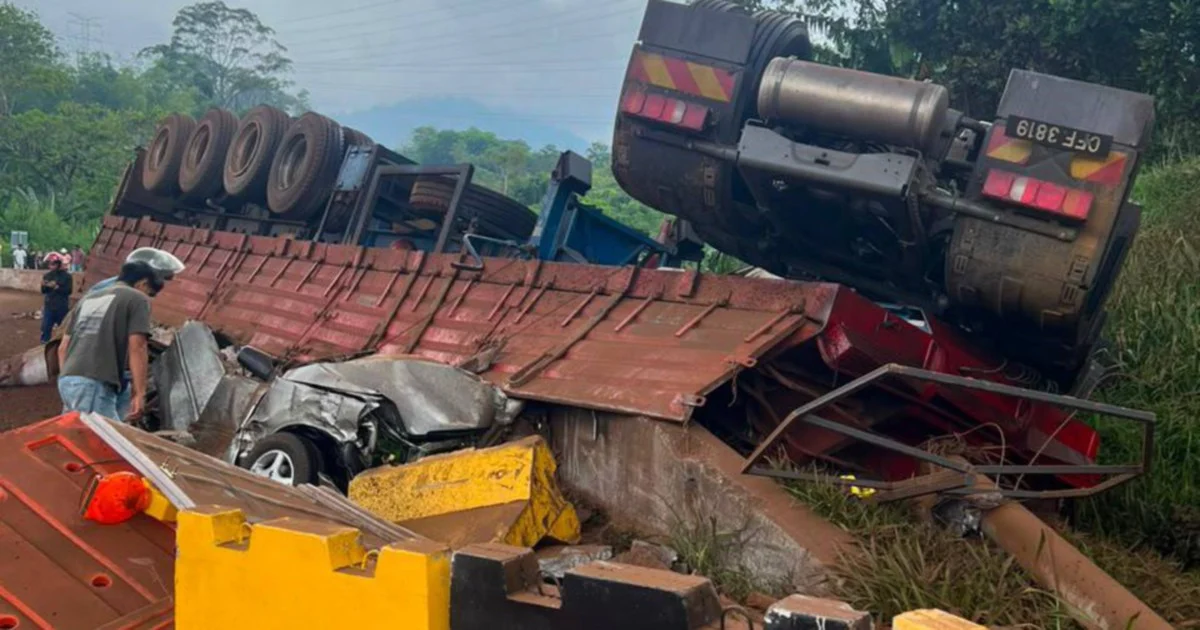
The trailer driver implicated in a catastrophic multi-vehicle collision that left four people dead near Bentong has been released on police bail as investigations continue into the circumstances surrounding the tragedy on the Karak Expressway. The decision to grant bail comes as authorities in Pekan work through the procedural steps necessary to determine whether charges will be filed against the driver in connection with the June 14 incident.
The release of the driver on bail represents a pivotal moment in the investigation, allowing authorities to balance the need for continued questioning and evidence gathering against legal requirements for bail conditions. Police have not disclosed the specific terms of the bail arrangement, though such conditions typically involve reporting requirements and travel restrictions that keep the suspect available for further questioning.
The fatal accident on the Karak Expressway highlighted once again the significant risks that heavy goods vehicle operators face on Malaysia's highway network, where fatigue, mechanical failure, and driver error continue to contribute to serious collisions. The four deaths resulting from this single incident underscore the devastating consequences when articulated vehicles lose control at highway speeds, often creating circumstances where vehicles travelling in proximity become trapped or struck by the much larger and heavier trailer unit.
Fatalities involving articulated lorries remain a persistent concern across Malaysia's arterial routes. The Karak Expressway, which connects Kuala Lumpur to Kuantan and serves as a crucial corridor for commercial transport, sees constant movement of heavy goods vehicles. When incidents occur on this route, the combination of high speeds, heavy cargo weights, and multiple lanes of traffic frequently results in multiple casualties and complex accident scenes.
The investigation now moves into a more detailed phase, where forensic evidence, vehicle condition assessments, and witness statements will be compiled to establish the precise sequence of events that led to the collision. Authorities will examine factors including vehicle maintenance records, driver logbooks to determine whether fatigue played a role, road conditions at the time of the accident, and the exact positioning of all vehicles involved in the chain reaction that resulted in the deaths.
In Malaysia's legal framework, drivers involved in fatal traffic accidents can face charges ranging from careless and inconsiderate driving causing death to more serious allegations depending on the circumstances established during investigation. The distinction between charges often hinges on whether negligence can be proven and the degree of culpability attributable to the driver's actions or omissions.
The bail decision does not imply innocence or guilt but rather reflects the police's assessment that they have gathered sufficient preliminary evidence while recognising that extended pre-trial detention is not automatically justified. For the driver released on bail, the period ahead will likely involve continued cooperation with investigators, potential court appearances, and uncertainty regarding eventual prosecution decisions.
Family members of the four deceased victims face an altogether different burden as they navigate the grieving process while criminal investigations unfold. These cases often extend over months or years, creating a prolonged period of uncertainty for those seeking answers and accountability regarding how their loved ones came to lose their lives on a major expressway corridor.
The incident reinforces ongoing concerns about heavy vehicle safety standards and enforcement on Malaysian expressways. Transport ministry officials, highway safety advocates, and industry groups have periodically called for enhanced measures including mandatory speed limiters on articulated vehicles, more frequent mechanical inspections, and stricter enforcement of driver hours regulations to combat fatigue-related incidents.
The Karak Expressway and similar major highways serve as vital economic arteries for Malaysia, facilitating the movement of goods between manufacturing centres and ports. However, this essential commercial function must be balanced against the imperative to protect the safety of all road users, whether travelling in heavy vehicles or passenger automobiles.
As the investigation progresses, the police will likely conduct detailed interviews with surviving witnesses, examine traffic camera footage if available, and scrutinise maintenance and operational records for the trailer involved. These investigative elements will form the foundation upon which prosecutors decide whether to pursue charges and what level of culpability to establish.
The outcome of this investigation will have implications not only for the individual driver but potentially for broader conversations about road safety enforcement, commercial vehicle regulation, and accountability within Malaysia's transport sector. Meanwhile, the driver released on bail remains subject to police directives and must maintain availability for questioning as this complex investigation continues toward its eventual conclusion.

