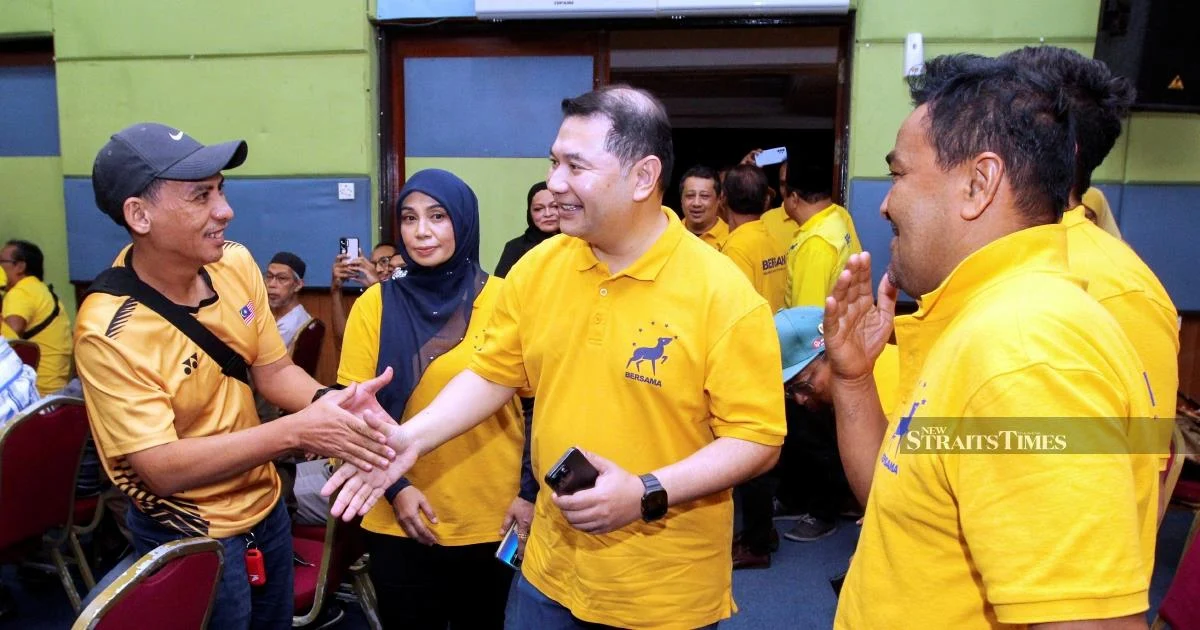
Parti Bersama Malaysia has signalled a fundamental reimagining of how it will operate as an organisation, rejecting the divisional and branch architecture that has long defined Malaysian political parties in favour of a unified digital membership platform. The decision, discussed by party leadership in Kota Baru, represents a deliberate attempt to break from the organisational models that have dominated Malaysian politics for decades and reflects a conviction that traditional hierarchical structures are no longer optimal for contemporary political engagement.
The shift towards a digitally centralised approach carries implications that extend beyond mere administrative convenience. By eliminating intermediate layers of regional and local divisions, Bersama aims to create a more direct relationship between party leadership and individual members, potentially enabling faster decision-making and more cohesive policy communication across the membership base. This flattening of organisational hierarchy mirrors management practices adopted by technology-focused companies, signalling an intention to position Bersama as a politically modern entity that embraces innovation rather than incremental reform of existing structures.
Traditional party divisions have historically served as crucial infrastructure for Malaysian political parties, functioning as vehicles for local political mobilisation, candidate recruitment, and grassroots fundraising. They have also created patronage networks and power bases within parties, sometimes becoming impediments to rapid strategic shifts or merit-based advancement. By centralising operations through a digital platform, Bersama seeks to circumvent these structural constraints while claiming greater transparency and efficiency in member engagement and party operations.
The app-based system under development would theoretically allow Bersama to maintain constant communication channels with members, gather real-time feedback on policy positions, and coordinate campaigns without the friction points that emerge from managing multiple hierarchical layers. Digital platforms also generate data about member preferences and engagement patterns, information that traditional structures cannot easily capture. This technological infrastructure positions the party to adapt rapidly to electoral opportunities or political shifts that might require swift repositioning.
However, this approach introduces distinct challenges that differ from obstacles faced by conventional parties. Digital systems require sustained technological investment and maintenance, creating ongoing operational costs that extend beyond traditional party administration. More significantly, an app-based membership model risks creating divisions between digitally connected and digitally excluded members, potentially marginalising older members or those less comfortable with technology—populations that remain influential in Malaysian political circles and voting behaviour.
The centralized digital model also concentrates decision-making authority at the national level without the checks and balances that regional divisions can theoretically provide. This concentration could expose Bersama to rapid policy reversals or leadership decisions that lack the moderation that comes from consulting geographically dispersed party structures. Additionally, digital systems are subject to technical failures, cybersecurity vulnerabilities, and data management risks that traditional paper-based and in-person structures largely avoid.
Within the broader context of Malaysian politics, Bersama's structural innovation reflects a calculated effort to appeal to younger, urban, and more digitally native voters who may view traditional party hierarchies as bureaucratic obstacles. The party appears to be positioning itself as genuinely distinct from Barisan Nasional and Pakatan Harapan not merely through policy differentiation but through fundamental organisational reimagining. This distinction carries symbolic weight, suggesting that Bersama represents a genuine break from entrenched political establishments.
The effectiveness of this approach will depend on execution quality and member adoption rates. For the digital platform to function as intended, it must be intuitive, reliable, and genuinely empowering for members rather than simply a mechanism for top-down communication. If it becomes perceived as a tool for leadership to bypass consultation with the wider membership, it could undermine the modernisation narrative that Bersama is attempting to construct.
Regionally, Bersama's structural approach may influence how other emerging political entities in Southeast Asia consider organisational design. The experiment will be closely watched by observers interested in whether technology-enabled political organisation can sustain the cohesion and operational effectiveness of traditional structures while avoiding their recognised inefficiencies. Success could validate digital-first political organisation; failure could reinforce scepticism about moving away from tested hierarchical models.
For Malaysian voters and political analysts, this development highlights a broader trend of political parties seeking to differentiate themselves through structural innovation alongside policy proposals. Whether Bersama's digital approach proves superior to conventional party organisation will ultimately depend on how well the platform functions in practice and whether members embrace the system as genuinely empowering rather than merely accepting it as a fait accompli. The party's success in building meaningful member engagement through the app will be as critical as the technical quality of the platform itself.

