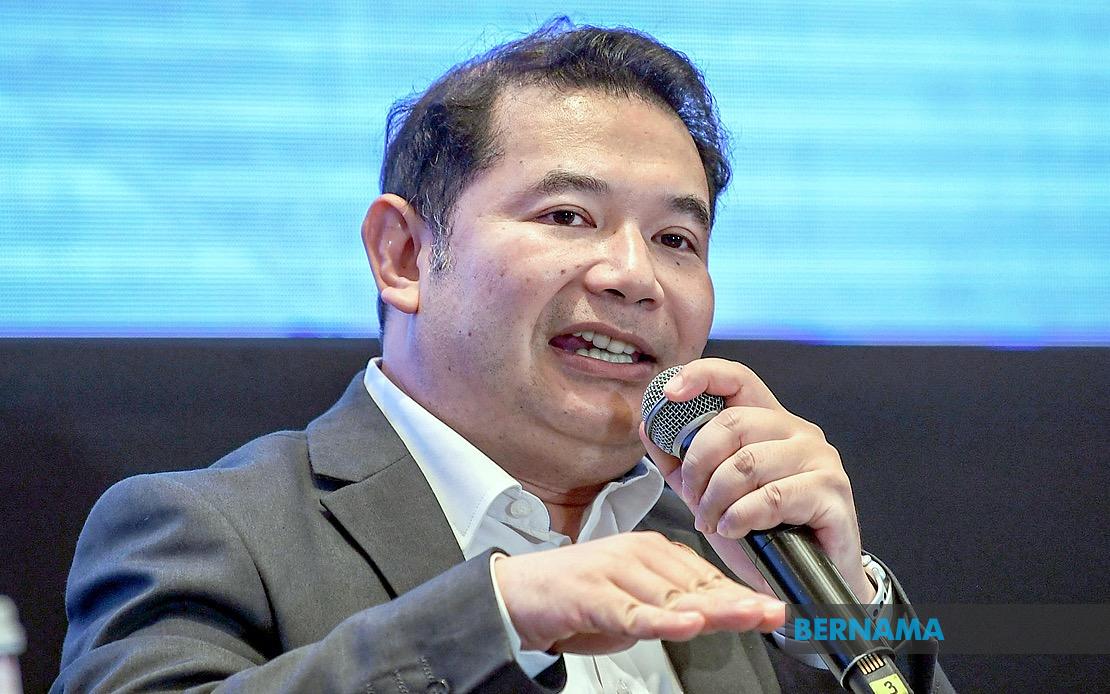
Parti Bersama Malaysia is set to reveal its full roster of candidates contesting the Johor state election at a public event in Johor Bahru on Friday, party president Datuk Seri Rafizi Ramli announced on Wednesday evening. The disclosure comes as the young political party enters a critical phase of campaigning ahead of polling day on July 11, marking a significant step in establishing its electoral presence in one of Malaysia's most competitive states.
Rafizi indicated that the party's candidate selection process has now concluded after a thorough evaluation of interested contenders. However, he refrained from specifying exactly how many state assembly seats Bersama intends to contest, leaving room for strategic manoeuvring as the party calibrates its involvement across the 56-seat legislature. The deliberate ambiguity around seat targets may reflect ongoing negotiations with potential coalition partners or internal deliberations about resource allocation and realistic victory prospects.
The party launched an open call for candidates just over a week prior, casting a wide net for individuals willing to represent Bersama in both the Johor and Negeri Sembilan state elections. The response from potential contenders significantly exceeded initial expectations, with more than 300 applications submitted during the brief recruitment window. This uptake suggests growing interest in Bersama's political platform, particularly among first-time candidates and those dissatisfied with existing mainstream parties.
Every applicant underwent standardised requirements, including completion of formal application documentation and participation in structured interviews. The assessment mechanism incorporated elements designed to test substantive knowledge and suitability for public service. Candidates faced random questioning focused on their personal history, professional credentials, and demonstrated commitment to the party's vision. Such rigorous screening aims to ensure that those representing Bersama possess adequate preparation and credibility for legislative responsibilities.
The timeline for the Johor state election has already been firmly established by the Election Commission. Nomination day is scheduled for June 27, providing just one week for parties to finalise their submissions to the electoral authority. Early voting is permitted on July 7, enabling absentee voters and those with legitimate reasons to cast ballots before the main polling day on July 11. This compressed calendar means parties must move swiftly from candidate announcement to formal nomination filing.
For Malaysian political observers, Bersama's emergence as an active participant in state-level contests represents a notable development. The party, which has positioned itself as an alternative voice in Malaysian politics, is testing its viability beyond the federal sphere where it has struggled to gain significant traction. Success in Johor would provide valuable experience, institutional infrastructure, and morale-boosting results ahead of potential future federal elections.
The Johor election carries particular significance across the broader political landscape. As the state that produced Prime Minister Anwar Ibrahim and retains considerable economic weight within Malaysia, the outcome will be closely watched for signals about shifts in voter sentiment, the efficacy of different campaign strategies, and the staying power of competing coalitions. A strong Bersama performance could potentially alter calculations about coalition possibilities and parliamentary arithmetic at the national level.
Rafizi's announcement came during the Jelajah Kancil programme in Kota Bharu, a grassroots engagement initiative designed to build party presence and solidarity. Such ground-level activities are crucial for parties like Bersama that lack the institutional machinery and name recognition of established players. Direct voter interaction through such tours generates local momentum, tests messaging resonance, and builds organisational capacity in constituencies where the party intends to compete.
The filtering process Bersama employed reflects broader trends in contemporary Malaysian politics, where parties increasingly emphasise candidate quality and public accountability. Gone are the days when nominations relied primarily on patronage and seniority. Contemporary Malaysian voters, particularly younger demographics with high digital literacy, demand greater transparency about candidate credentials, funding sources, and policy commitments. Bersama's screening methodology positions the party as responsive to such expectations, though results on polling day will ultimately determine whether careful candidate selection translates into electoral success.
As nomination day approaches, other political entities contesting Johor will face similar pressures to finalise and publicly disclose their candidate lineups. Coalition politics and potential seat-sharing arrangements between established opposition parties may complicate some announcements. Bersama's clarity about its candidate slate positions it as either confident about standing independently or already assured of coalition accommodations. Either scenario warrants monitoring by analysts tracking the evolution of Malaysia's multi-party system and the potential realignment of electoral coalitions at both state and federal levels.

