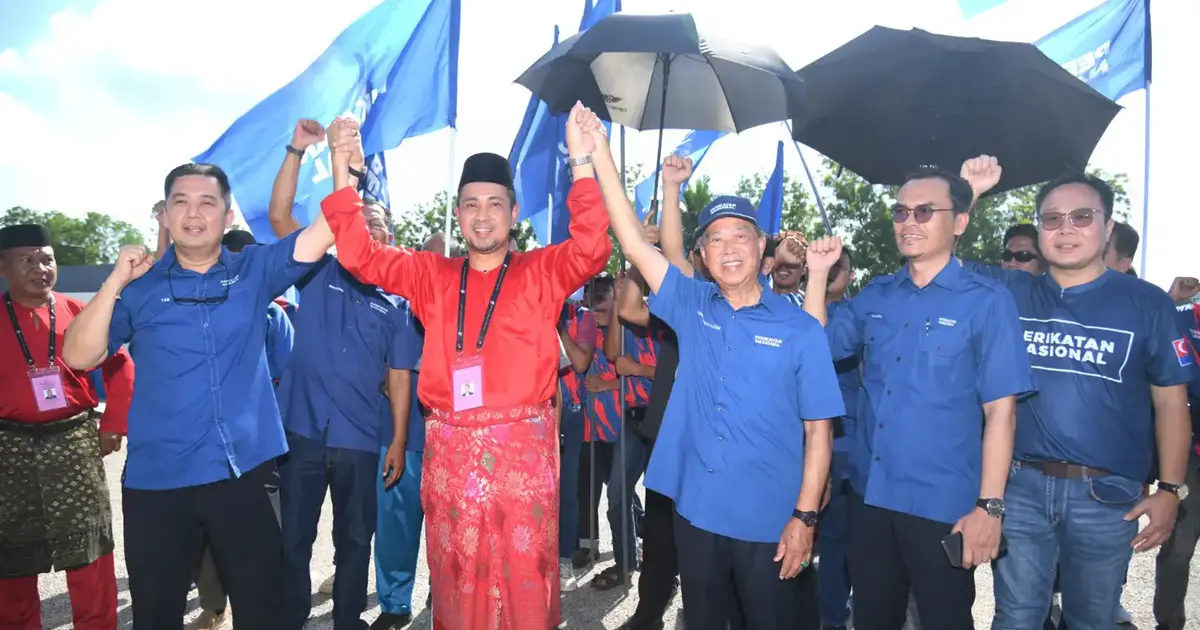
Bersatu's leadership has chosen measured pragmatism over confrontation following PAS's decision to withhold campaign machinery support, according to remarks by party president Muhyiddin Yassin. The response underscores the ongoing navigation of coalition politics within Perikatan Nasional, where member parties maintain distinct operational independence despite shared electoral objectives.
Muhyiddin's stance reflects a calculated approach to managing intra-coalition tensions that have periodically surfaced within Perikatan Nasional's governance structure. By publicly accepting PAS's position without recrimination, the Bersatu leadership seeks to preserve the broader coalition framework while respecting the autonomy each constituent party exercises over its own resources and strategic choices. This measured tone contrasts with the more combative positioning that sometimes characterises Malaysian coalition politics, where disputes over resource allocation and campaign support frequently threaten alliance stability.
The Bersatu president emphasised that while cooperation and reciprocal assistance represent foundational principles undergirding Perikatan Nasional's existence, these commitments operate within a framework of voluntary participation rather than coercion. This distinction proves significant in Malaysian coalition politics, where member parties must balance collective interests against individual party survival and electoral performance. Muhyiddin's articulation of this principle suggests Bersatu's acceptance that PAS, as the larger Islamic-based party within PN, possesses both organisational capacity and political rationale for protecting its own resources.
The broader context involves the delicate equilibrium Perikatan Nasional must maintain across ideologically and organisationally distinct partners. Bersatu, the relatively newer entrant to Malaysian coalition politics, operates alongside PAS, which commands substantial grassroots mobilisation capability, particularly in rural Peninsular Malaysia and historically-PAS-dominant states. The refusal to share machinery resources potentially reflects PAS's confidence in its independent electoral machinery and desire to preserve strategic flexibility in its own campaign operations.
For Malaysian observers, this episode illuminates how coalition partnerships in the country's political landscape operate on pragmatic rather than idealistic foundations. Unlike political systems where coalition partners demonstrate deeper institutional integration, Malaysian coalitions typically comprise autonomous parties maintaining separate organisational structures, fundraising mechanisms, and campaign apparatus. This structural reality inevitably creates friction points when one partner seeks assistance from another, particularly where such assistance might compromise the assisting party's own electoral prospects.
The implications extend beyond immediate coalition mechanics to shape medium-term PN viability. Coalition endurance in Malaysian politics depends substantially on perceptions that member parties treat each other equitably and respect established boundaries. Muhyiddin's acceptance of PAS's position, rather than escalating dispute, suggests Bersatu leadership understands that manufacturing grievances over machinery sharing could trigger broader coalition unravelling. This represents mature coalition management in a political system where multiple parties have previously abandoned coalitions over perceived slights or resource-sharing inequities.
PAS's decision itself warrants scrutiny regarding its strategic positioning within PN. The refusal to share campaign machinery might reflect confidence in independent electoral capacity, or alternatively, signal calculation that Bersatu's electoral fortunes require enhancement less critical than preserving PAS's own organisational autonomy. In rural constituencies where PAS maintains traditional strongholds, the party's machinery represents irreplaceable mobilisation capacity that voters have rewarded across multiple election cycles. Sharing such resources, particularly to benefit relative newcomers like Bersatu, risks diluting PAS's competitive advantages in demographic areas where it faces minimal serious opposition.
The episode also highlights continuing questions about Perikatan Nasional's overall coherence as a political force. While the coalition secured federal government formation following the 2022 elections, subsequent years have witnessed periodic tensions regarding resource allocation, ministerial representation, and strategic direction. Each public disagreement, whether over machinery sharing or other matters, invites speculation about coalition durability, particularly as Malaysian voters increasingly scrutinise whether coalitions genuinely function as coherent governmental units or merely as temporary electoral conveniences.
Bersatu's positioning as the junior partner within PN's leadership structure influences its approach to such disputes. While Muhyiddin commands the coalition presidency, PAS controls substantial parliamentary representation and maintains deeper organisational roots across significant constituencies. This asymmetry explains why Bersatu's acceptance of PAS's refusal reads as politically astute rather than capitulatory—acknowledging the respective parties' different leverage positions within the coalition architecture.
Looking forward, this incident may establish precedent for how Perikatan Nasional handles future resource-sharing discussions. Should Bersatu secure its own machinery capabilities independent of coalition partners, the party might reduce reliance on external support and strengthen internal organisational capacity. Conversely, continued machinery gaps could perpetually constrain Bersatu's electoral performance in constituencies beyond its traditional support bases, potentially affecting the coalition's overall competitiveness against rival coalitions.
The broader Malaysian political landscape presents multiple coalitions competing simultaneously, each managing similar internal tensions between collective electoral objectives and individual party survival imperatives. Observers tracking coalition stability should monitor whether Muhyiddin's diplomatic handling of PAS's refusal establishes productive precedent for future cooperation, or whether it signals underlying fault lines that may subsequently widen. Coalition politics in Malaysia ultimately depends on sustained perception that partnership benefits exceed the costs of maintaining organisational autonomy and strategic independence—a calculation that this machinery-sharing dispute has tested, though apparently without threatening imminent coalition fracture.

