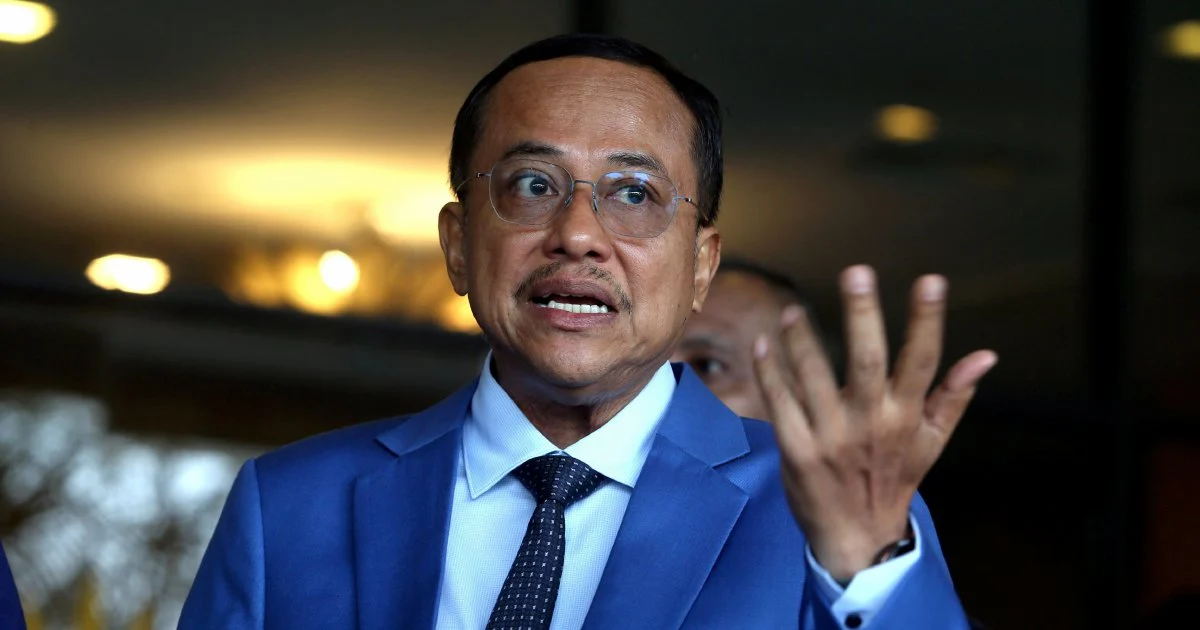
Bersatu's information chief Datuk Tun Faisal Ismail Aziz has delivered a pointed criticism of Perikatan Nasional chairman Datuk Seri Dr Ahmad Samsuri Mokhtar, contending that the coalition leader has essentially abdicated his fundamental responsibilities during a pivotal period of internal discord. The party official took aim at what he characterises as a troubling disconnect between Samsuri's formal title and his apparent reluctance to exercise the authority and oversight that position demands.
Faisal's remarks represent the latest volley in what appears to be an escalating disagreement within PN's ranks, suggesting deep fractures running through Malaysia's opposition coalition. The allegation strikes at the heart of the coalition's governance structure, questioning whether Samsuri has genuinely committed himself to steering PN through its current difficulties or whether he has allowed Pas—the largest component party—to overshadow and dominate coalition decision-making. This distinction carries particular weight given that PN was established as a coalition mechanism precisely to balance competing interests among its member parties.
The criticism underscores a structural tension that has periodically plagued Malaysian political coalitions: the challenge of maintaining genuine collective leadership when one member party possesses significantly greater parliamentary representation and organisational capacity than others. Pas, as PN's dominant force, naturally commands substantial influence over coalition direction. However, Bersatu's complaint suggests that this influence has crossed into territory where other partners feel marginalised or their voices rendered inconsequential in shaping PN's strategic orientation.
Bersatu's grievances appear rooted in the sense that Samsuri has defaulted into a figurehead role, ratifying Pas-driven decisions rather than actively mediating between divergent party interests or charting a genuinely coalition-wide course. For a coalition chairman to be effective, particularly during periods of internal strain, requires demonstrating equitable attention to all member parties' concerns and wielding sufficient independence from any single dominant partner to maintain credibility as a neutral arbiter. The implication in Faisal's statement is that Samsuri has failed this test.
The broader context matters significantly for understanding these accusations. PN has endured mounting pressure since its formation, navigating complex relationships between ideologically distinct partners and managing competing ambitions for ministerial posts and policy direction. When coalitions face external pressures or internal disagreements, the quality of its chairman's leadership becomes magnified—members look to that position to provide steady guidance and demonstrate commitment to coalition principles over narrow party interest. Samsuri's apparent passivity or selective engagement apparently fails this expectation from Bersatu's perspective.
The accusation that Samsuri has conflated his PN responsibilities with a Pas-centric agenda raises serious questions about coalition cohesion. If the chairman is perceived as primarily serving the interests of the largest partner rather than mediating equitably among all members, smaller parties like Bersatu face a choice: accept a subordinate position within PN's hierarchy or seek alternative political arrangements. Neither option bodes well for coalition stability, as the first breeds resentment while the second threatens fragmentation.
For Malaysian observers, these internal PN disputes reflect familiar patterns in coalition politics where structural imbalances create ongoing friction. The 2023 formation of PN as an opposition alternative was meant to offer voters a cohesive non-government force, yet internal dynamics consistently threaten that unity. Bersatu's willingness to publicly criticise PN's leadership structure suggests confidence that such criticism will resonate with the coalition's broader membership while simultaneously signalling that patience with current arrangements is wearing thin.
Samsuri's position as PN chairman derives from expectations that he would exercise genuine authority and judgment independent of component parties. The fact that Bersatu feels compelled to question whether he remembers holding that position rather than merely serving Pas interests indicates a serious credibility crisis. Coalition leadership requires visible, consistent demonstration of commitment to serving all members' needs, not merely accommodating the preferences of the most powerful component.
The timing of these accusations within whatever broader PN crisis has emerged matters considerably. If Bersatu is publicly airing these complaints now, it suggests the coalition faces a specific challenge where Samsuri's handling has catalysed frustration. Whether concerning electoral strategy, policy positions, ministerial distribution, or internal party appointments, Bersatu apparently believes Samsuri failed to lead effectively on a consequential matter, instead allowing Pas to dominate outcomes.
Looking ahead, Samsuri faces pressure to demonstrate renewed engagement with all PN components, not merely the largest. Whether through consultative forums, mediation efforts, or concrete policy decisions that reflect input from Bersatu, Pas's smaller partners, and others, he must visibly reassert PN chairmanship as a position wielding meaningful authority. Without such demonstration, Bersatu's criticism will likely harden into deeper doubts about PN's viability as a genuine coalition or merely a Pas-dominated structure masquerading as one.
These internal tensions matter beyond coalition politics. How effectively opposition parties manage their internal relationships affects their credibility as potential government alternatives. Malaysian voters assessing opposition credentials naturally consider whether coalition partners genuinely cooperate as equals or whether structural arrangements mask hierarchical realities. Bersatu's public complaint, therefore, carries implications extending well beyond internal party management into the broader question of whether PN represents authentic multi-party cooperation or simply Pas with junior partners.