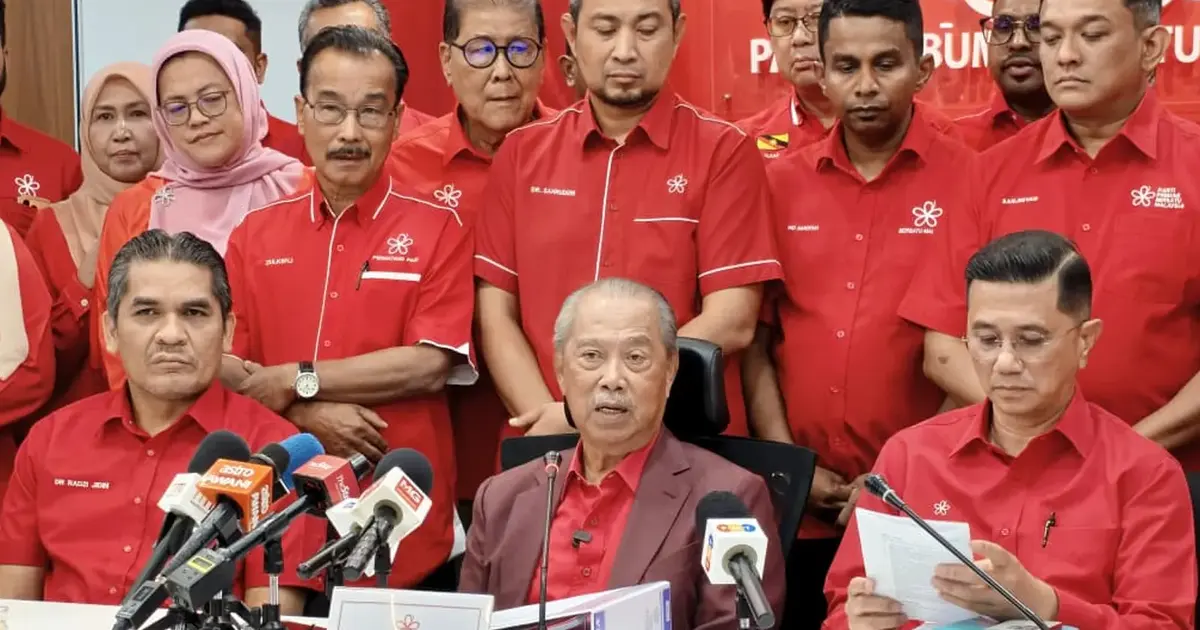
Bersatu will continue its membership in Perikatan Nasional, according to party president Muhyiddin Yassin, who has anchored this strategic decision to public sentiment favouring the coalition. The statement comes as Malaysian political alignments remain fluid, with various blocs testing their appeal and consolidating support ahead of potential electoral contests.
Muhyiddin's assertion reflects Bersatu's calculation that remaining within Perikatan Nasional serves the party's long-term political interests. The coalition, which has undergone several iterations since its formation, continues to position itself as an alternative to other major political groupings. Bersatu's role within this framework has evolved considerably, particularly as the political landscape has shifted following recent electoral cycles and coalition realignments across the nation.
The Perikatan Nasional alliance, which includes Bersatu alongside other component parties, has sought to establish itself as a credible governing force with distinct ideological moorings. For Bersatu specifically, the coalition provides a platform through which to amplify its political voice and maintain relevance in Malaysian politics. Muhyiddin's leadership has been crucial in navigating the party through various transitions and maintaining internal cohesion despite external pressures.
Public acceptance, as cited by Muhyiddin, represents a key metric by which political coalitions measure their viability. In Malaysian politics, where coalition dynamics fundamentally shape governance prospects, public perception directly influences a party's strategic options. Bersatu's reliance on this metric suggests the party is attuned to broader electoral considerations and voter preferences, particularly among segments that previously supported the party during earlier iterations of the political system.
The timing of Muhyiddin's reaffirmation carries significance within the broader Malaysian political context. Coalition stability has become increasingly important as parties anticipate future electoral cycles and assess their competitive positioning. Bersatu's explicit commitment helps clarify its intentions and may serve to reassure both coalition partners and party members of its steadfast engagement with Perikatan Nasional's project.
Within Perikatan Nasional itself, Bersatu occupies a position of considerable influence. The party brings electoral machinery, parliamentary representation, and organisational capacity that enhance the coalition's overall strength. Conversely, the coalition provides Bersatu with legitimacy derived from collective effort and collective platforms, particularly valuable when individual party approval ratings fluctuate.
For regional observers across Southeast Asia, Malaysia's coalition politics offer insight into how diverse political entities navigate shared governance frameworks. Unlike electoral systems with rigid party structures, Malaysian politics permits considerable fluidity and renegotiation of alliances. Bersatu's choice to remain with Perikatan Nasional illustrates how individual parties weigh autonomy against coalition benefits in competitive multiparty environments.
Muhyiddin's framing of public acceptance as the rationale for remaining in Perikatan Nasional also suggests the party conducts internal assessments of coalition popularity. Such evaluations likely consider multiple data points—parliamentary performance, ground-level sentiment, electoral polling, and demographic trend analysis. By explicitly invoking public backing, Muhyiddin reinforces the notion that Bersatu's decisions reflect democratic principles and responsiveness to voter preferences.
The stability signalled by this commitment may influence other coalition partners' calculations regarding their own membership. In Malaysian politics, where defections and realignments occur frequently, clear statements of intent from major component parties provide reassurance about coalition durability. This announcement thus functions as both an internal consolidation message and an external signal to potential allies and rivals about Perikatan Nasional's cohesion.
Bersatu's path has been unconventional by Malaysian standards. Formed relatively recently, the party achieved rapid prominence and underwent multiple coalition configurations. This history makes Muhyiddin's explicit reaffirmation of Perikatan Nasional membership more significant—it demonstrates that despite past shifts, the party has determined this coalition alignment best serves its interests and aligns with public sentiment.
The party's commitment also occurs within broader debates about governance models and political direction in Malaysia. Different coalitions champion varying policy priorities, constitutional interpretations, and visions for national development. By cementing its position within Perikatan Nasional, Bersatu endorses that coalition's particular approach to these fundamental questions.
Looking forward, Bersatu's continued participation in Perikatan Nasional will likely influence how the coalition develops policy platforms and contests electoral battles. The party's grassroots networks, particularly in certain states, provide geographical advantages that strengthen coalition prospects. Conversely, any deterioration in public acceptance of Perikatan Nasional would eventually pressurize Bersatu to reconsider, making the party's position contingent on maintaining and improving public support.
Muhyiddin's statement, therefore, represents neither merely symbolic posturing nor permanent commitment, but rather a strategic positioning that acknowledges current political realities while preserving flexibility for future adaptation. In Malaysian politics, such declarations typically contain implicit conditionality—parties remain in coalitions so long as perceived benefits outweigh costs and public sentiment remains favourable.