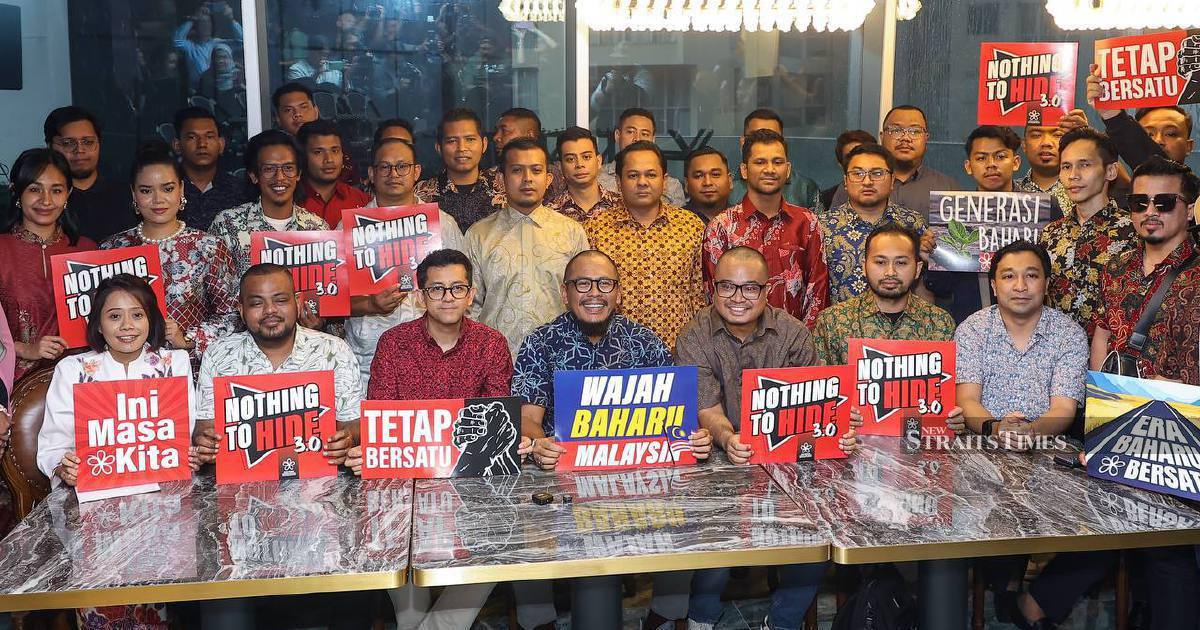
Mohd Ashraf Mustaqim Abdul Munir, the Kota Siputeh state assemblyman, has signalled that Bersatu remains hopeful about salvaging its partnership with PAS despite recent friction within the Perikatan Nasional alliance. His measured optimism comes at a moment when both parties face mounting pressure to demonstrate unity within PN, the coalition that has anchored Malaysia's political landscape since 2020. The assemblyman's comments suggest that underlying institutional ties and shared electoral interests may yet supersede the personal and ideological tensions that have surfaced publicly in recent weeks.
The relationship between Bersatu and PAS has endured considerable strain as policy disagreements and leadership disputes have become increasingly visible to party members and the wider electorate. Both parties operate within PN's structural framework, yet their differing approaches to governance, religious priorities, and regional dominance have created friction that extends beyond typical coalition management. The tensions have manifested through public statements, competing legislative agendas, and manoeuvring for influence within federal and state administrations where they govern jointly. These dynamics have raised questions among observers about whether PN can maintain cohesion ahead of anticipated electoral contests and potential shifts in parliamentary composition.
Ashraf's analogy—comparing the situation to a married couple continuing to argue while sharing a household—captures an important political reality in Malaysian coalition dynamics. Long-term partners within governing alliances often experience periods of acute disagreement without necessarily contemplating dissolution. The metaphor implies that fundamental structural bonds, whether electoral calculations, administrative interdependence, or ideological overlap, remain intact despite surface-level conflict. In the Malaysian context, where coalitions frequently require careful maintenance across multiple parties with different constituencies and programmatic priorities, such friction is sometimes treated as navigable rather than terminal.
The Perikatan Nasional framework has itself become the subject of internal negotiation since its formation. Originally conceived as a realignment of Malaysian politics away from the UMNO-led structures that dominated for decades, PN has struggled to establish stable governance arrangements despite controlling significant parliamentary strength and multiple state governments. Bersatu and PAS, as its primary components, have fundamentally different voter bases—Bersatu drawing from Malay-Muslim professionals and dissidents from UMNO, while PAS maintains a grassroots religious constituency and growing mainstream appeal. These electoral foundations create both incentives for collaboration and sources of competition.
Recent months have witnessed disagreements between the two parties on various administrative matters and resource allocation questions. Such disputes are routine in Malaysian coalition politics, where state chief minister appointments, budget priorities, and regulatory decisions must be negotiated across party lines. However, the public nature of recent tensions has amplified concerns that PN's internal management mechanisms may be insufficiently robust to contain disagreements before they damage electoral credibility. For voters and observers, coalition instability signals uncertainty about governance priorities and raises questions about whether shared governance partners can deliver coherent policy agendas.
The timing of Ashraf's reassurance carries significance given Malaysia's evolving political calendar. Federal elections need not occur until 2025, yet state-level contests and potential parliamentary manoeuvres could reshape the political environment before then. Bersatu and PAS, as partners governing multiple states and holding substantial federal representation, have mutual interests in presenting a unified front to potential coalition partners and the electorate. Fragmentation between them would benefit rival coalitions, particularly Pakatan Harapan, which seeks to rebuild centrist and urban voter support. For Bersatu, which relies on PAS for critical state-level representation and electoral machinery in key constituencies, maintaining workable relations is strategically essential.
The assemblyman's intervention reflects broader efforts within PN leadership to manage public perceptions of internal stability. Senior figures from both Bersatu and PAS have periodically issued statements affirming commitment to the alliance despite acknowledged disagreements. These managed disclosures serve multiple purposes—reassuring supporters that their party remains strong within the coalition structure, signalling to other potential allies that PN is not fracturing, and providing room for behind-the-scenes negotiations without admitting fundamental breakdown. The public framing of tensions as recoverable distinguishes Malaysia's coalition politics from scenarios where parties openly contemplate separation or realignment.
The substance of current disputes between Bersatu and PAS remains partly opaque to external observers, with public communications focusing on procedural or administrative disagreements rather than philosophical rifts. This opacity itself indicates that both parties retain incentives to manage their differences quietly rather than escalate through public confrontation. Unlike situations where coalitions collapse due to irreconcilable programmatic differences—such as religious versus secular governance models—the Bersatu-PAS tensions appear rooted in competition for influence and resources within an accepted shared framework. Both parties operate within Malaysia's constitutional monarchy system and Islamic governance principles, limiting ideological distance compared to other potential coalition pairings.
For Malaysian and Southeast Asian observers, the durability of PN will significantly influence Malaysia's political trajectory and regional stability considerations. A fragmented coalition could trigger parliamentary instability, necessitate fresh elections, or create openings for alternative governing arrangements. Conversely, successful management of internal tensions would suggest that Malaysian political actors can sustain complex multiparty arrangements despite centrifugal pressures. The precedent established by how Bersatu and PAS resolve their current disagreements may influence whether other regional coalitions adopt similar conflict-management approaches or interpret unresolved tensions as indicators of fundamental incompatibility requiring restructuring.
Ashraf's optimism rests partly on the assumption that rational political calculation will ultimately override personality-driven conflicts or territorial disputes. Malaysian politics has historically demonstrated considerable flexibility in coalition formation and dissolution, with parties regularly shifting alignments when electoral mathematics or policy priorities change. However, sustained governance requires partners to develop institutional mechanisms for managing disagreement, establishing procedures for decision-making when interests diverge, and maintaining sufficient goodwill to prevent disputes from cascading into broader coalition breakdown. The test for Bersatu and PAS will be whether their underlying shared interests prove sufficiently robust to weather continued friction without allowing competitive impulses to overshadow collaborative requirements.

