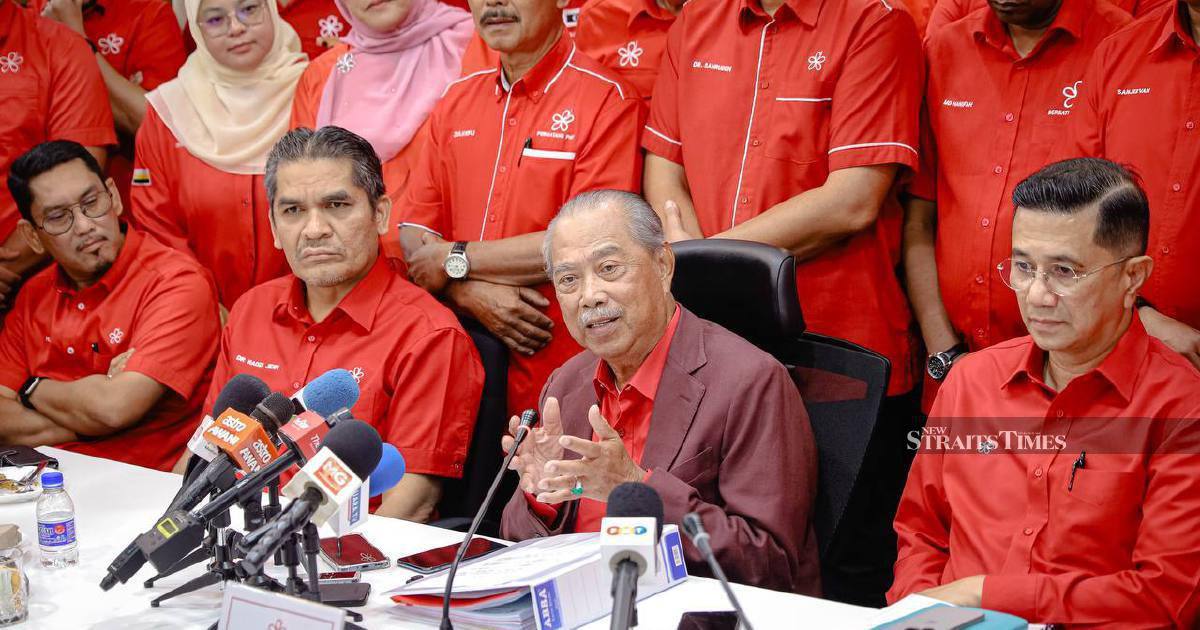
Tan Sri Muhyiddin Yassin, president of Bersatu, has declared his party's willingness to directly contest against PAS in Johor state elections should seat-sharing negotiations between the two parties collapse and result in competing candidacies in the same constituencies. The statement signals a potential escalation of political tensions within the Malay-Muslim voting bloc, a critical demographic in the resource-rich southern state whose electoral dynamics carry implications across Malaysia's broader political landscape.
Muhyiddin's remarks reflect the ongoing complexity of coalition politics within the ruling government alliance and the delicate balance required to maintain unity among parties competing for overlapping voter bases. Bersatu, which emerged as a significant political force following the 2020 general election, has positioned itself as a key player in negotiations over electoral arrangements, particularly in states where it has demonstrated electoral strength. The party's assertion of competitive readiness serves as a negotiating posture ahead of what is anticipated to be a hotly contested state election.
The prospect of direct competition between Bersatu and PAS represents a fundamental challenge to coordinated campaigning efforts in Johor. Both parties draw support from the Malay-Muslim electorate, though their political messaging and organizational bases differ considerably. PAS, as the larger and historically more established Islamist party, typically commands stronger grassroots organization in rural constituencies, while Bersatu has built appeal among urban and semi-urban Malay voters through its positioning as a reform-oriented alternative within the ruling coalition. Such head-to-head contests could fragment the government-aligned Malay vote and potentially benefit opposition parties in three-cornered fights.
The timing of Muhyiddin's statement reflects broader negotiations occurring behind closed doors among coalition partners regarding electoral strategy. In Malaysian political practice, such public pronouncements often serve as tactical signals to coalition partners, indicating willingness to negotiate but also setting parameters for acceptable compromises. By publicly emphasizing Bersatu's capacity to contest independently, Muhyiddin seeks to strengthen his party's bargaining position in seat allocation discussions, ensuring Bersatu receives sufficient constituency slots to maintain its political relevance and reward its grassroots supporters.
Johor's political significance cannot be overstated in this context. As the nation's second-largest state by population and a consistent stronghold of government-aligned parties, developments in Johor elections reverberate throughout Malaysia's political system. The state has historically served as a testing ground for new political configurations and inter-party arrangements, with electoral outcomes frequently influencing calculations at the federal level. A fractured ruling coalition in Johor could weaken government performance in state administration and diminish its parliamentary representation, creating cascading effects for the stability of the current federal administration.
The dynamics between Bersatu and PAS also reflect the challenge of managing multiple power centers within the ruling coalition. Since the 2020 election, Bersatu has transitioned from opposition party to government component, requiring realignment of both organizational culture and political relationships. This transformation has not eliminated competitive impulses between Bersatu and established players like PAS, particularly in states where both possess electoral viability. The tension between maintaining coalition unity and competing for voter loyalty remains unresolved and likely to persist through electoral cycles.
From a strategic perspective, Muhyiddin's statement addresses concerns among Bersatu's membership and supporters regarding the party's electoral prospects. Party members across Johor have reportedly expressed anxiety about potential seat allocations, fearing that a disadvantageous distribution would undermine Bersatu's growth trajectory and weaken its capacity to deliver tangible benefits to constituencies. By signalling readiness for independent competition, Muhyiddin reassures the party base that leadership will not accept marginalization, even if such assertiveness creates tensions with coalition partners.
The implications for Malaysian electoral politics extend beyond state-level considerations. Competition patterns established in Johor often serve as models for negotiations in other states, creating precedents that constrain future flexibility. If Bersatu successfully secures substantial seat allocations in Johor through tough negotiating positions, similar demands may emerge in other states where the party contests. Conversely, if PAS successfully limits Bersatu's expansion, it reinforces PAS's dominance within the Malay-Muslim political space and demonstrates the risks of coalition partnership with larger, more established players.
For Malaysian voters, particularly those in Johor, the possibility of intensified competition between government-aligned parties raises questions about electoral efficiency and governance focus. When ruling coalition members compete vigorously against each other, campaign resources and leadership attention become fragmented, potentially compromising the ability to articulate unified platforms addressing voter concerns such as economic development, service delivery, and corruption prevention. The electorate may experience multiple campaigns by similar-leaning parties rather than clear ideological or programmatic differentiation.
Looking ahead, the resolution of seat-sharing negotiations will reveal much about relative power dynamics within the ruling coalition and the capacity of senior leadership to broker compromise among competing interests. Whether Muhyiddin's assertiveness prompts genuine negotiations yielding acceptable compromises, or whether Bersatu ultimately contests multiple seats against PAS, will shape Johor's electoral landscape and provide insights into the durability of Malaysia's current governing arrangement as the nation approaches subsequent electoral cycles.